Institute: Peoples' Friendship University of Russia
Course: 4
Theme: residential complex
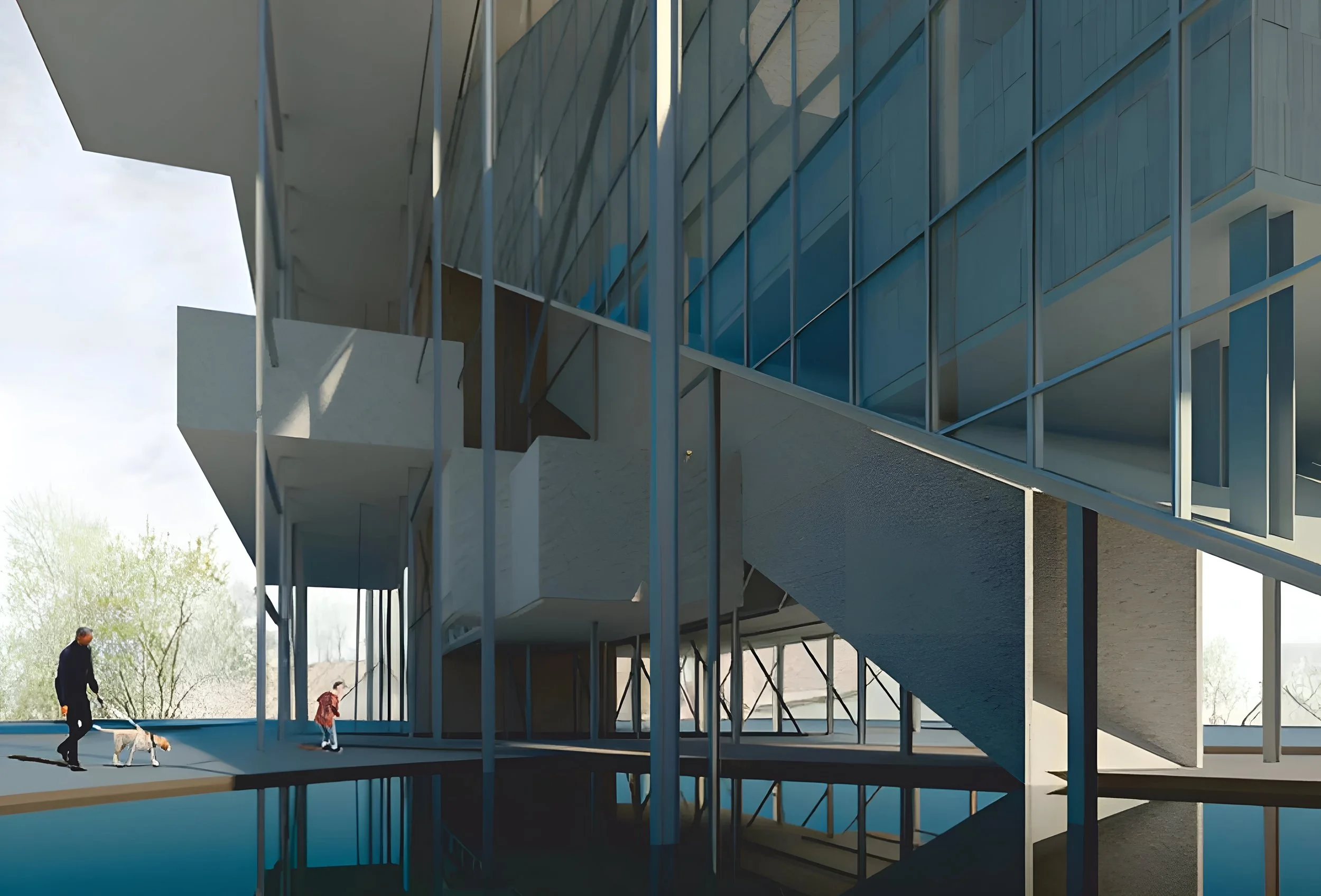
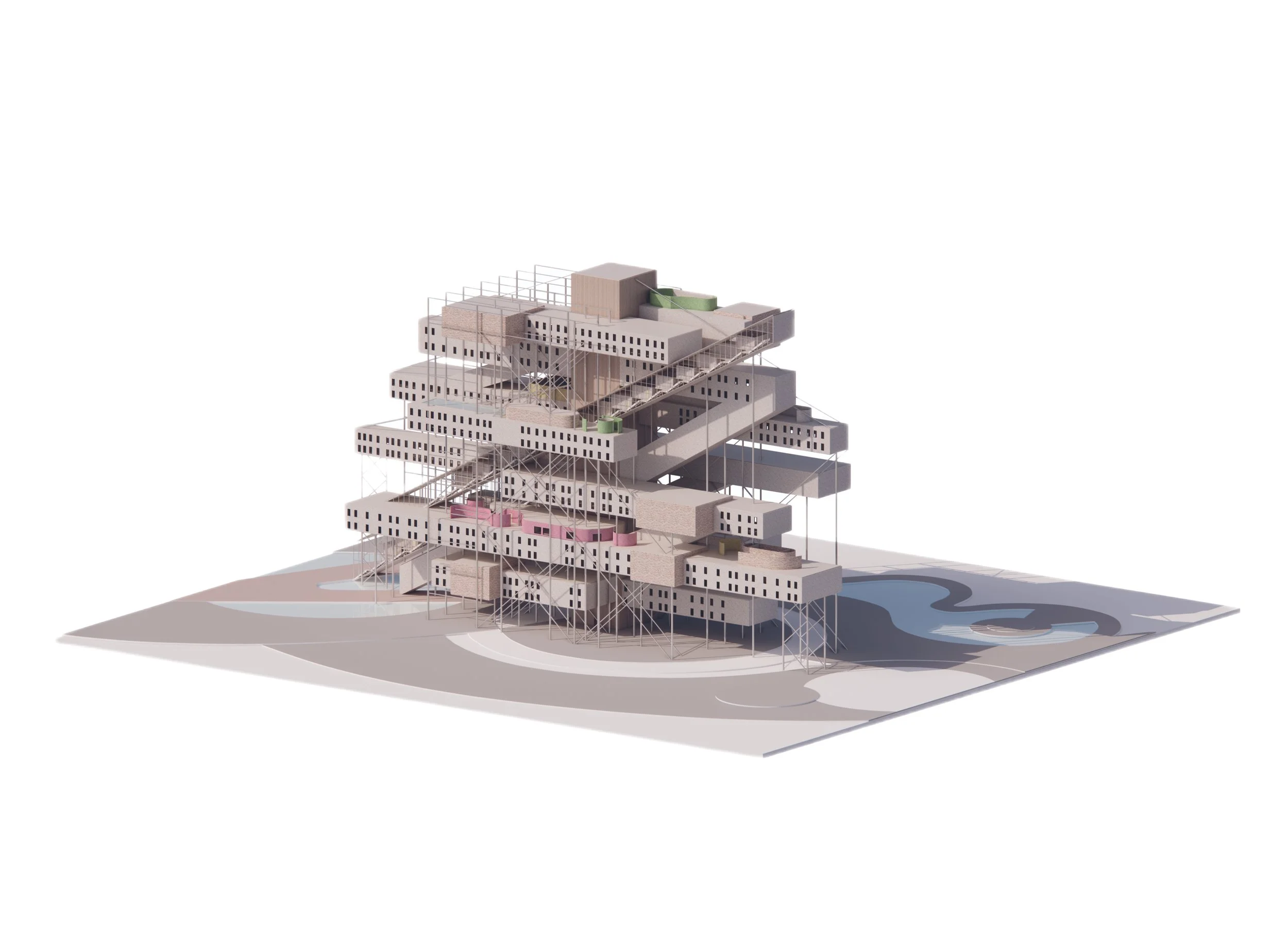
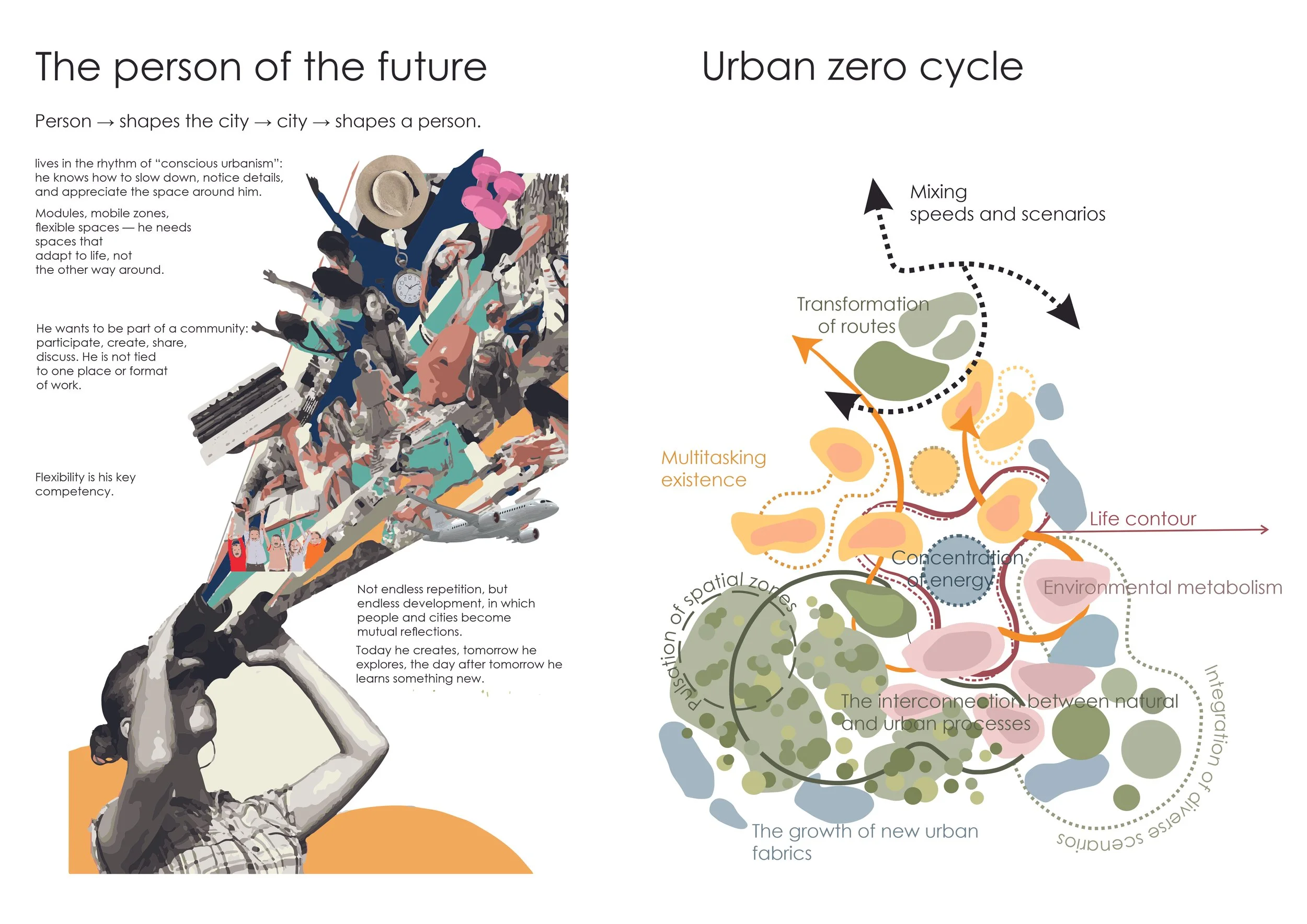
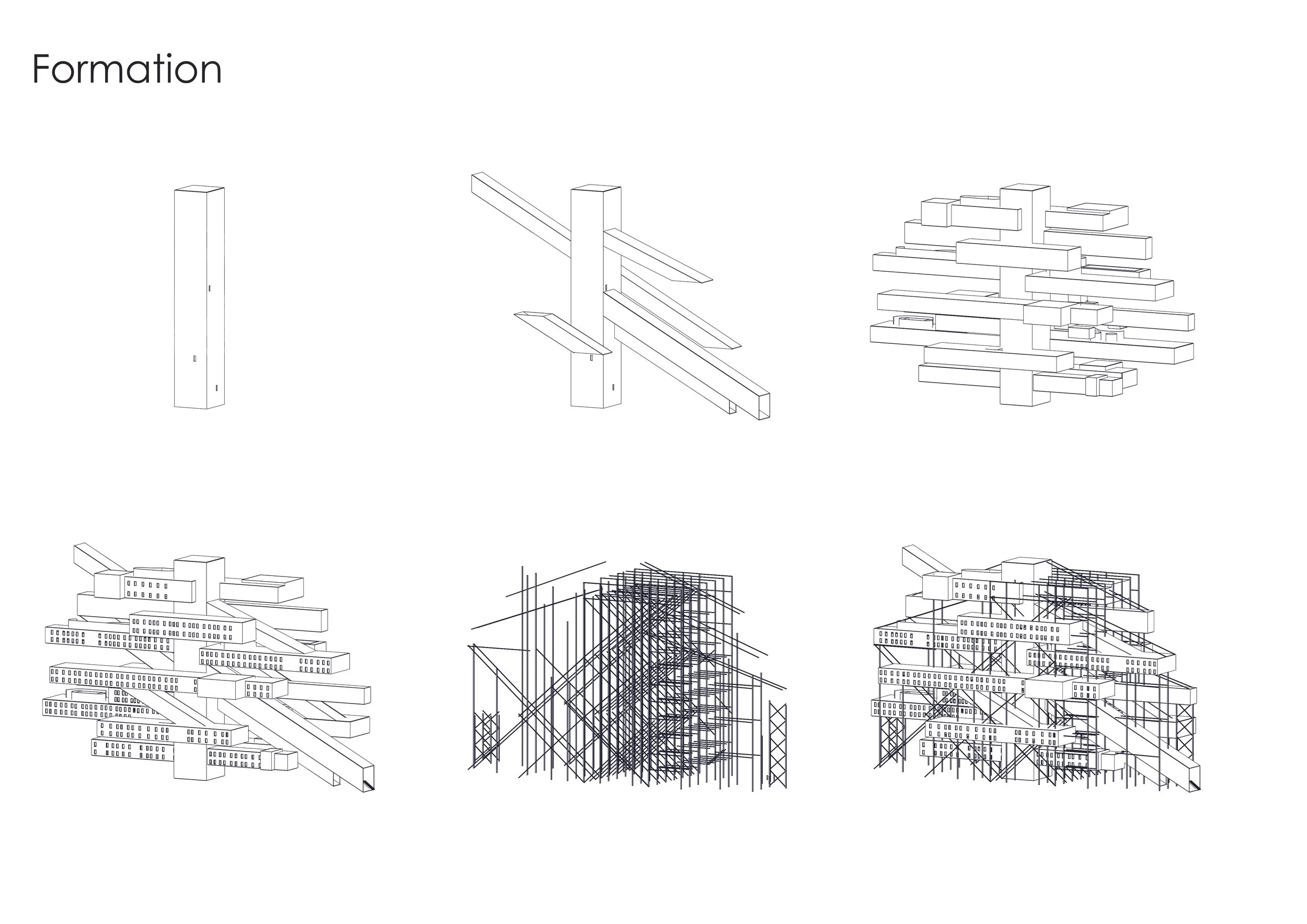
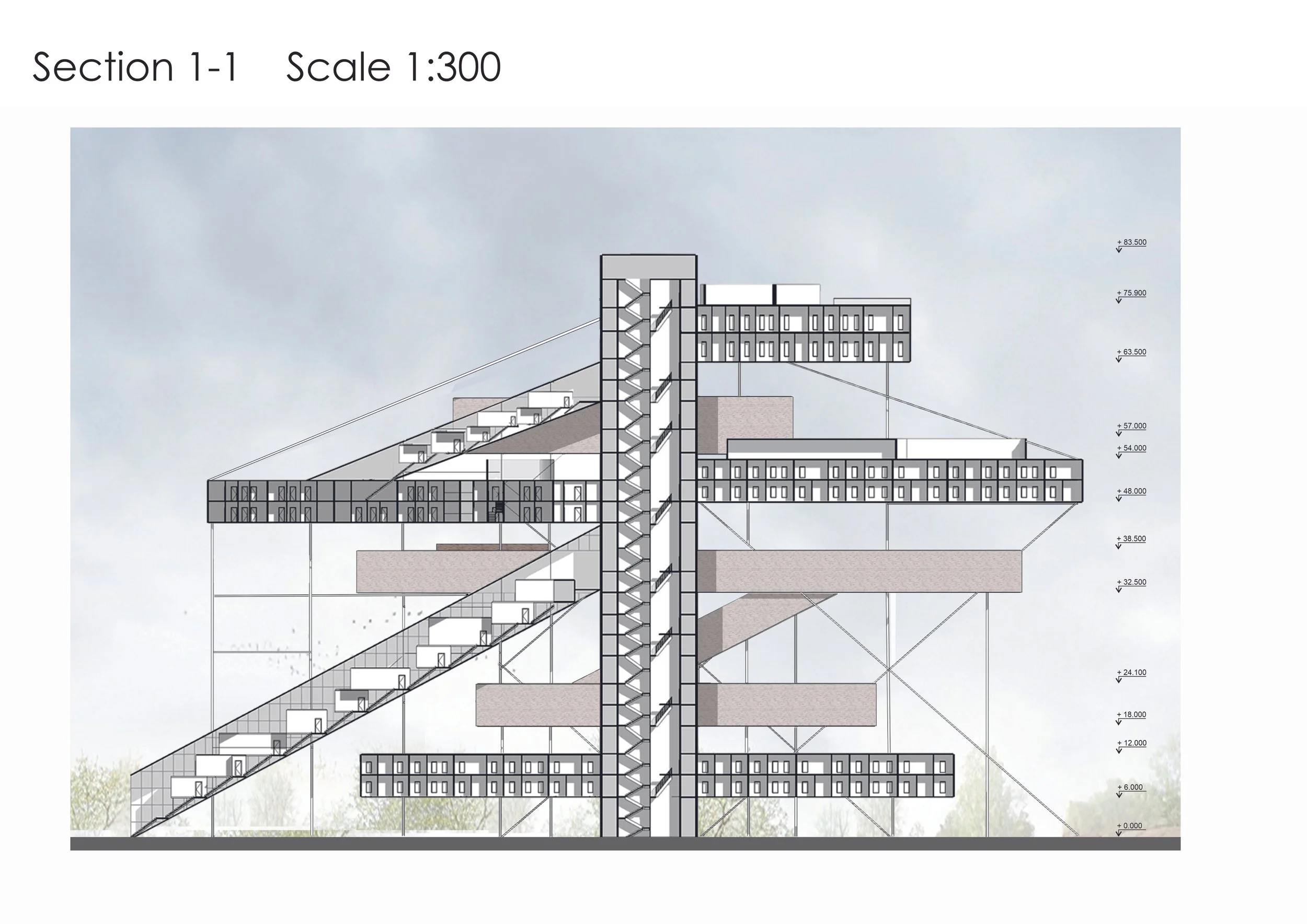
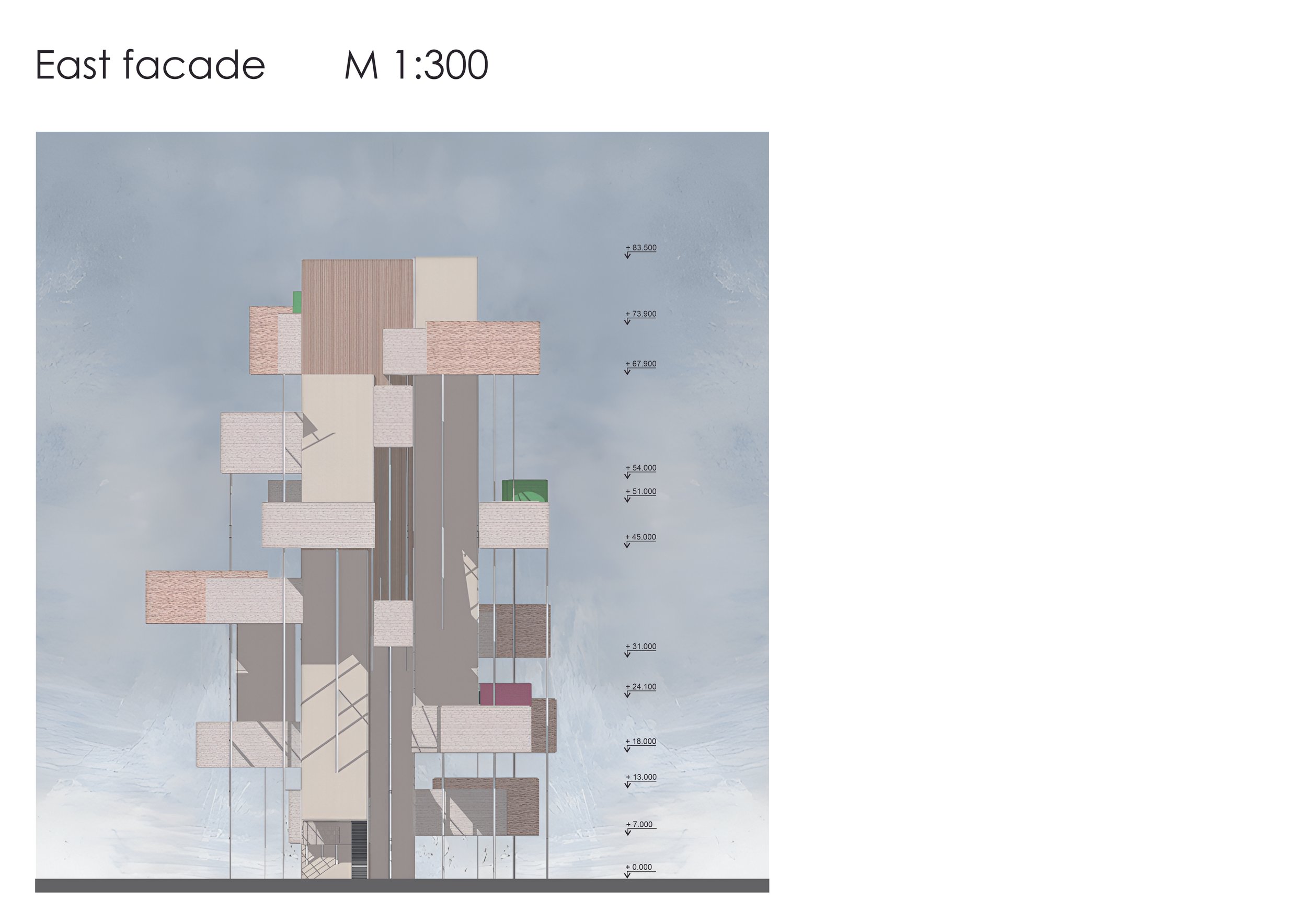
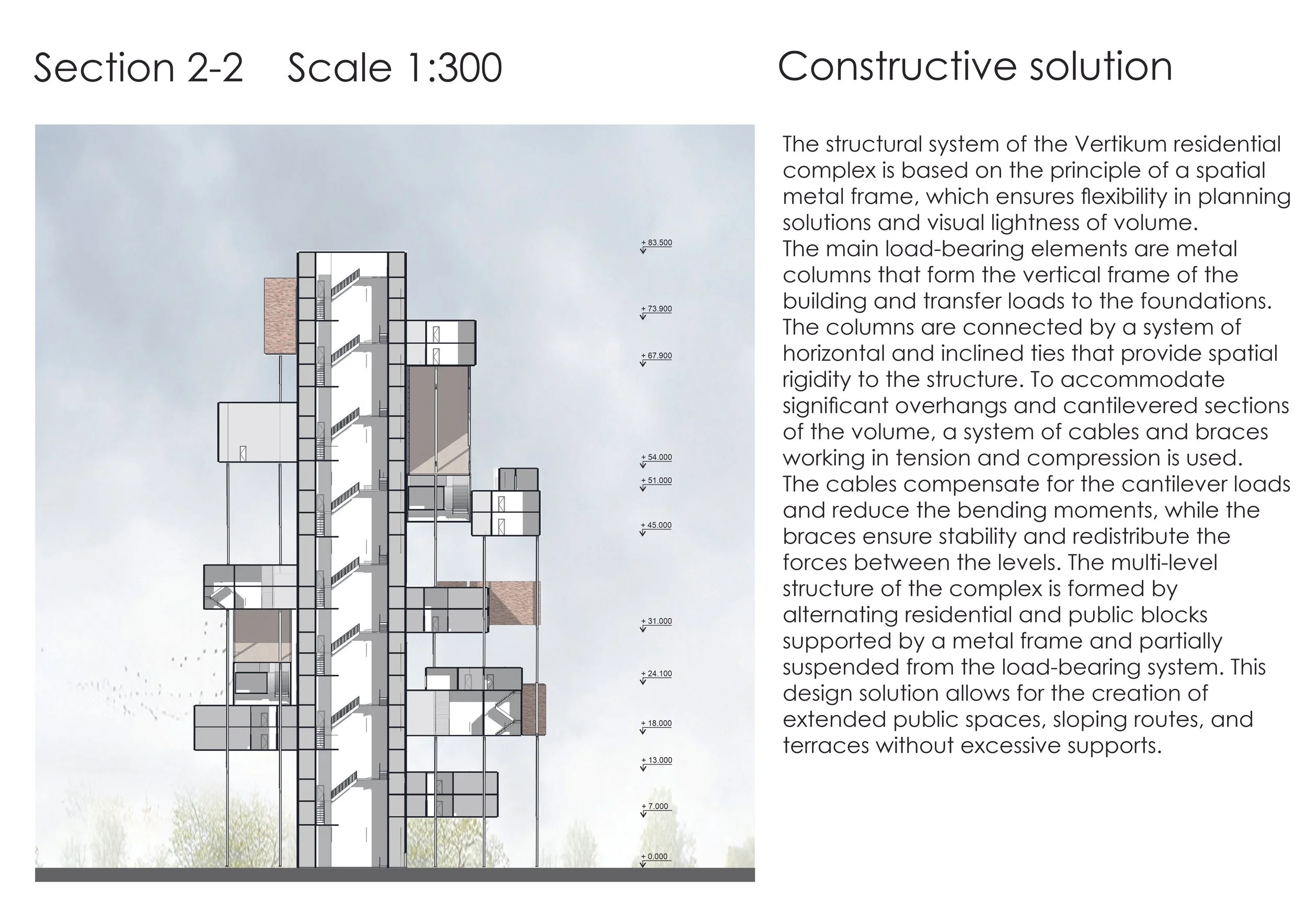
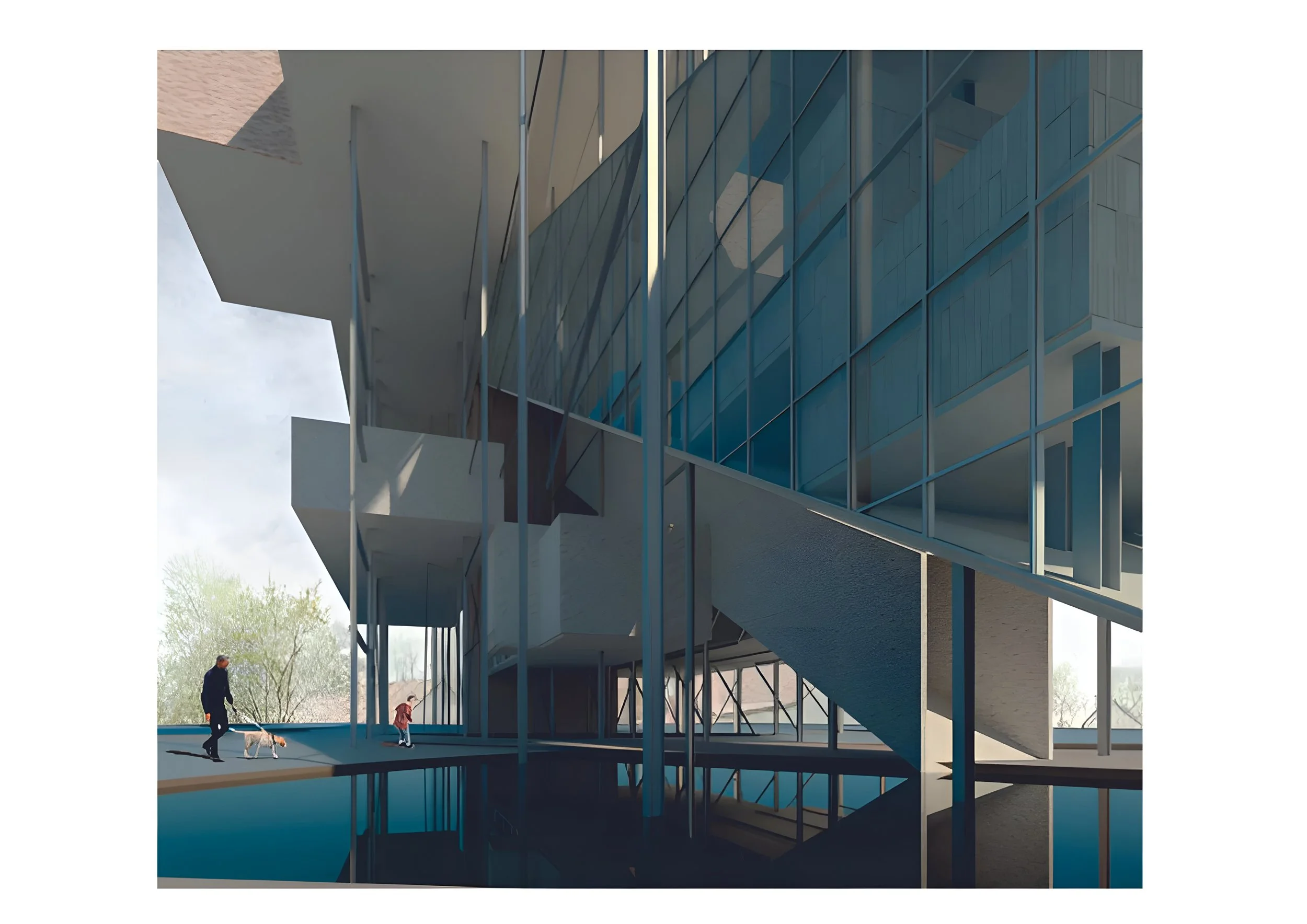
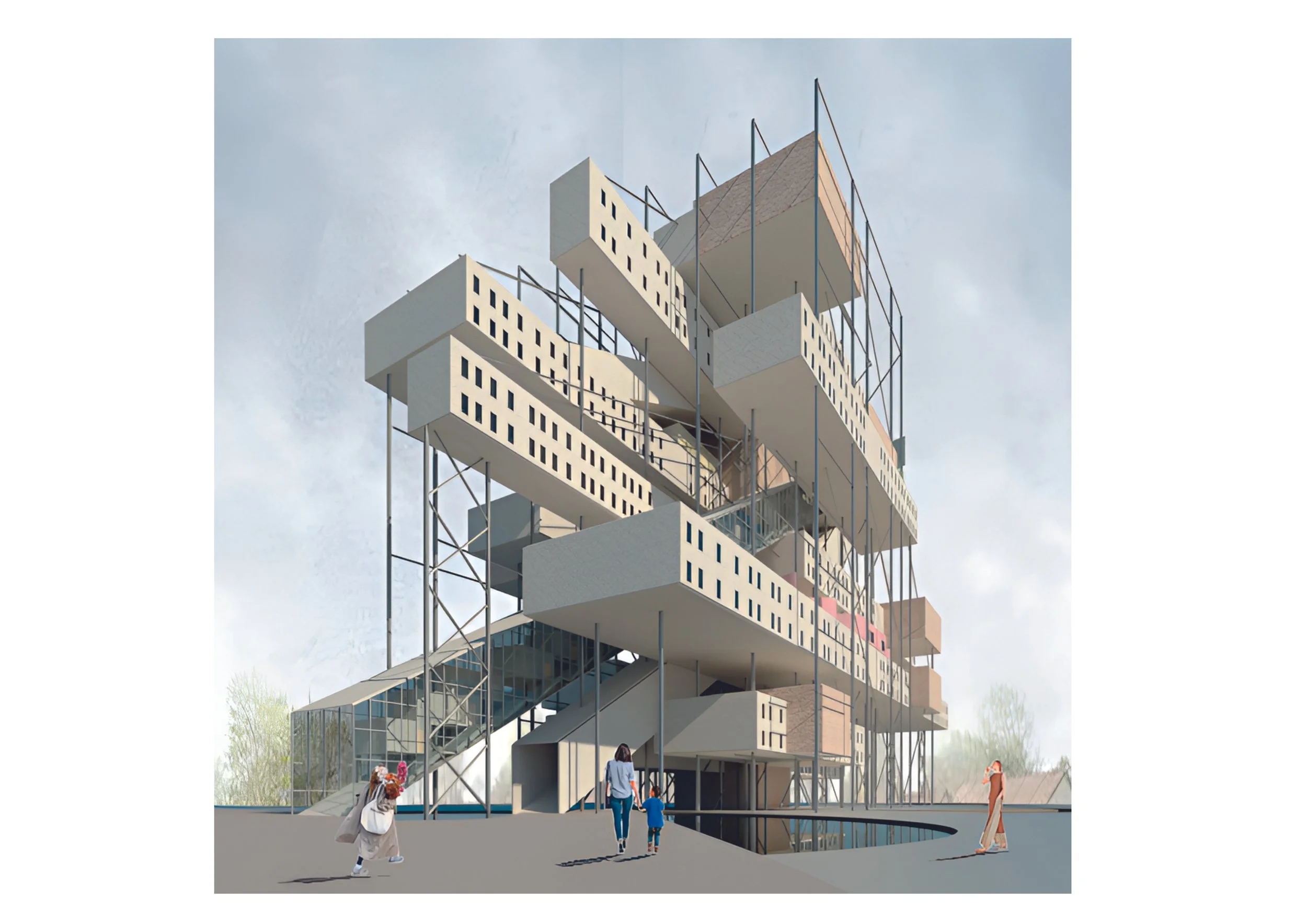
Verticum represents a paradigm shift in urban housing, proposing a vertical ecosystem where architecture functions as an integrated platform for living, social interaction, and creative activity. The project reinterprets urban development as an upward trajectory, replacing horizontal expansion with a multi‑tiered system that merges private residences and public spaces into a cohesive living environment.
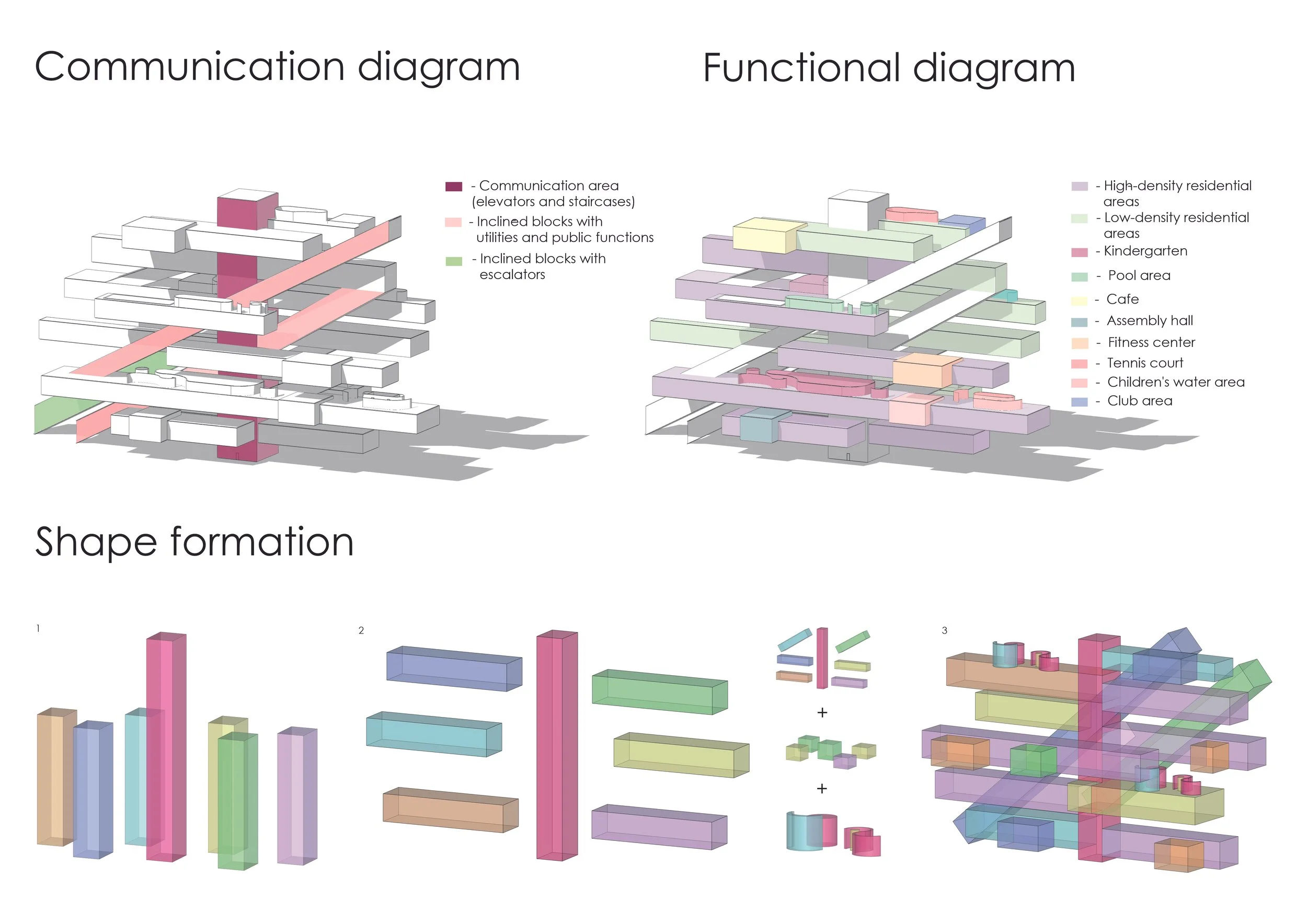
The spatial organization is based on three key principles:
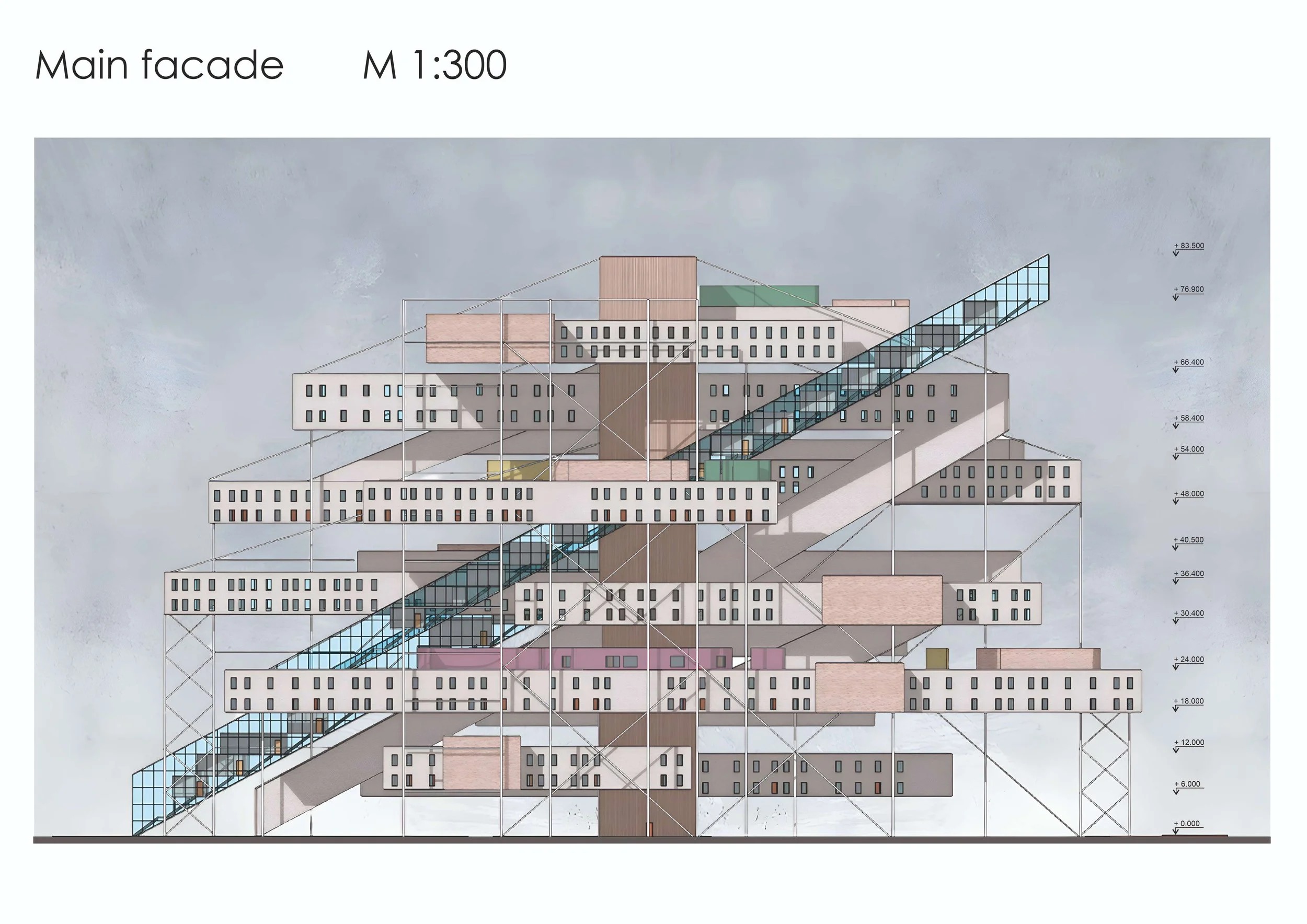
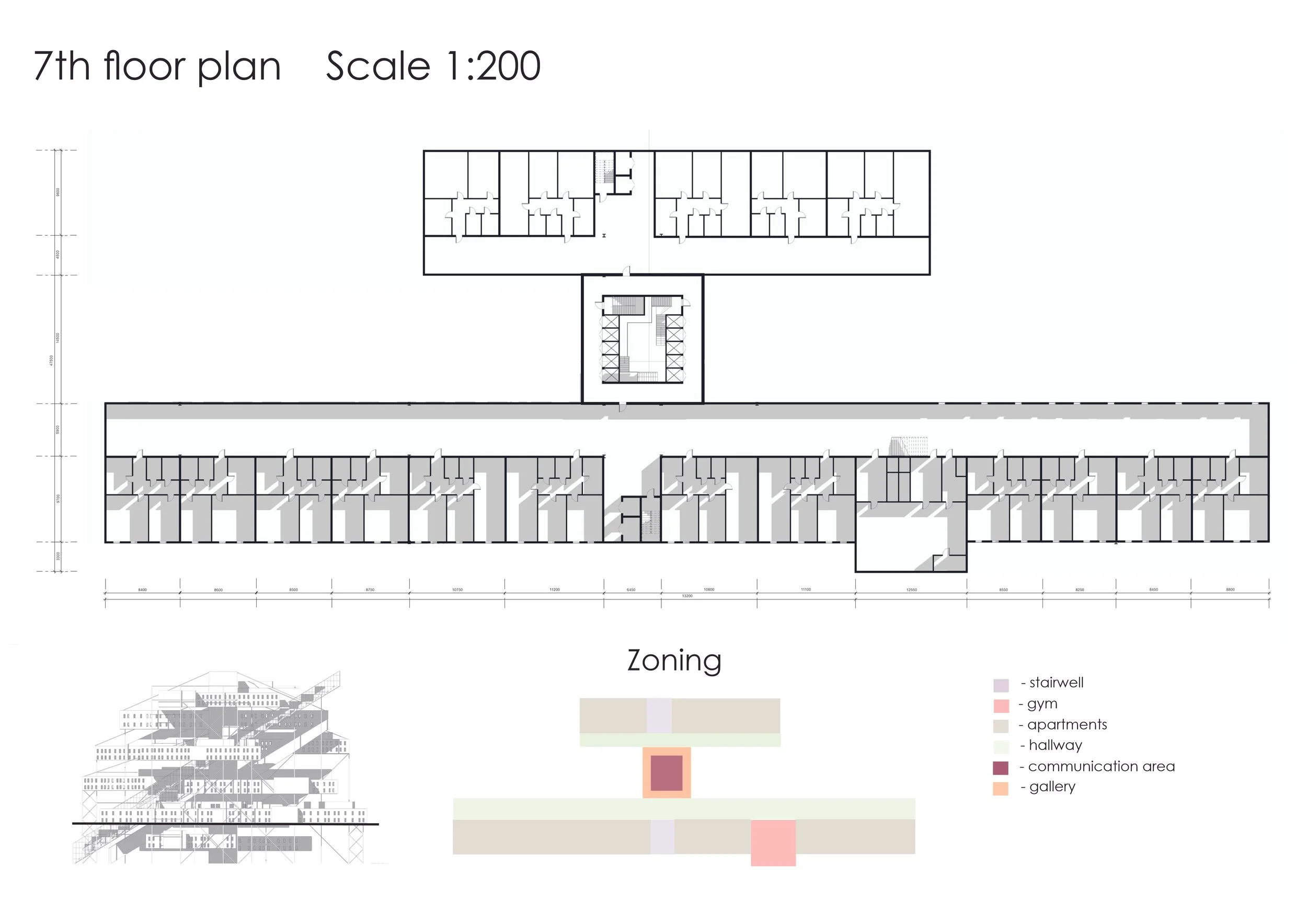
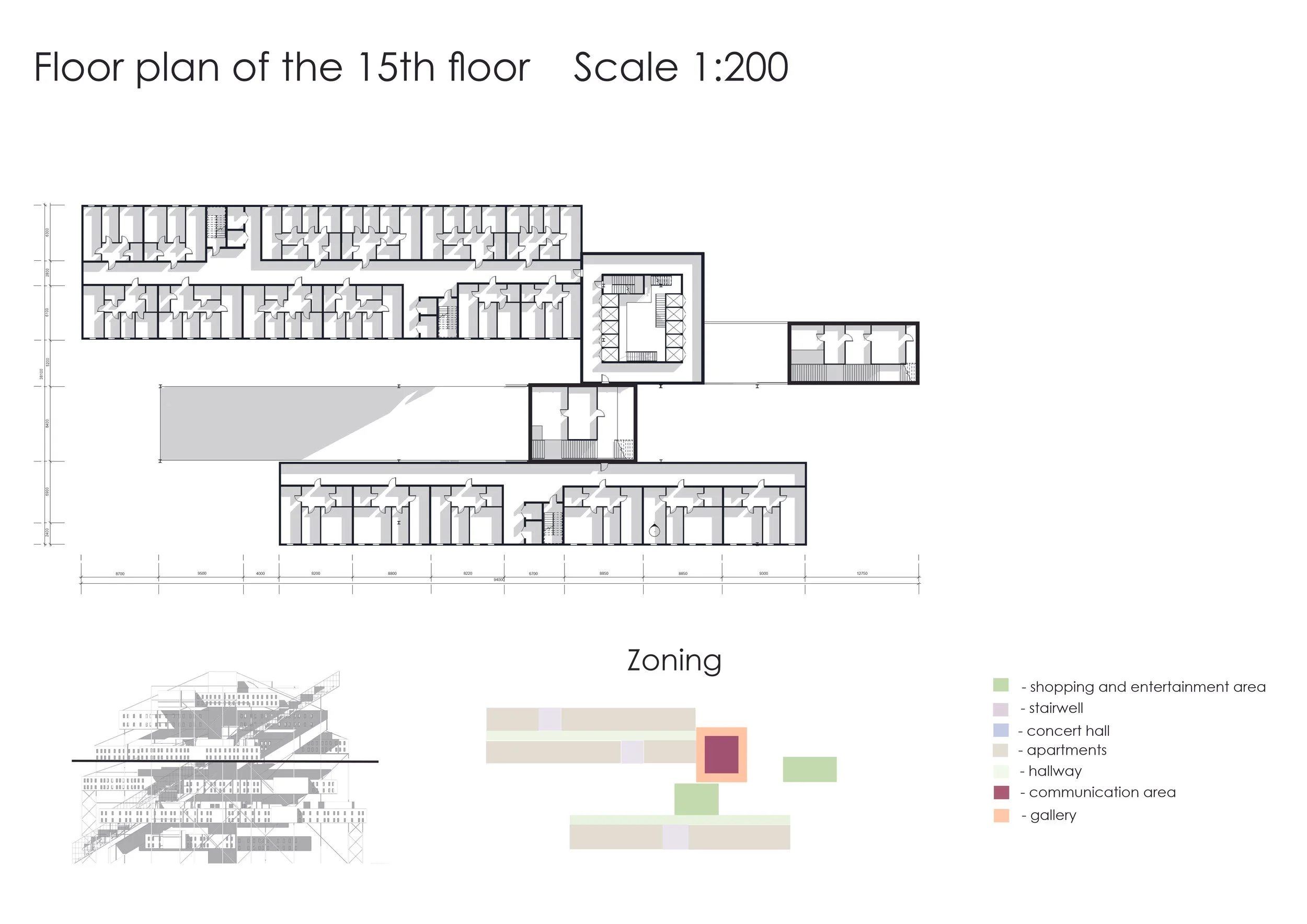
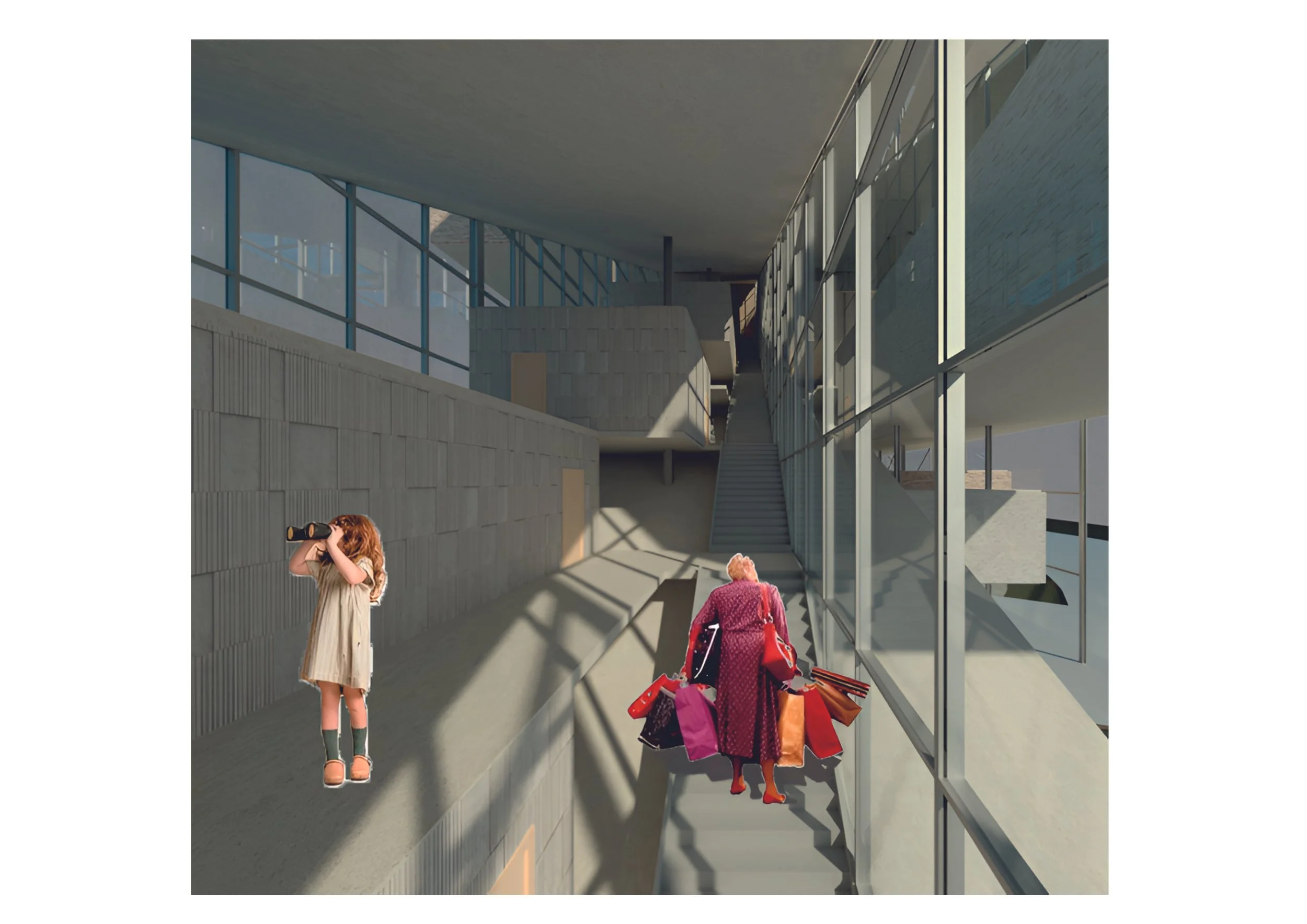
Dynamic Circulation. Sloping volumes and interconnected pathways create a landscape of continuous movement. The central communication core — integrating elevators, staircases, and sky galleries — serves as the building’s structural and social axis, transforming transit into a social experience.
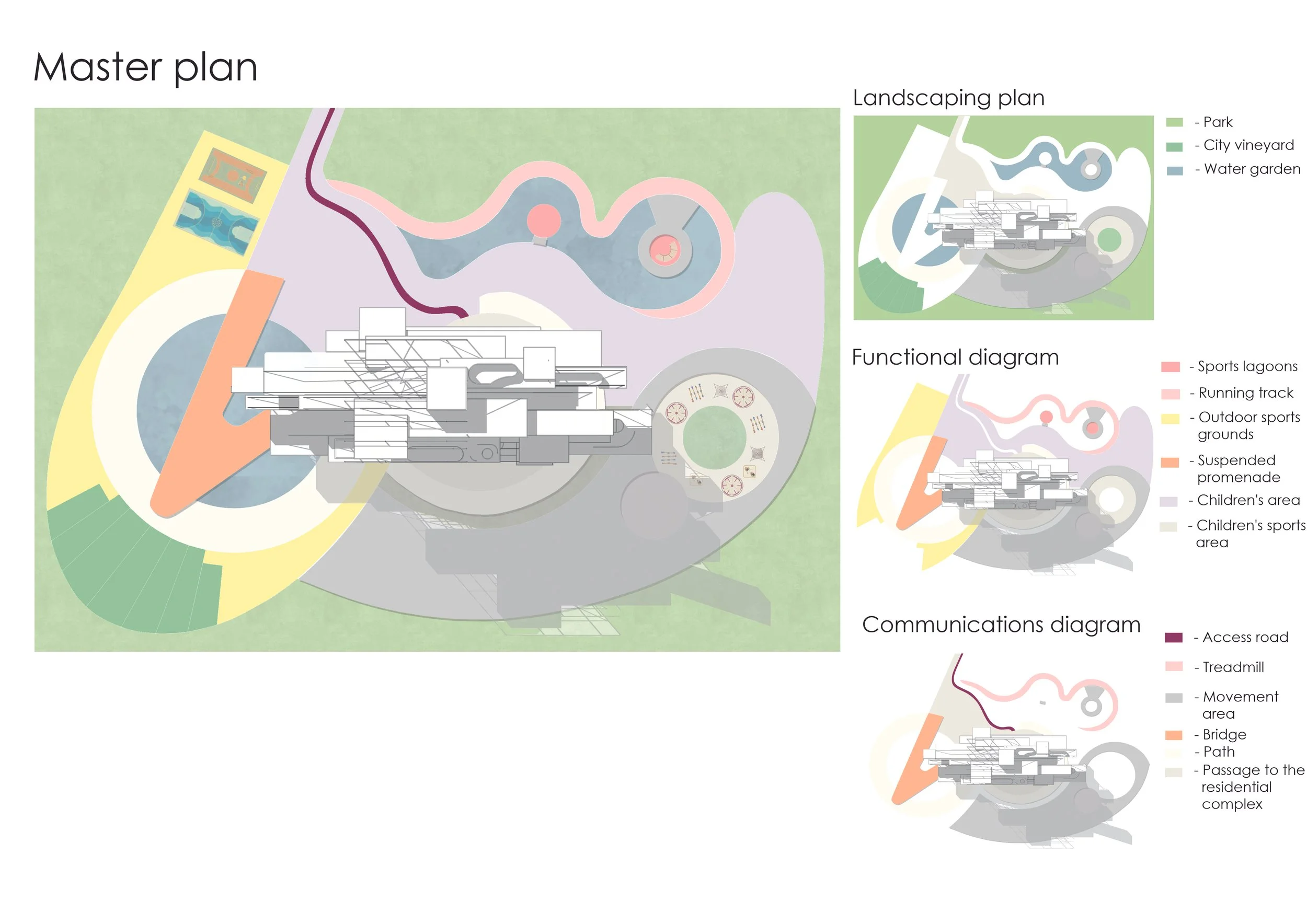
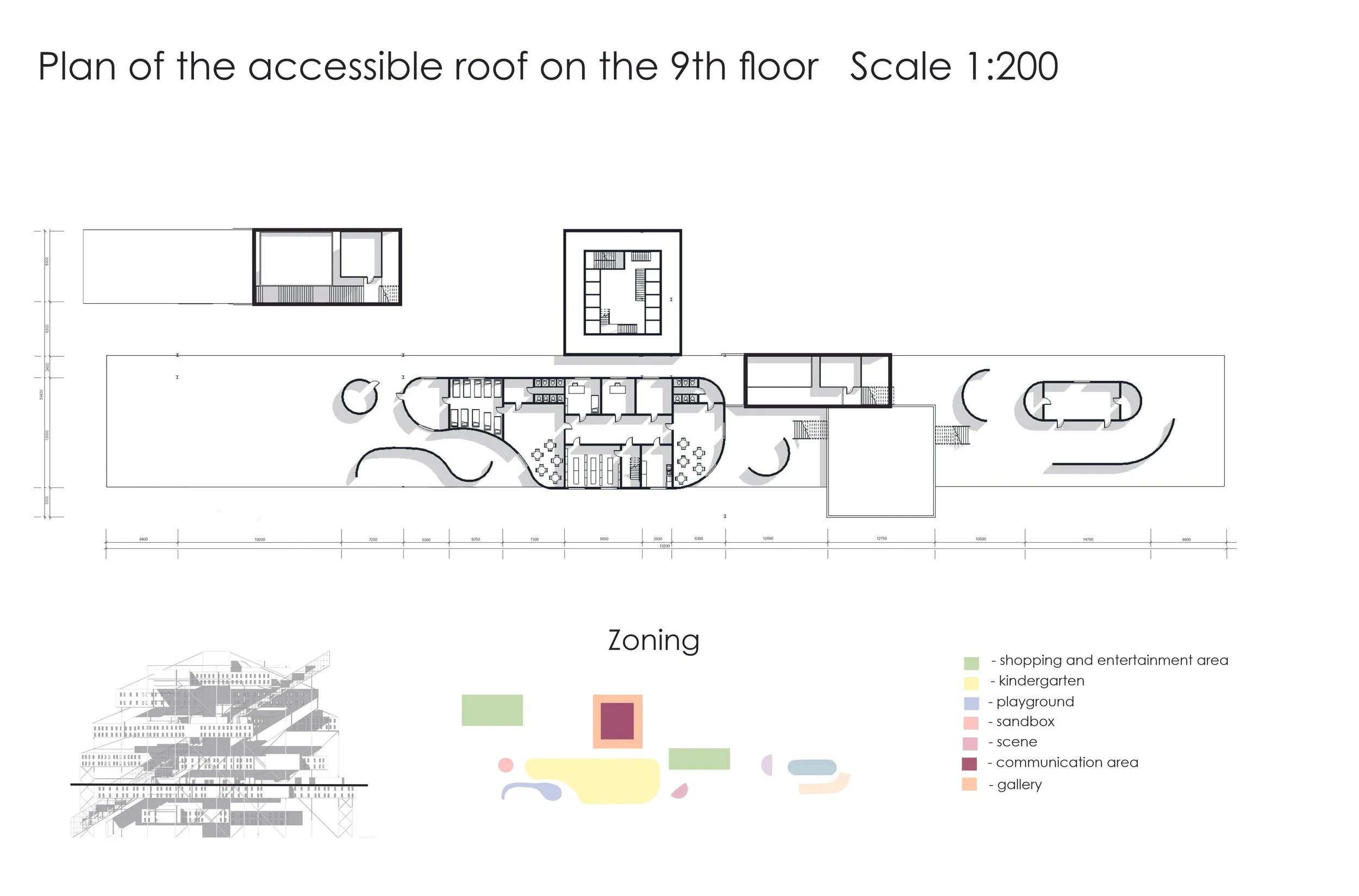
Vertical Public Realm. Rooftop spaces extend the city upward, hosting kindergartens, pools, sports areas, and green terraces. These elevated public zones redefine urban density, introducing a stratified model of community life where shared facilities exist at multiple levels.
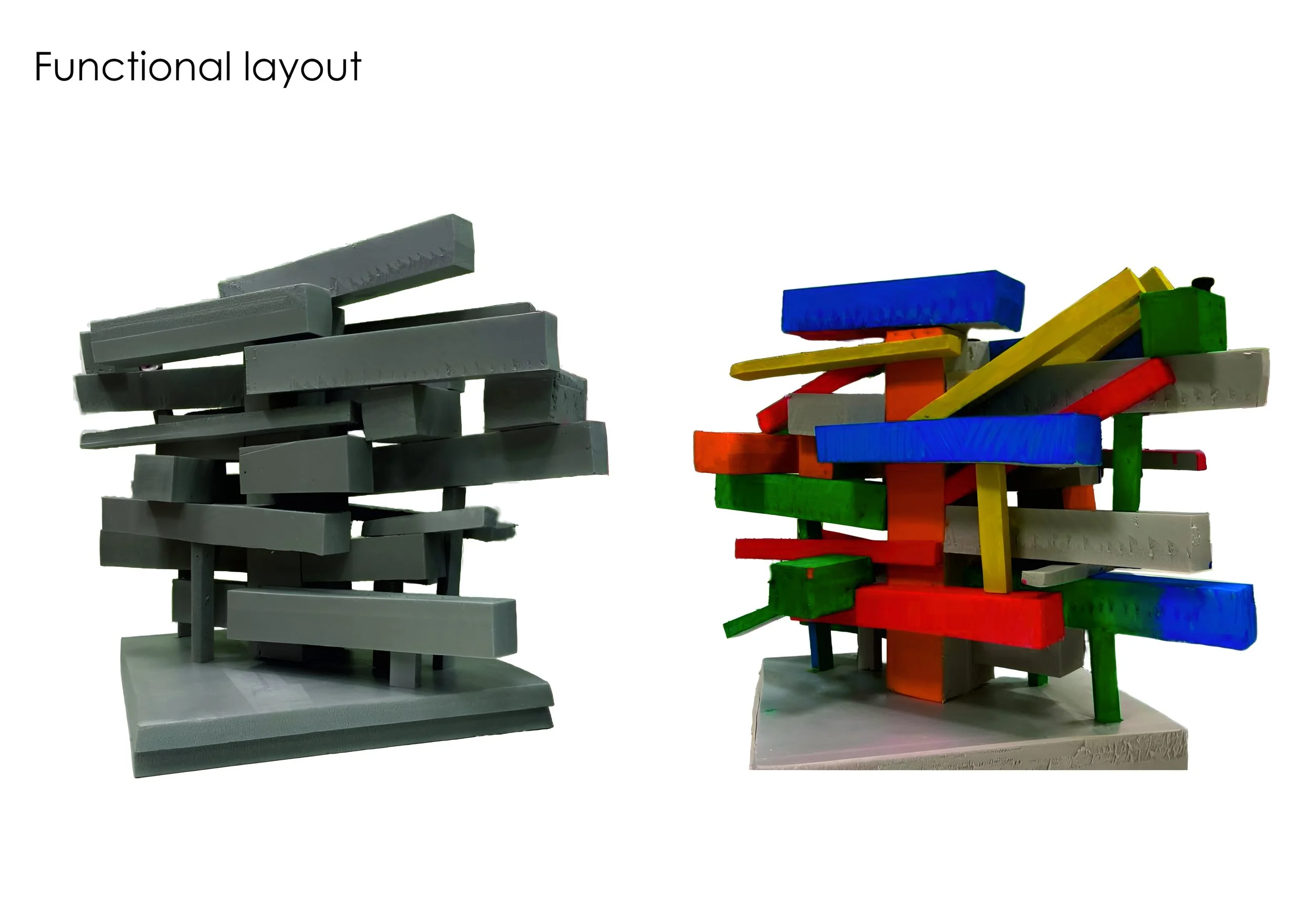
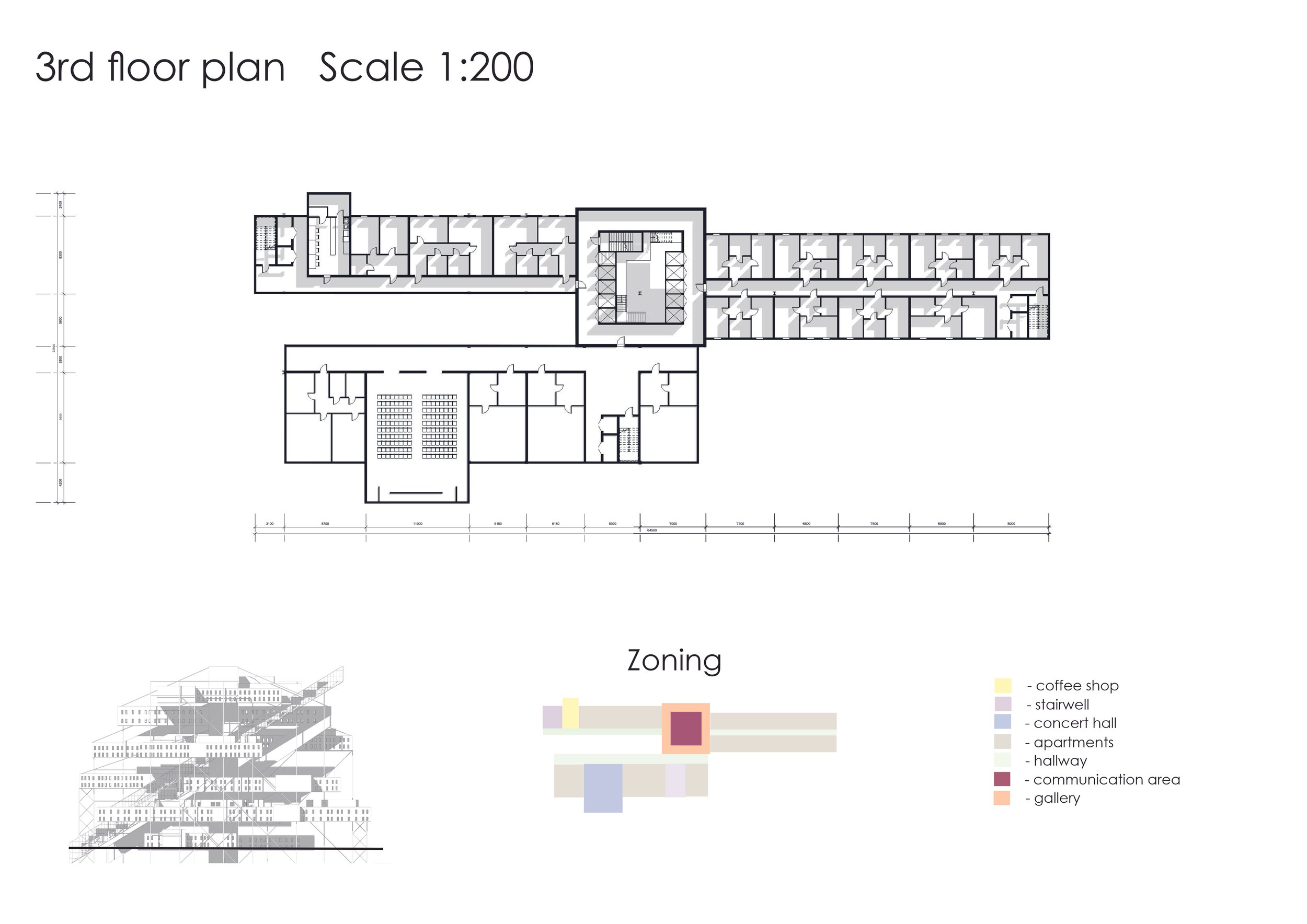
Adaptive Zoning. The complex accommodates diverse lifestyles through differentiated spatial programming:
active zones for social engagement and creative work;
contemplative areas for privacy and rest;
transitional spaces blurring boundaries between private and public domains.
The architectural concept emphasizes experiential verticality — a quality where height translates into layered social and sensory experiences. Pathways, viewpoints, and communal areas are designed to foster spontaneous encounters, turning vertical movement into a form of urban interaction.
In essence, Verticum proposes a new standard for urban living: a self‑contained vertical community where architectural form, social infrastructure, and natural elements converge to create a resilient, multi‑layered habitat. This model demonstrates how high‑density development can enhance, rather than restrict, the quality of urban life.