Institute: Peoples' Friendship University of Russia
Course: 5
Theme: architectural and design concept for a multifunctional shelter complex for stray and critically ill animals
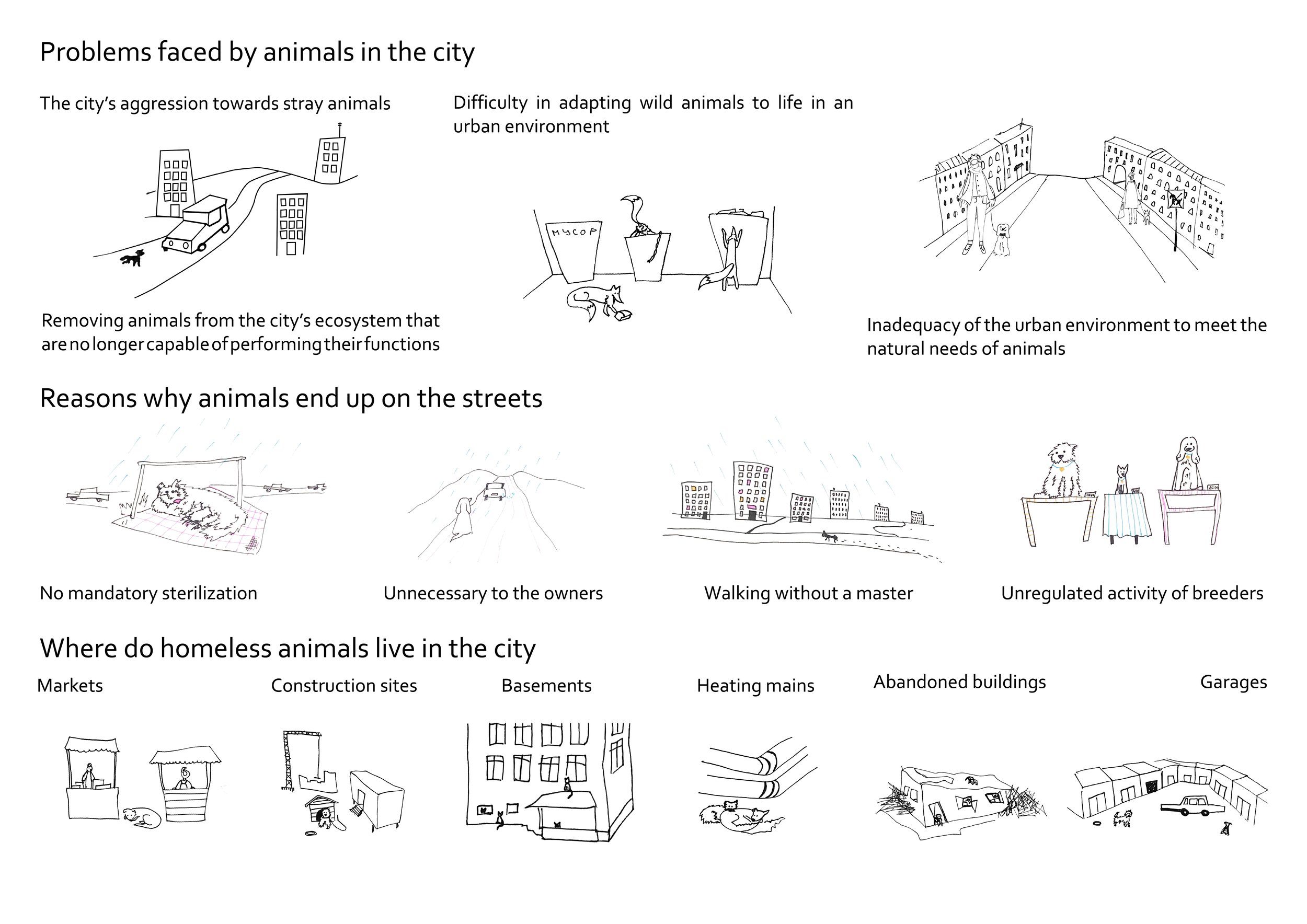
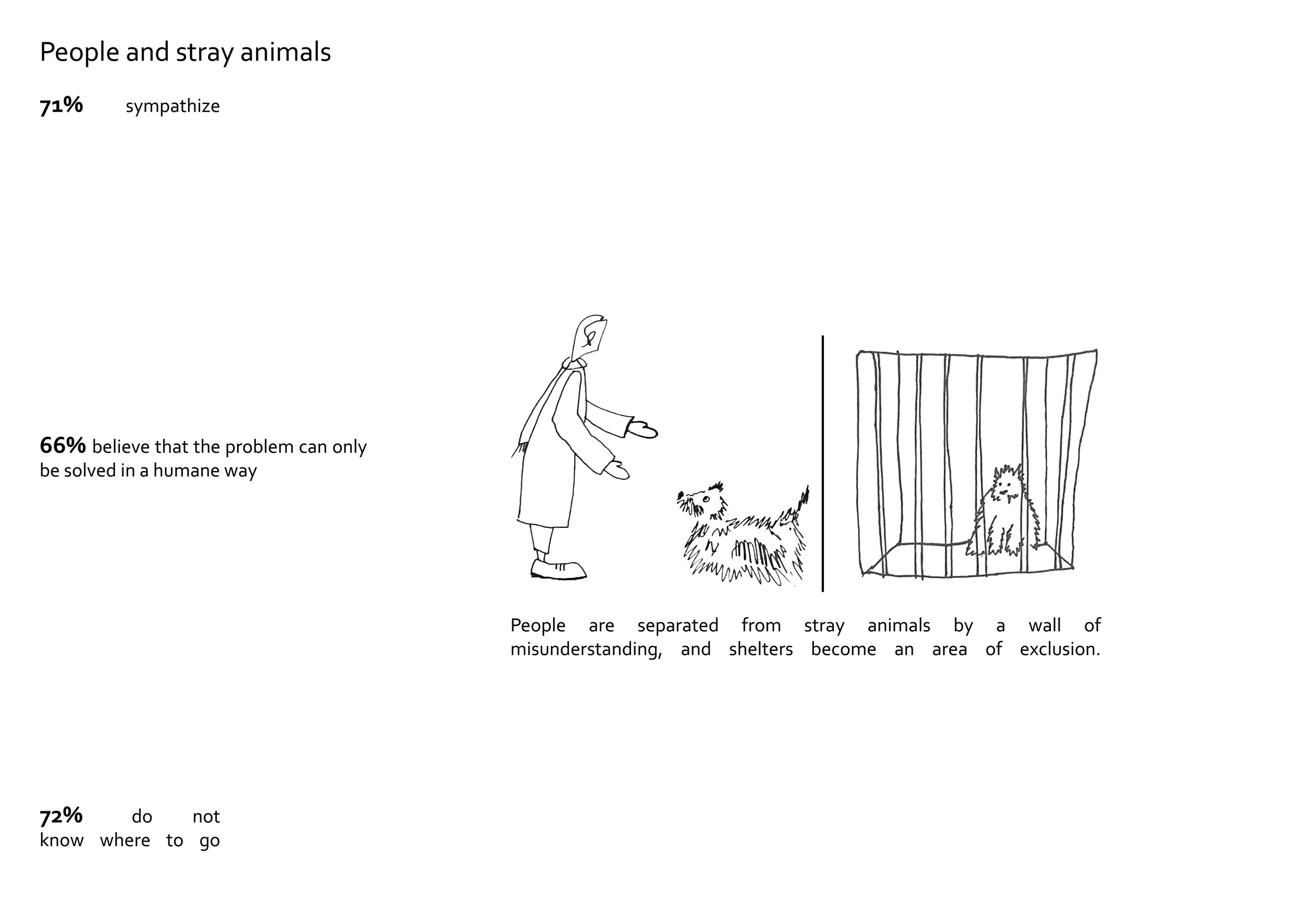
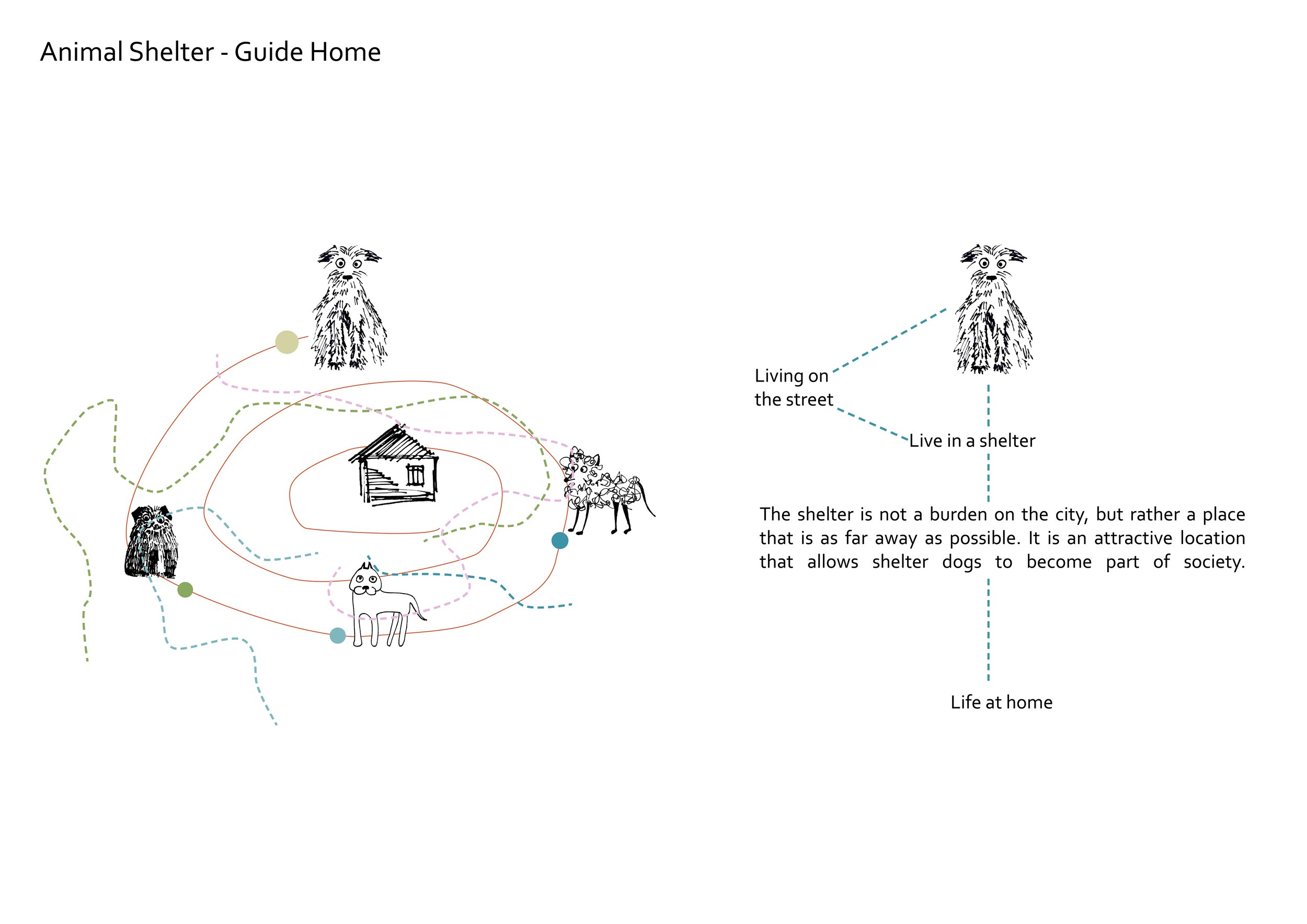
Stray animals are among the most vulnerable urban dwellers. The scale of the problem is alarming: only 3% of Russia’s 4.2 million stray animals find shelter, while the rest are left to fend for themselves on the streets. Public sympathy is high — 71% of people feel compassion for homeless animals — but few know how to help effectively. Our shelter complex aims to change this, transforming shelters from cold, alienating places into gateways to a better life for animals.
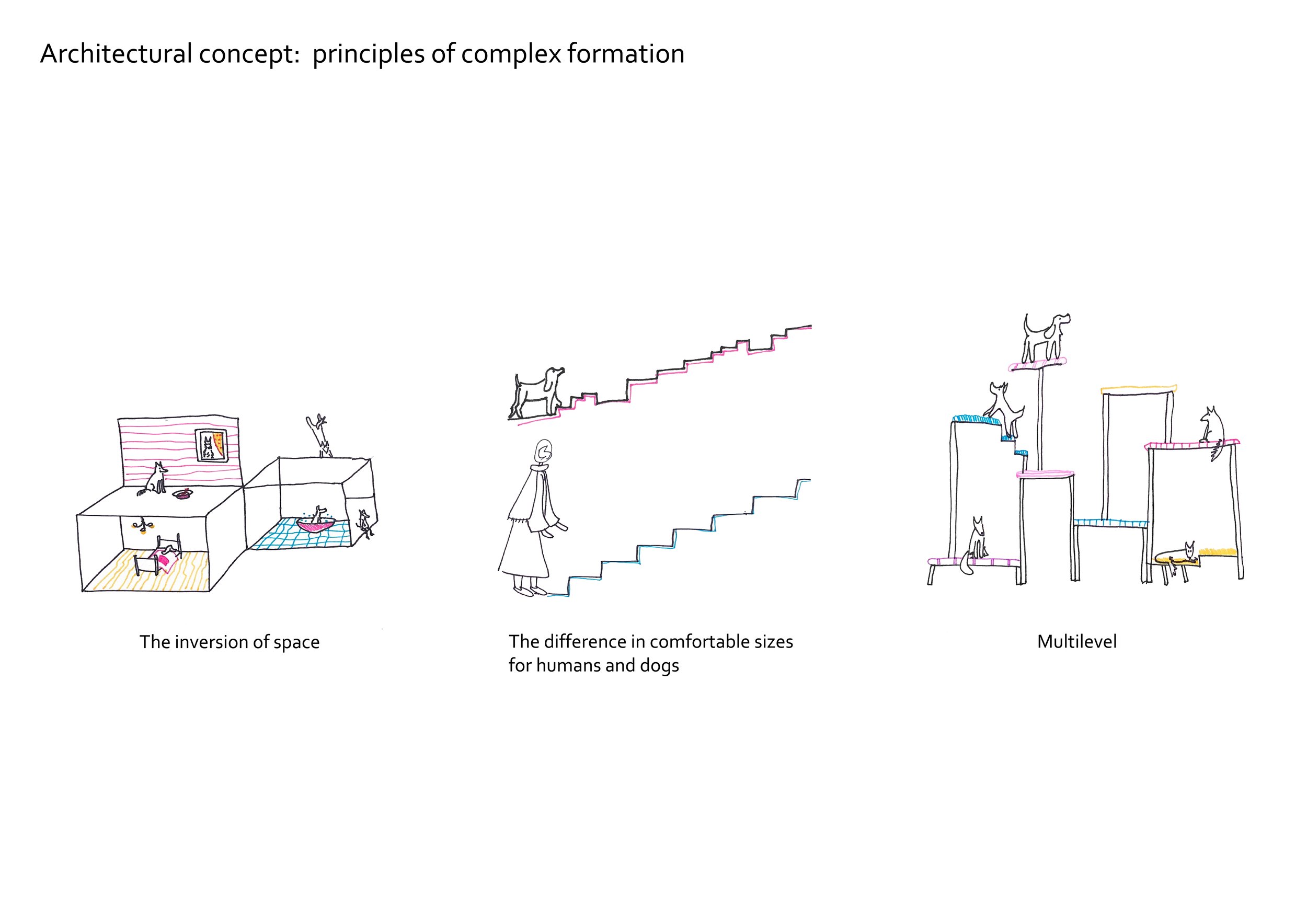
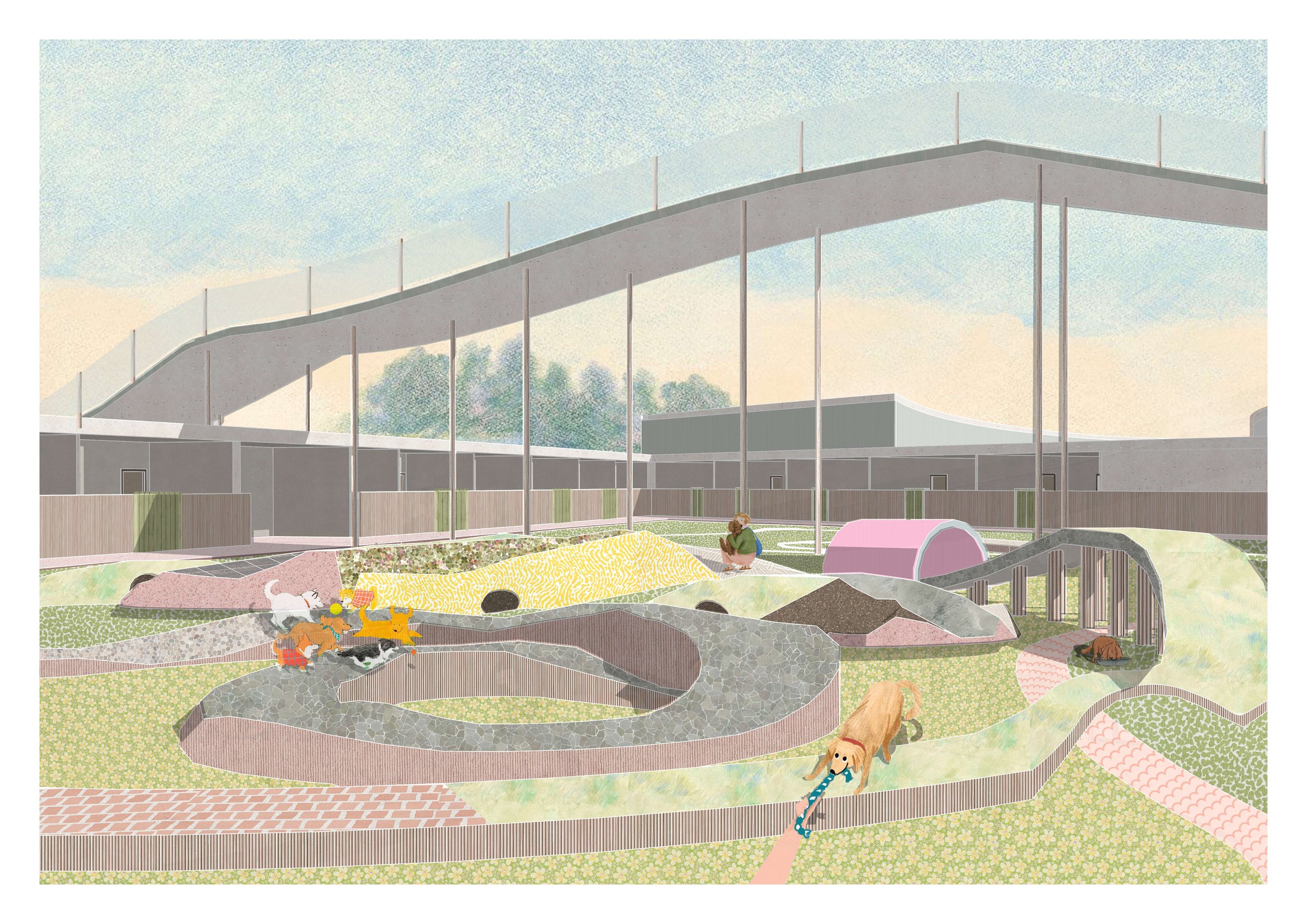
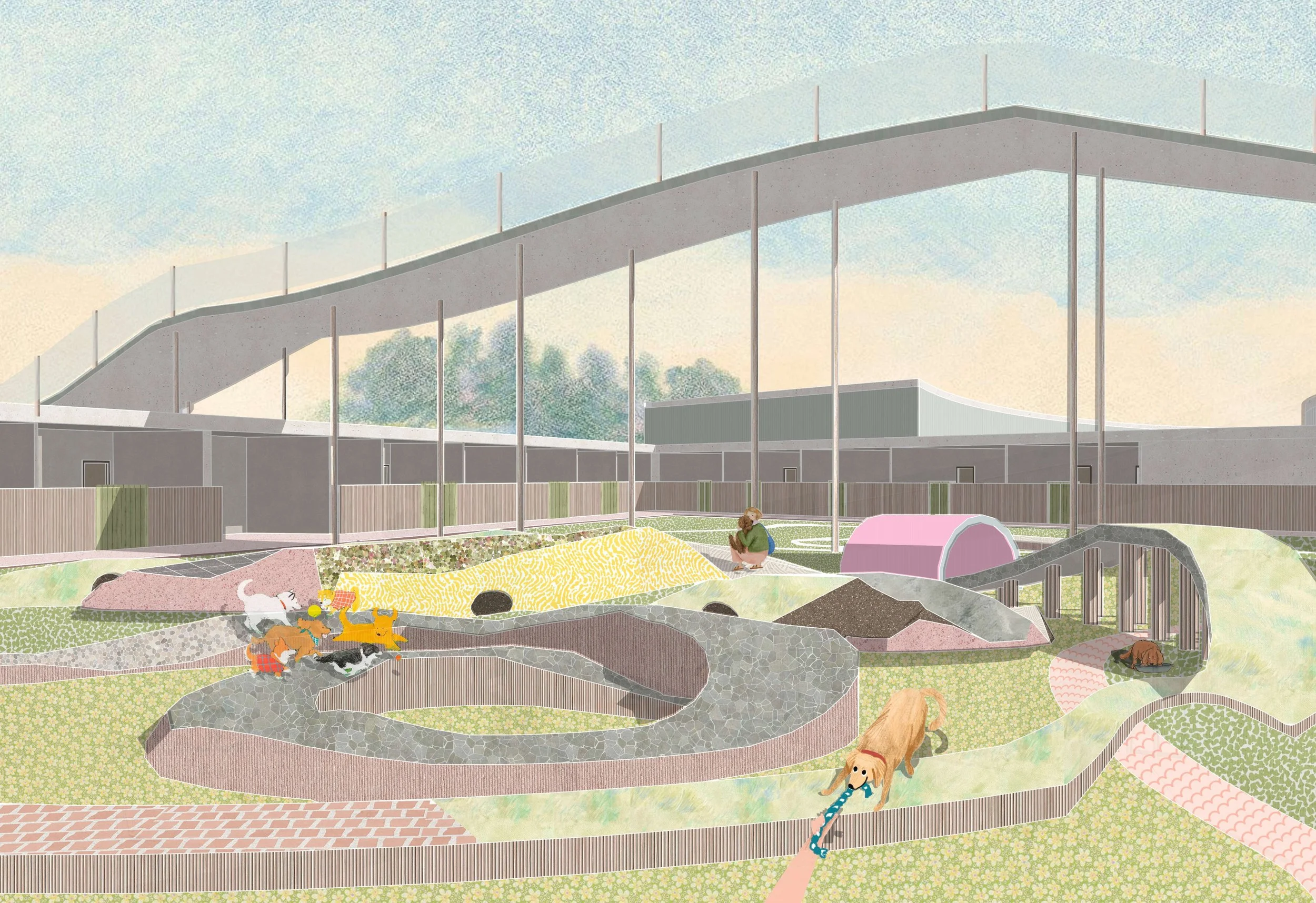
The design concept is rooted in post-humanistic principles, rethinking the relationship between architecture and its non-human users. We blur the boundary between indoor and outdoor spaces, mimicking dogs’ natural perception of the environment. Vertical freedom is key: multi-level structures provide animals with the choice of elevation, boosting their comfort and psychological well-being. Every detail is scaled to animal needs — from step height to passage width — ensuring spaces are truly user-friendly for our four-legged residents.
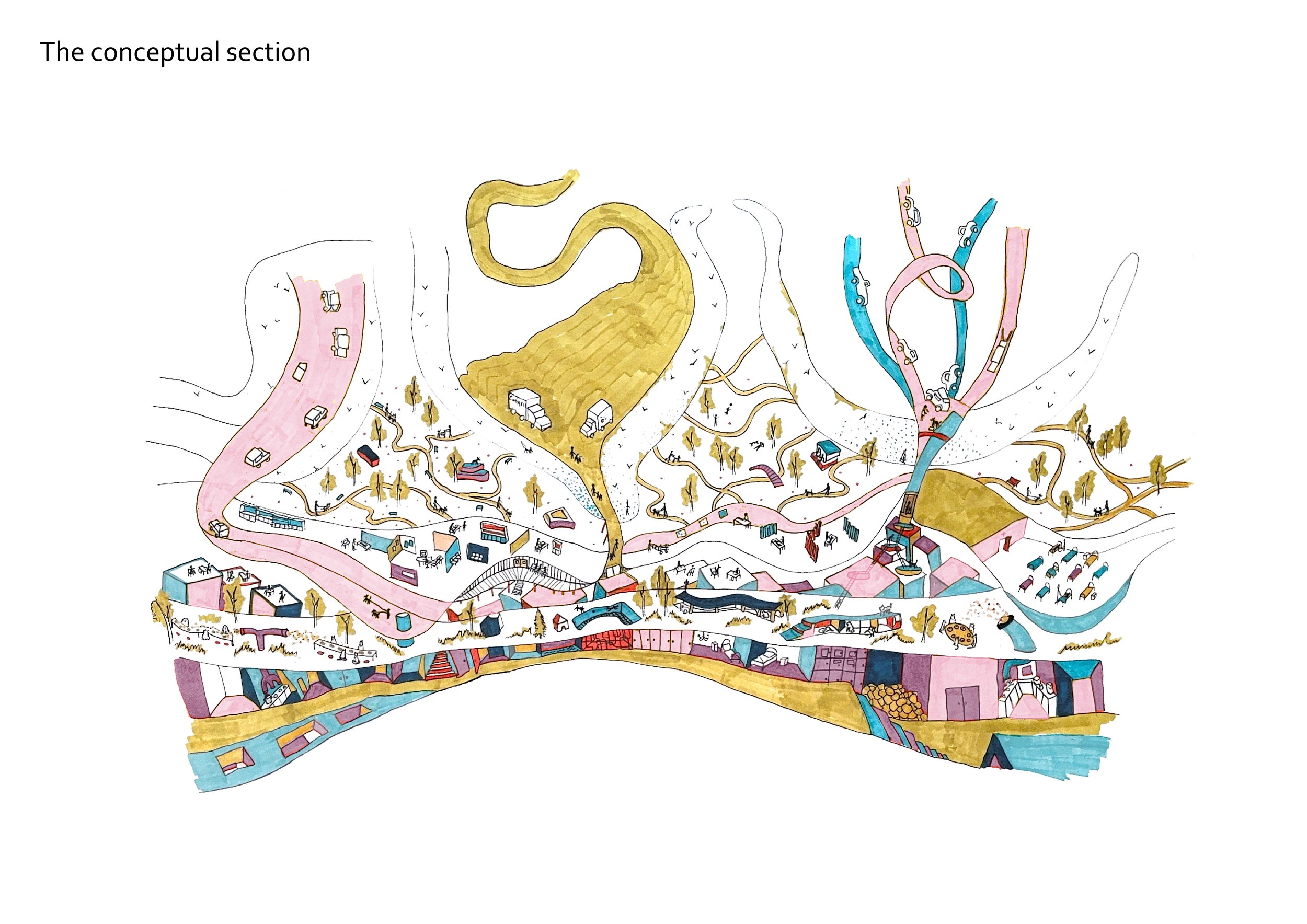
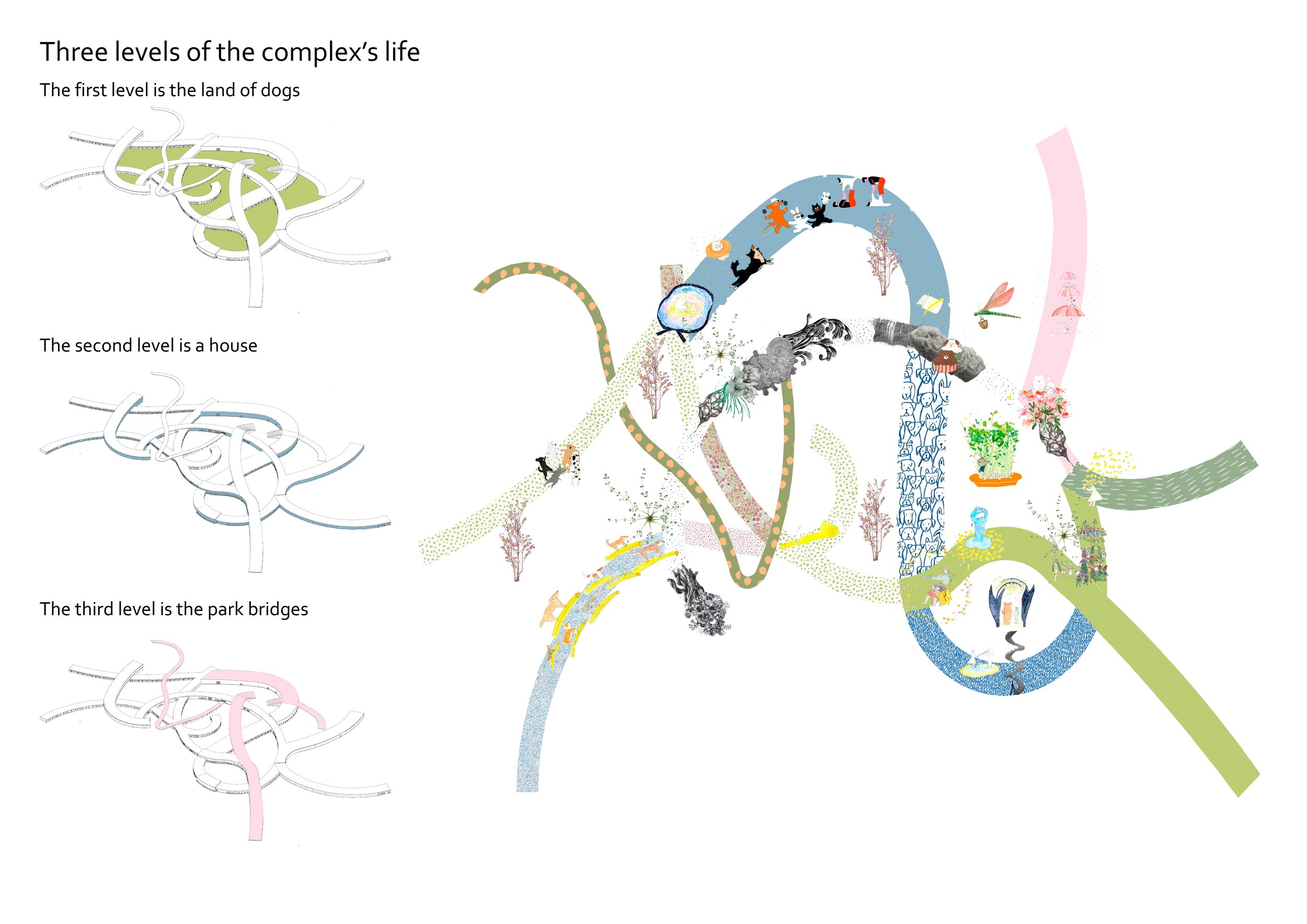
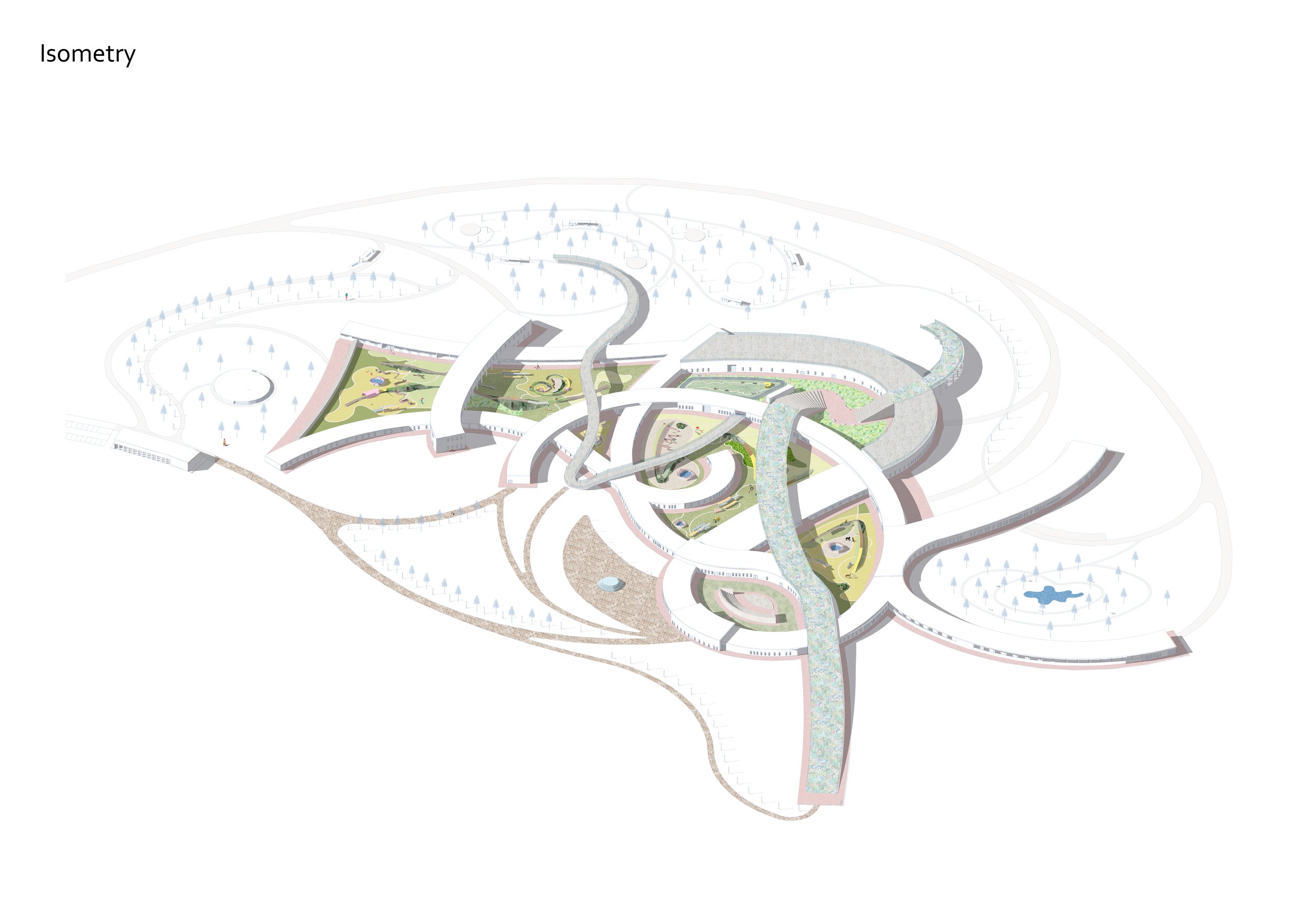
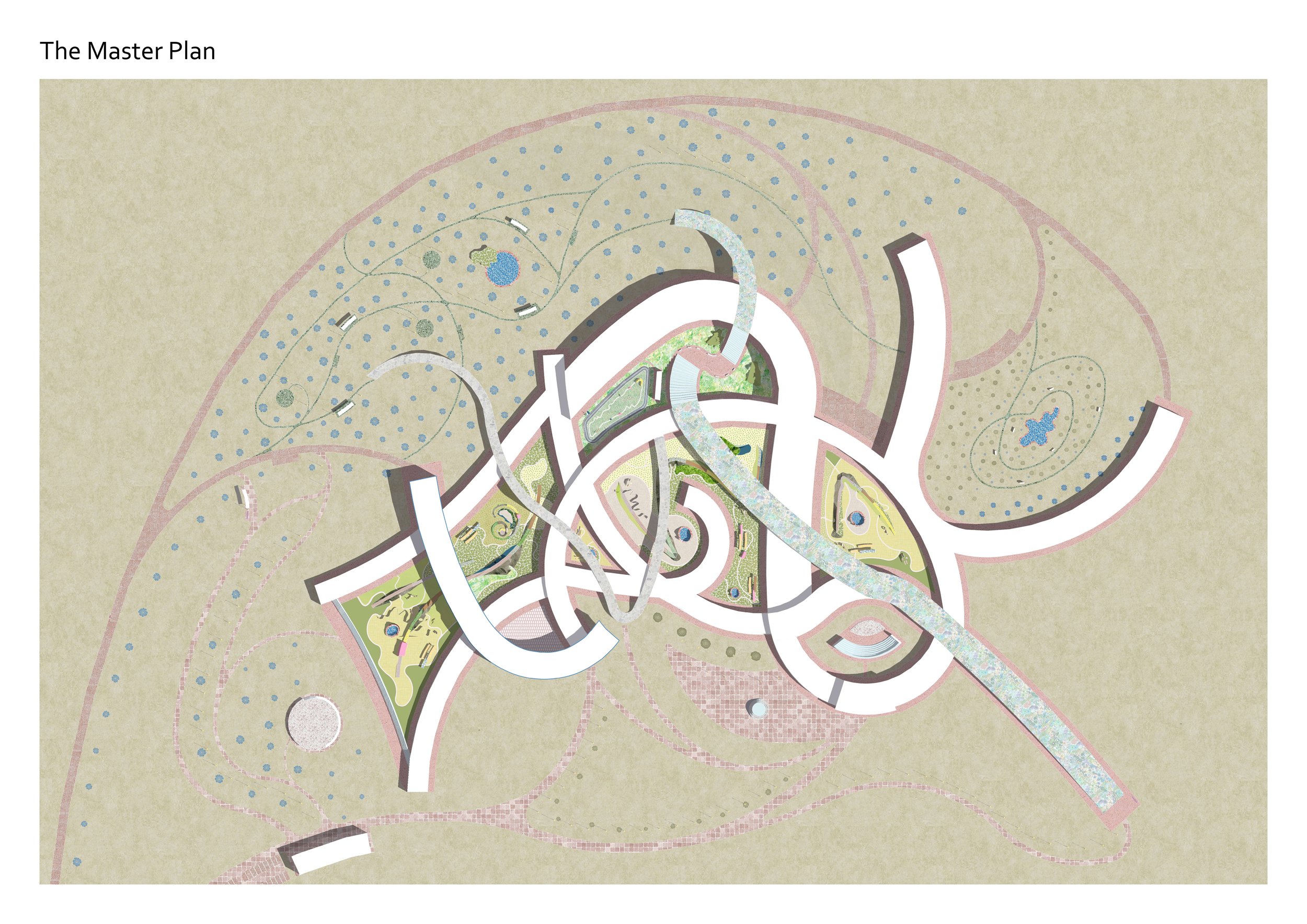
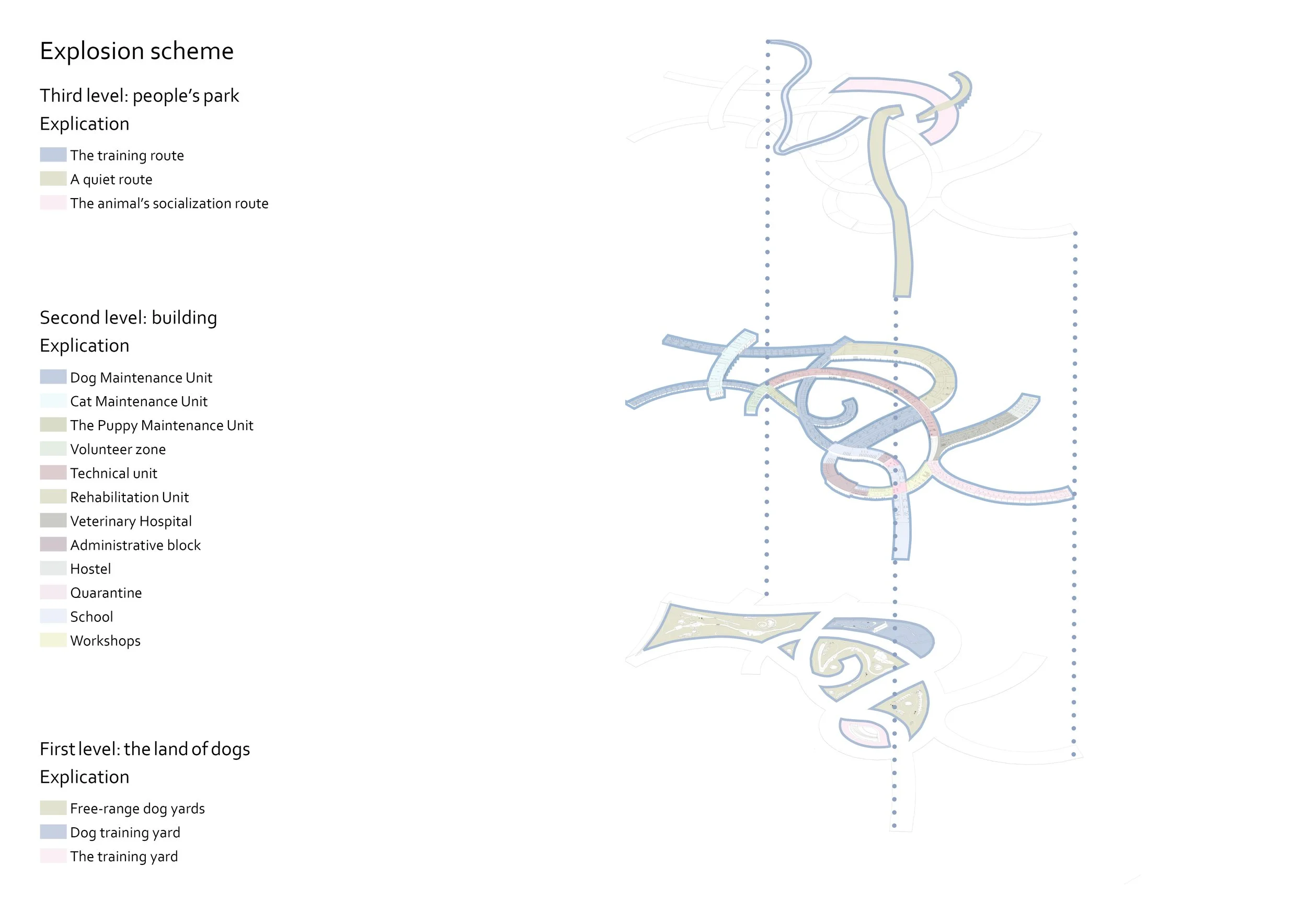
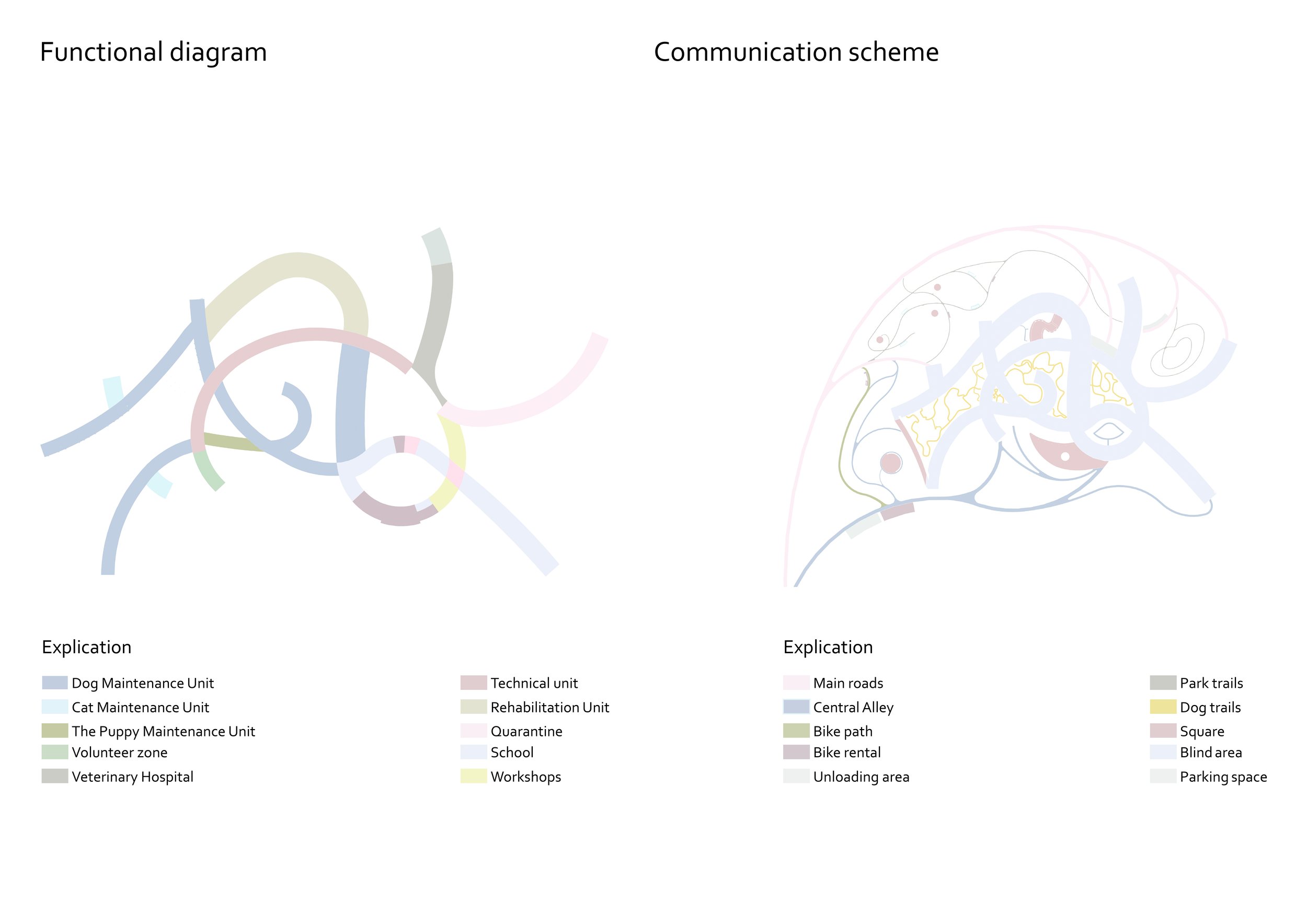
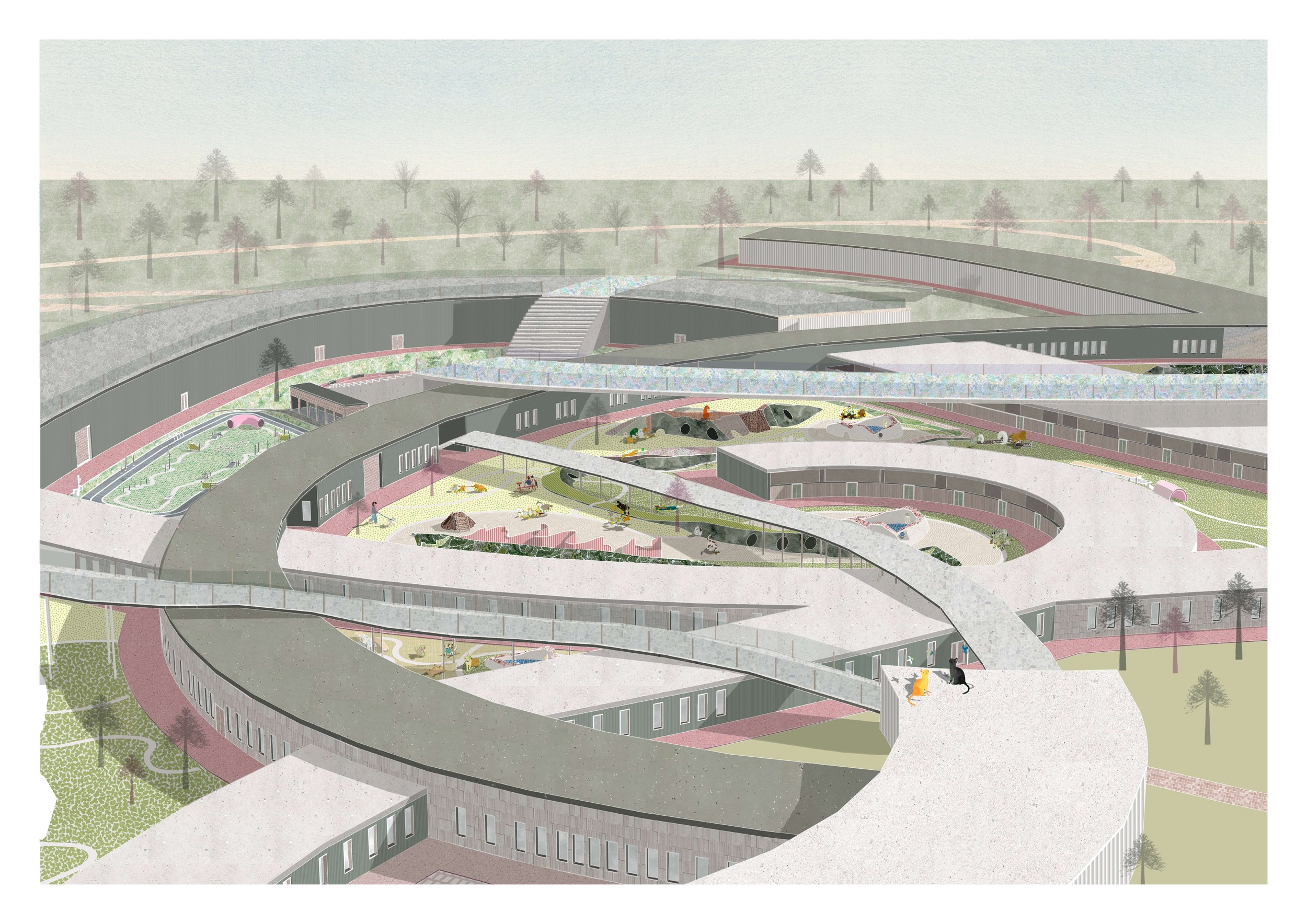
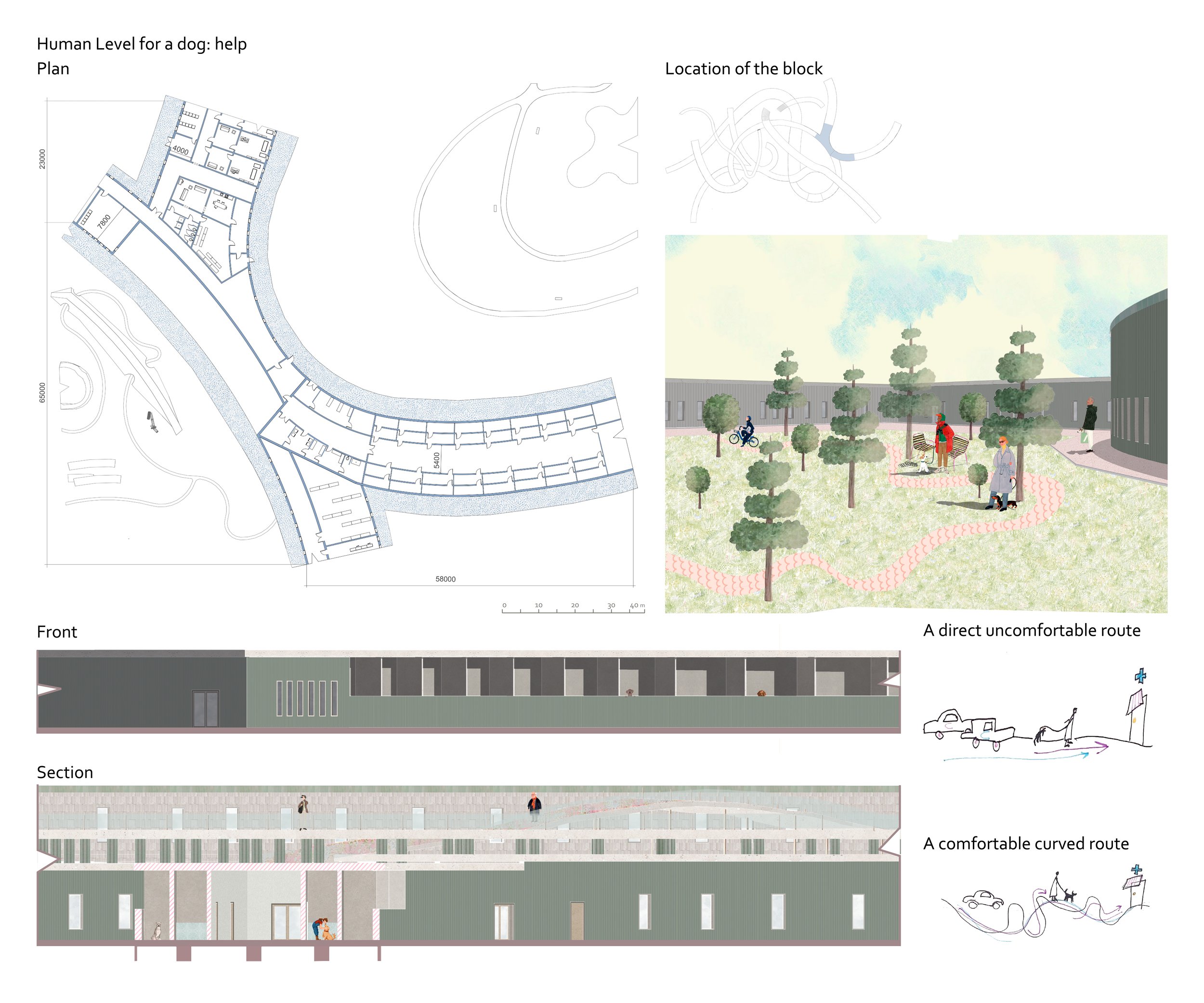
The complex unfolds in three interconnected layers. At the heart lies the «ground of dogs» — a purpose-built living area where animals can thrive. A support building encircles it, housing all essential services: from feed preparation to storage facilities. The outer layer takes the form of a park shell — a gentle transition zone. Here, visitors can pass through without direct contact with animals, gradually overcoming any fear and building empathy through observation.
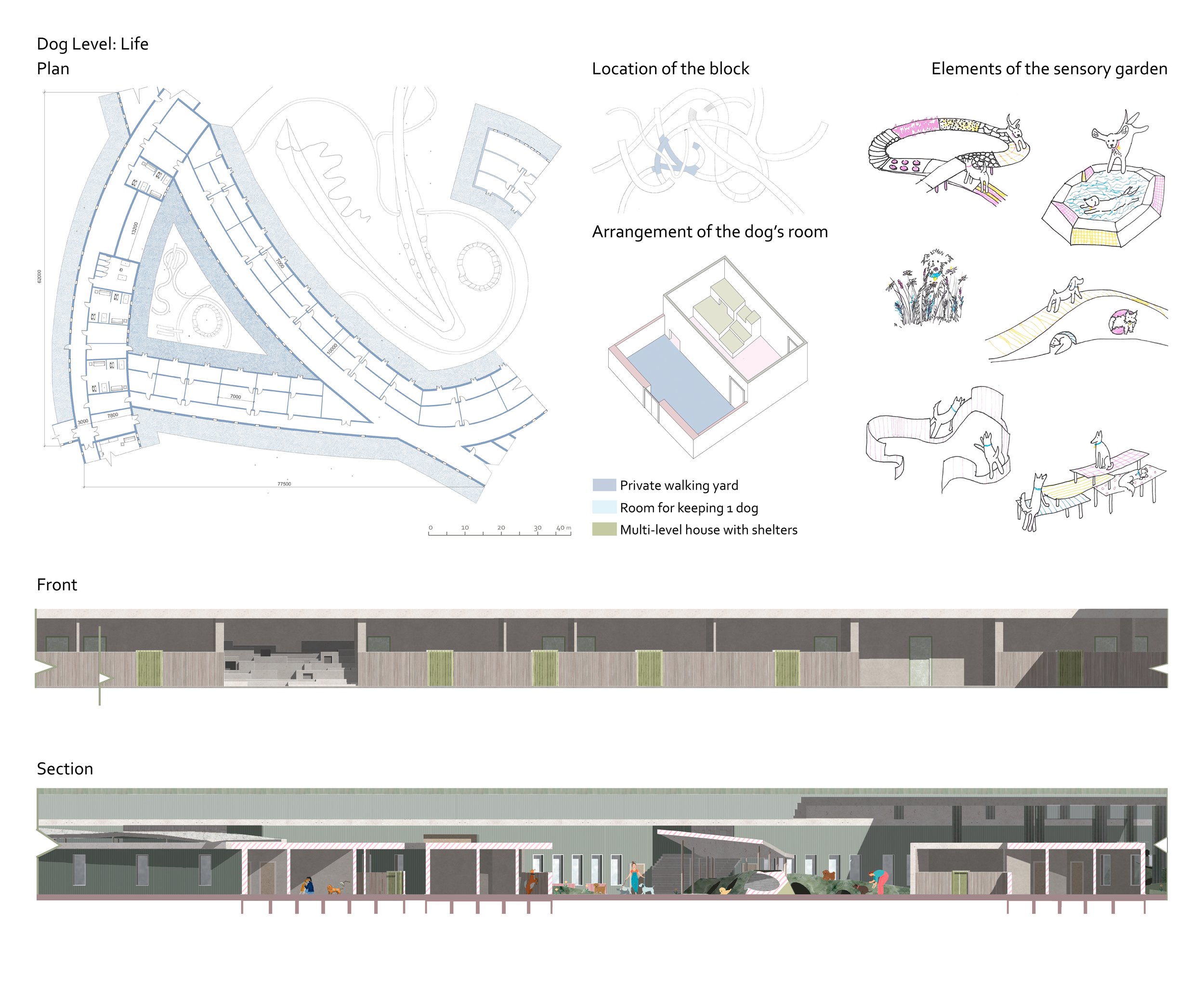
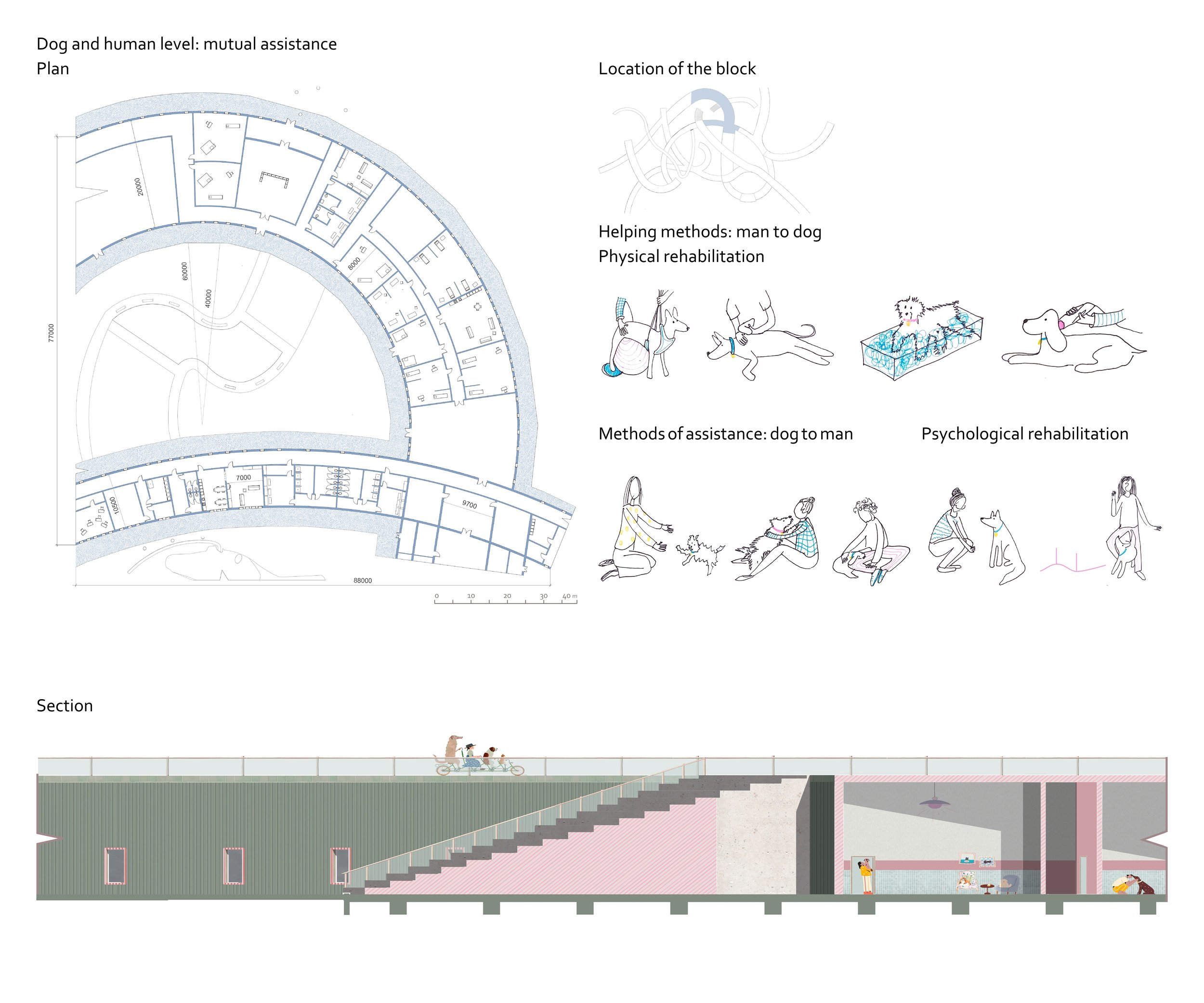
The shelter’s interior is a carefully curated mix of functional zones. Living areas offer flexible accommodation: rooms of varying sizes accommodate 1–3 residents each, creating a homely atmosphere. The veterinary hospital is designed with animal comfort in mind — «slow-movement» corridors and rest zones minimise stress during medical procedures. Adjacent rehabilitation spaces combine cynological training halls with therapy rooms for kinesiotherapy, hydrotherapy, and canistherapy sessions.
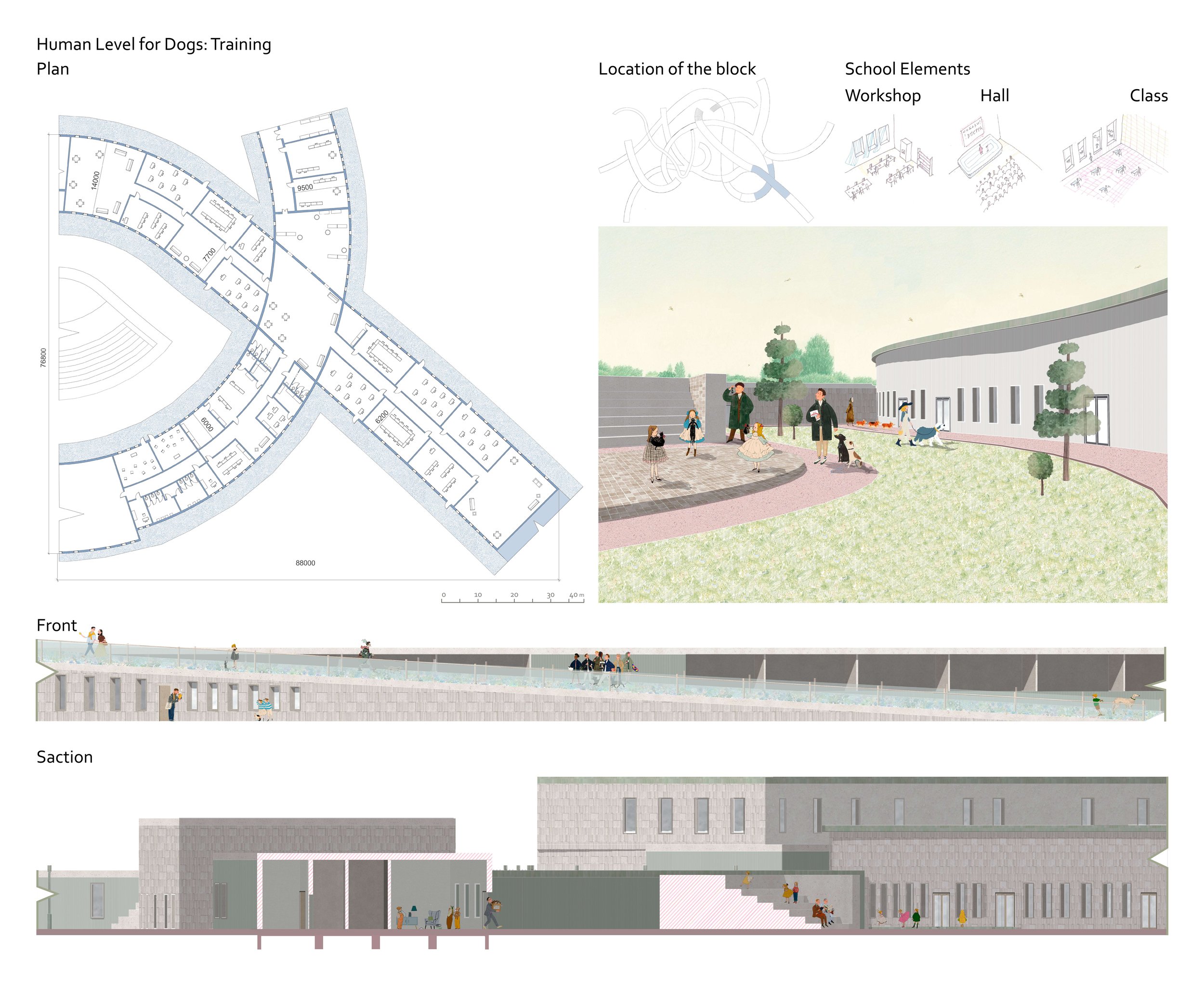
Education lies at the core of our mission. Classrooms with views of interior courtyards allow visitors to observe animals in a natural setting, fostering understanding without intrusion. Adjacent workshops and a store offer hands-on engagement: visitors can create useful items for pet care, bridging the gap between humans and animals through shared activity.
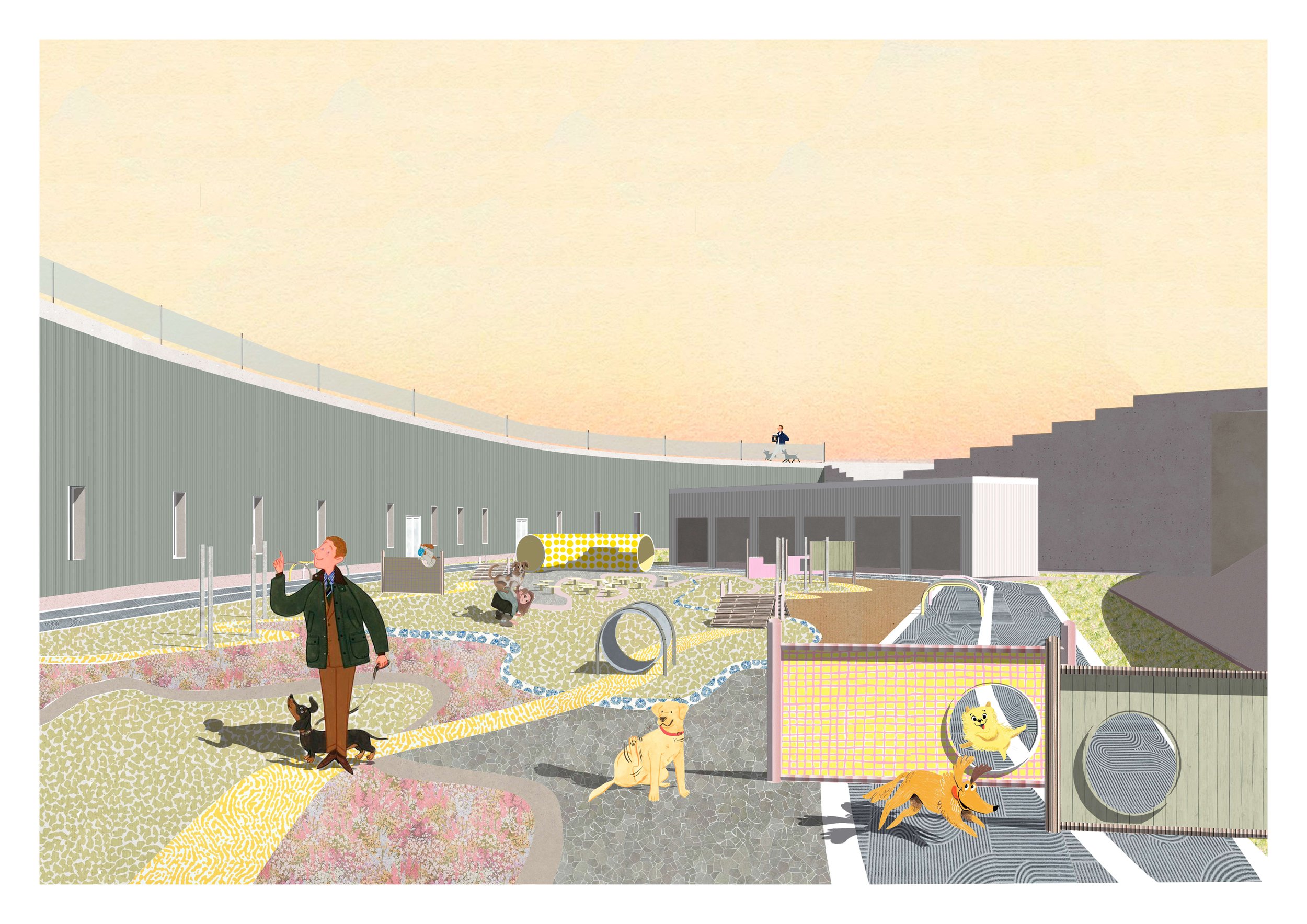
Outdoor areas are equally thought-out. Sensory gardens, multi-level exercise yards, and swimming pools stimulate physical and mental well-being, giving animals the freedom to explore and play. These spaces are not just functional — they are an integral part of the healing process, helping residents prepare for life beyond the shelter.
This shelter complex transcends its utilitarian purpose. It is a living laboratory where architecture becomes a tool for social change, a bridge between species. By creating an environment where both humans and animals can flourish, we hope to rewrite the story of stray animals — turning compassion into action, and shelters into homes.