Project date: 2026
Type: Academic | Thesis
Tutor: Egor Orlov
Author: Andrey Evteev
Institute: Peoples' Friendship University of Russia
Course: 4
Theme: small architectural form
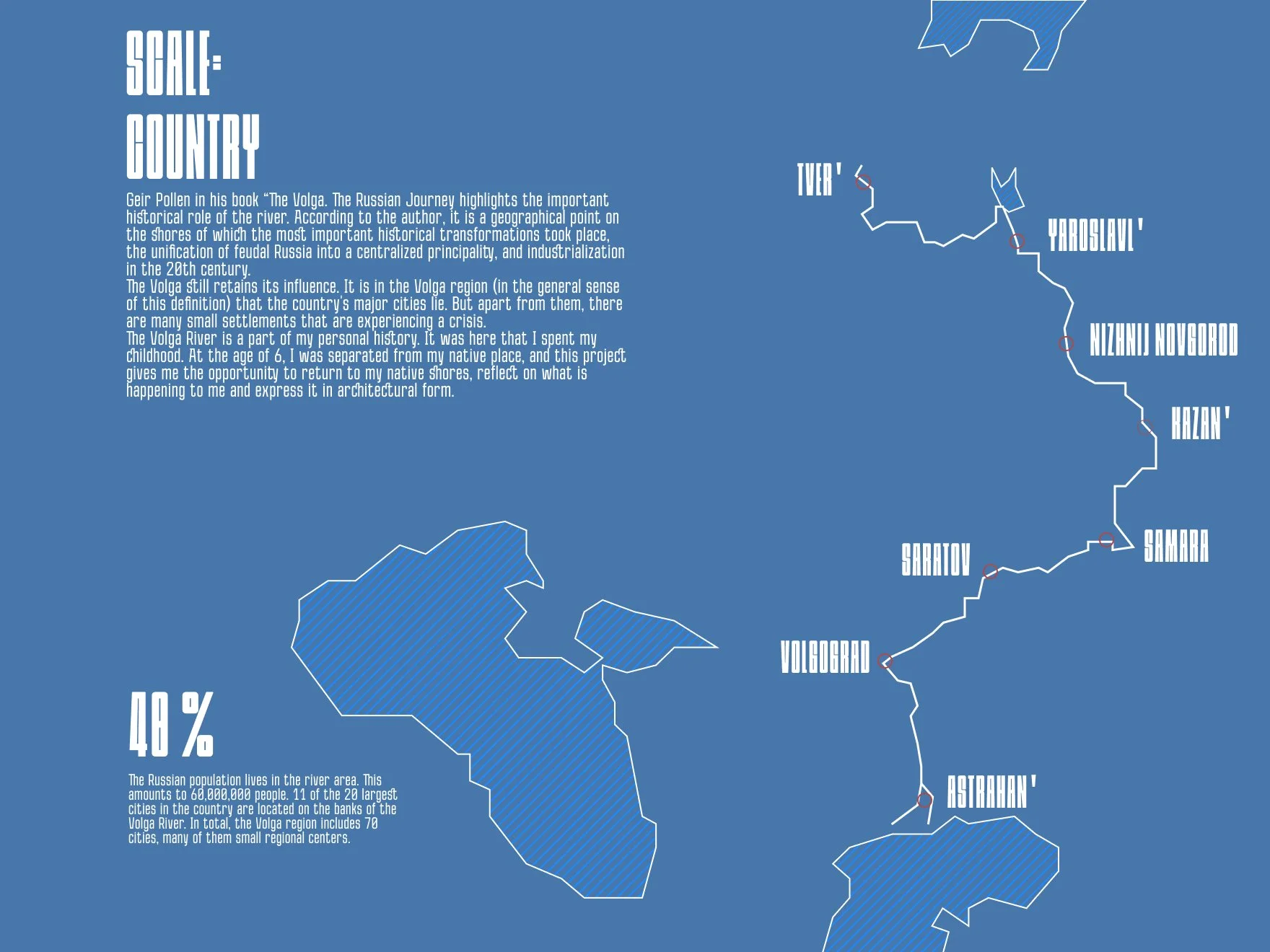
In his book “The Volga: A Russian Journey”, Geir Pollen highlights the river’s important historical role. According to the author, it is a geographical landmark on whose banks major historical transformations took place, including the unification of feudal Rus’ into a centralized principality and the industrialization of the 20th century.
The Volga continues to exert its influence today. It is in the Volga region that the country’s major cities are located. But in addition to these, there are many small settlements that are facing a crisis.
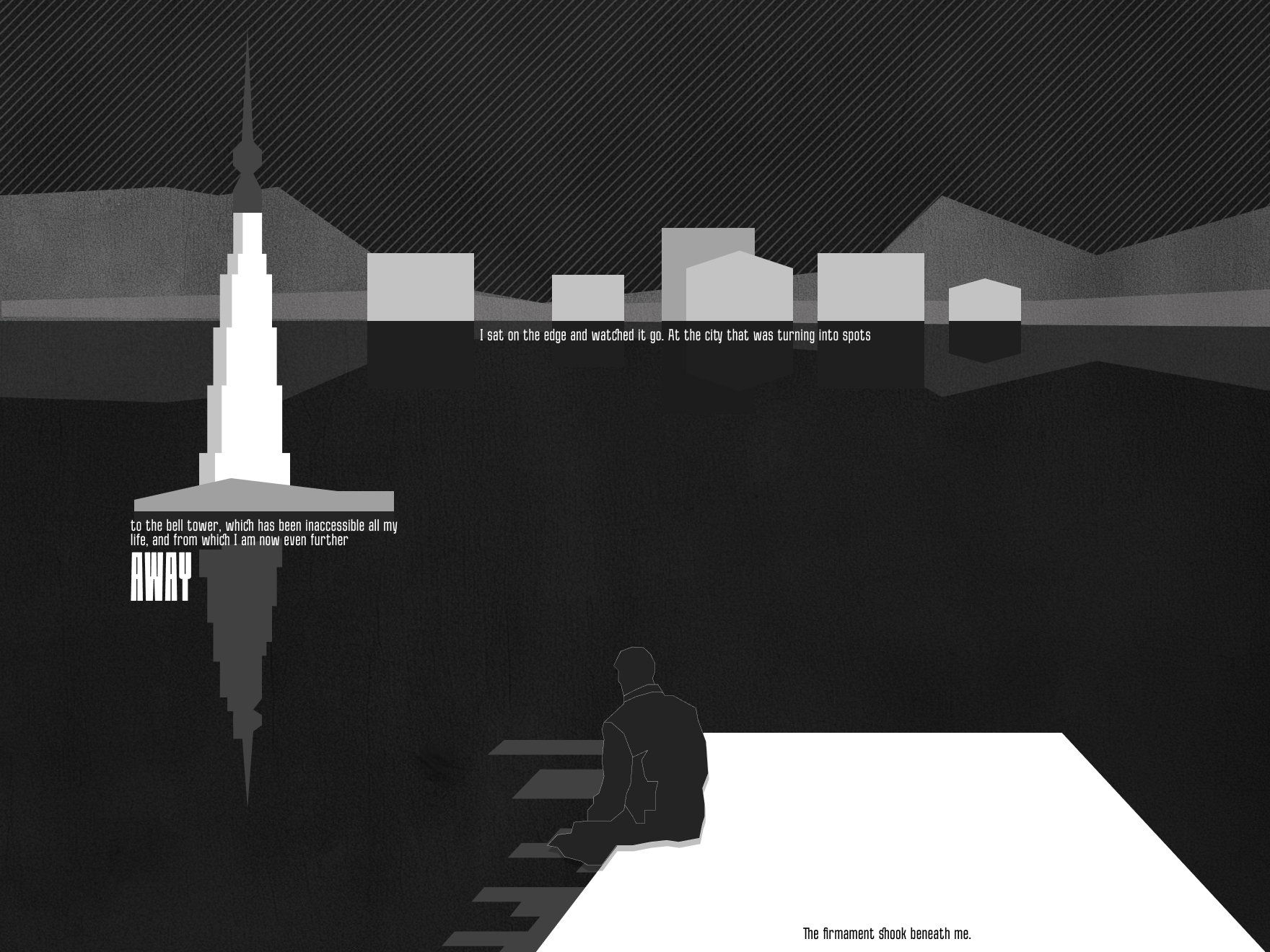
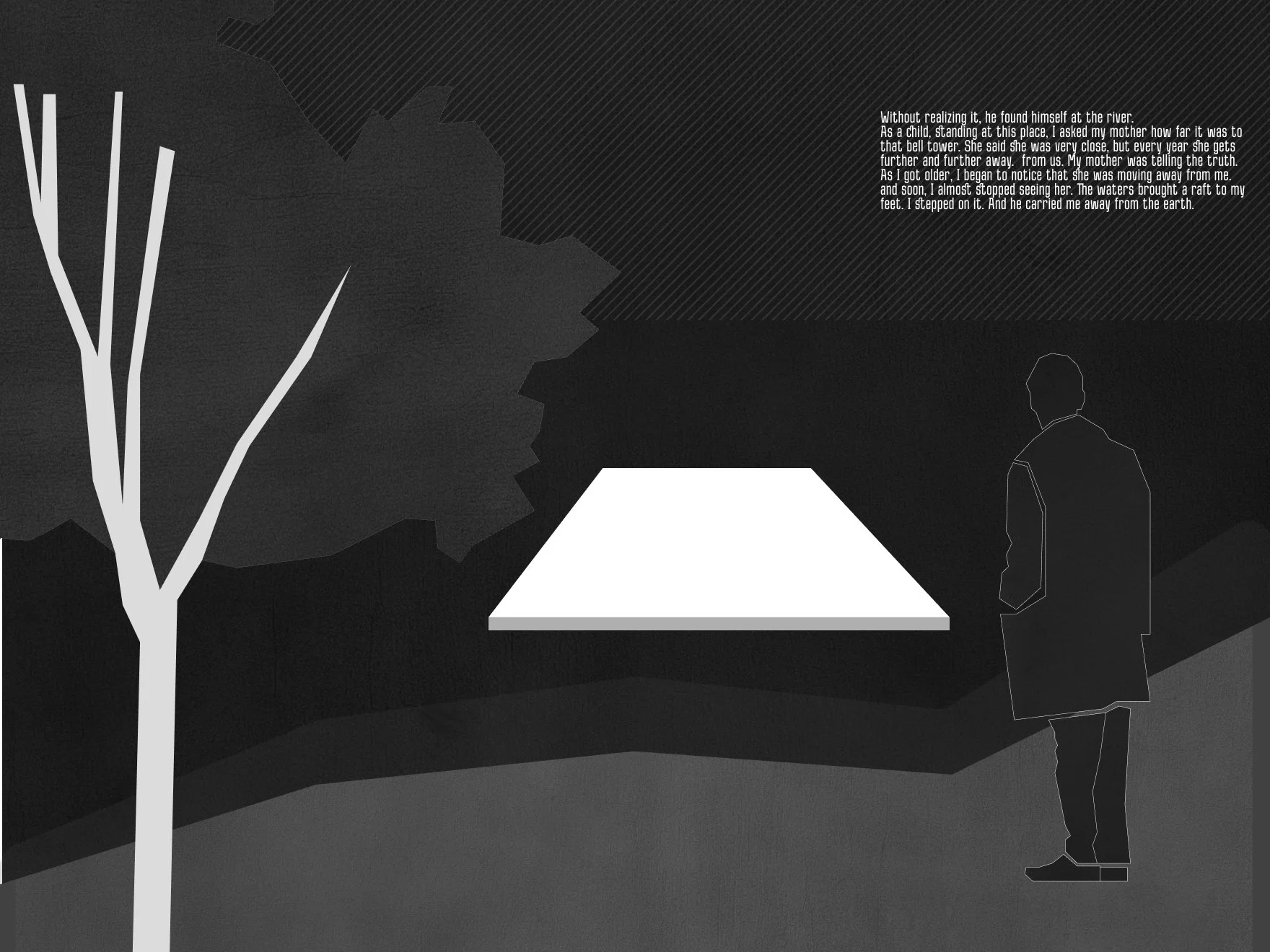
For me, the Volga is part of my personal history. This is where I spent my childhood. At the age of 6, I was separated from my hometown, and this project gives me the opportunity to return to those familiar shores, reflect on what has happened to me, and express it through architecture.
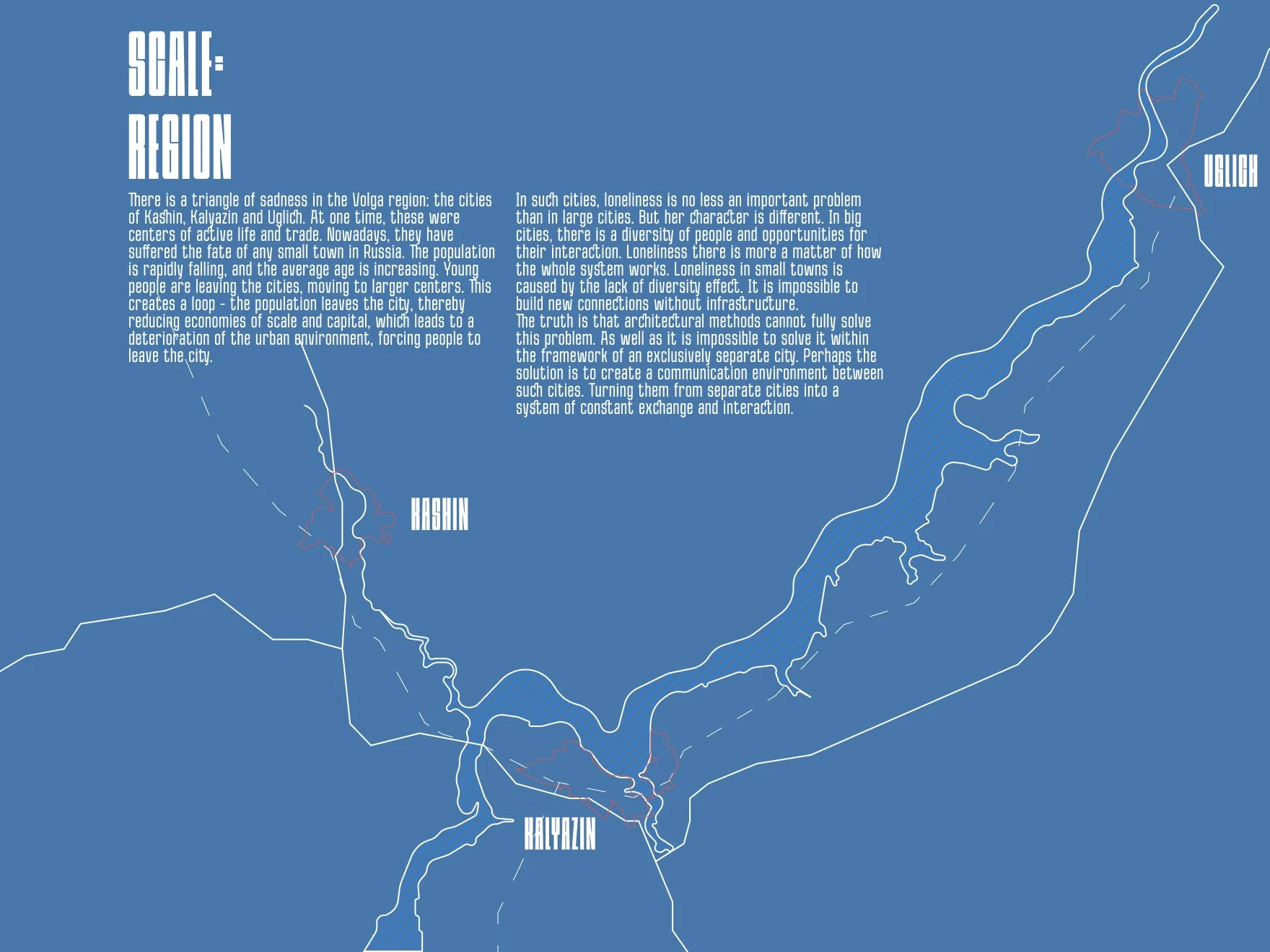
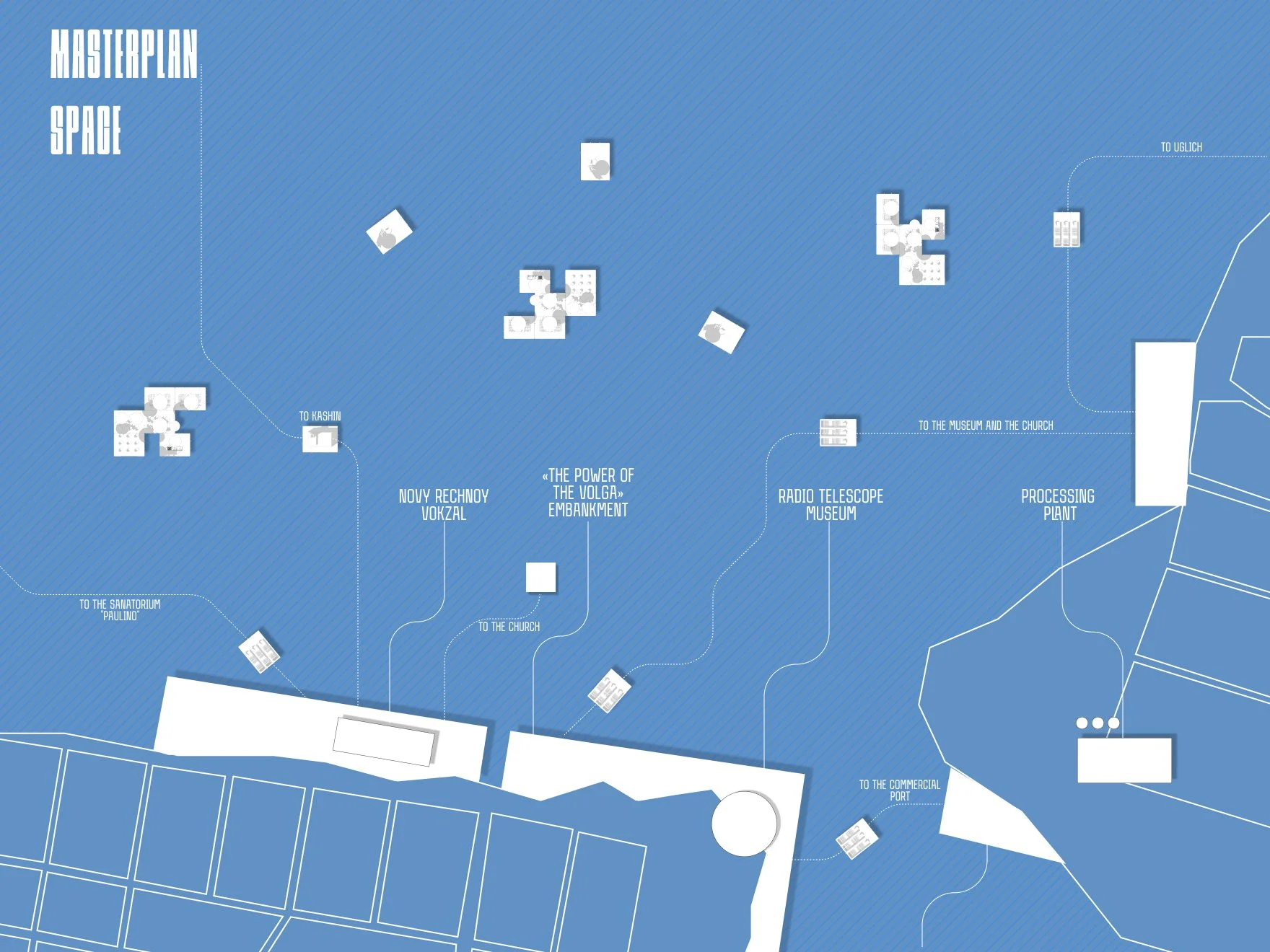
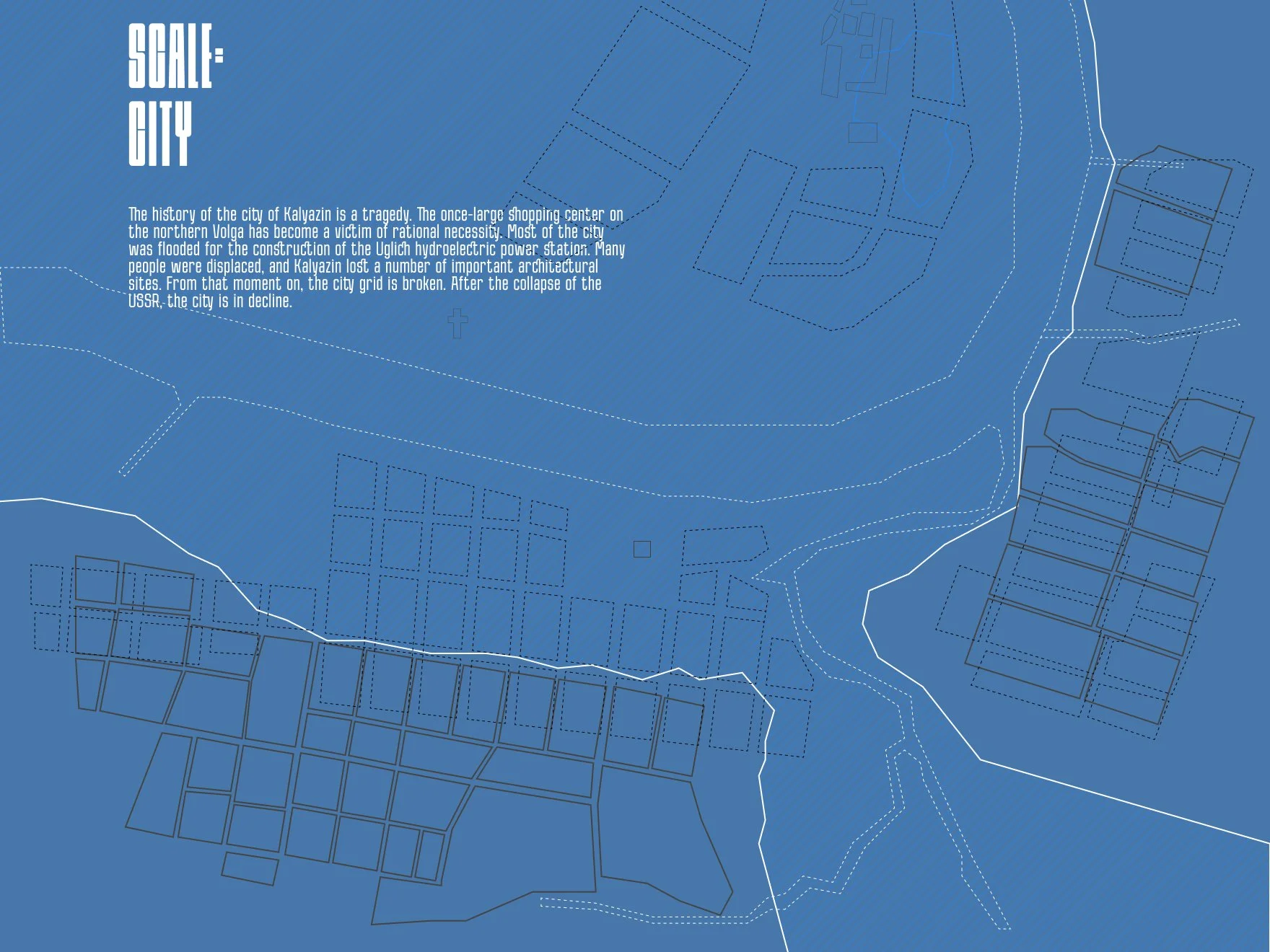
In the Volga Region, there is a “triangle of sorrow”: the cities of Kashin, Kalyazin, and Uglich. In their heyday, these were bustling centers of activity and trade. Today, they have suffered the same fate as any small town in Russia. Their populations are plummeting, and the average age is rising.
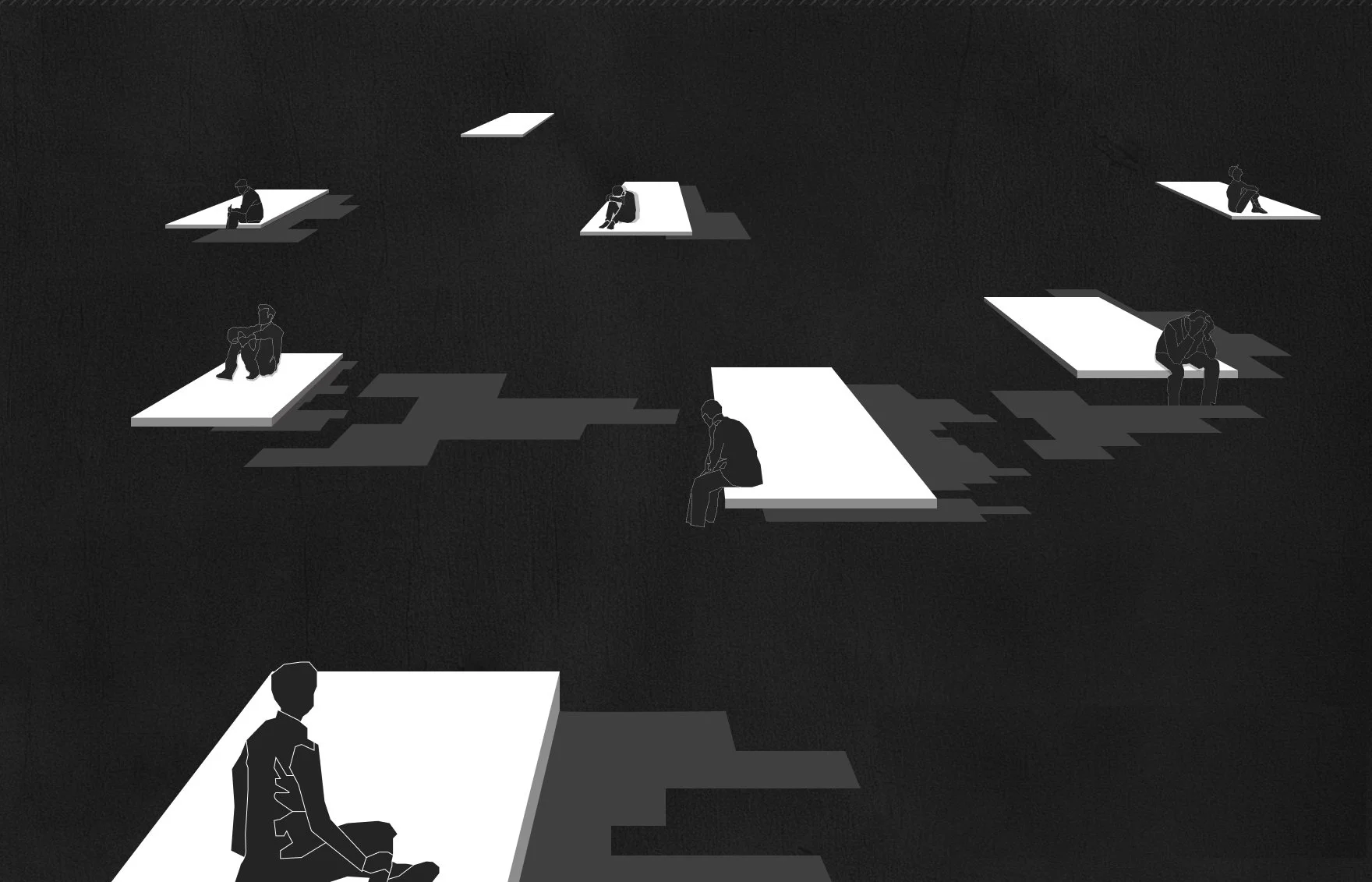
In such towns, loneliness is just as much of a problem as it is in large cities. Loneliness in small towns stems from the lack of diversity. It is impossible to form new connections without infrastructure. Perhaps the solution lies in creating a communicative environment among these towns—transforming them from isolated towns into a system of constant exchange and interaction.
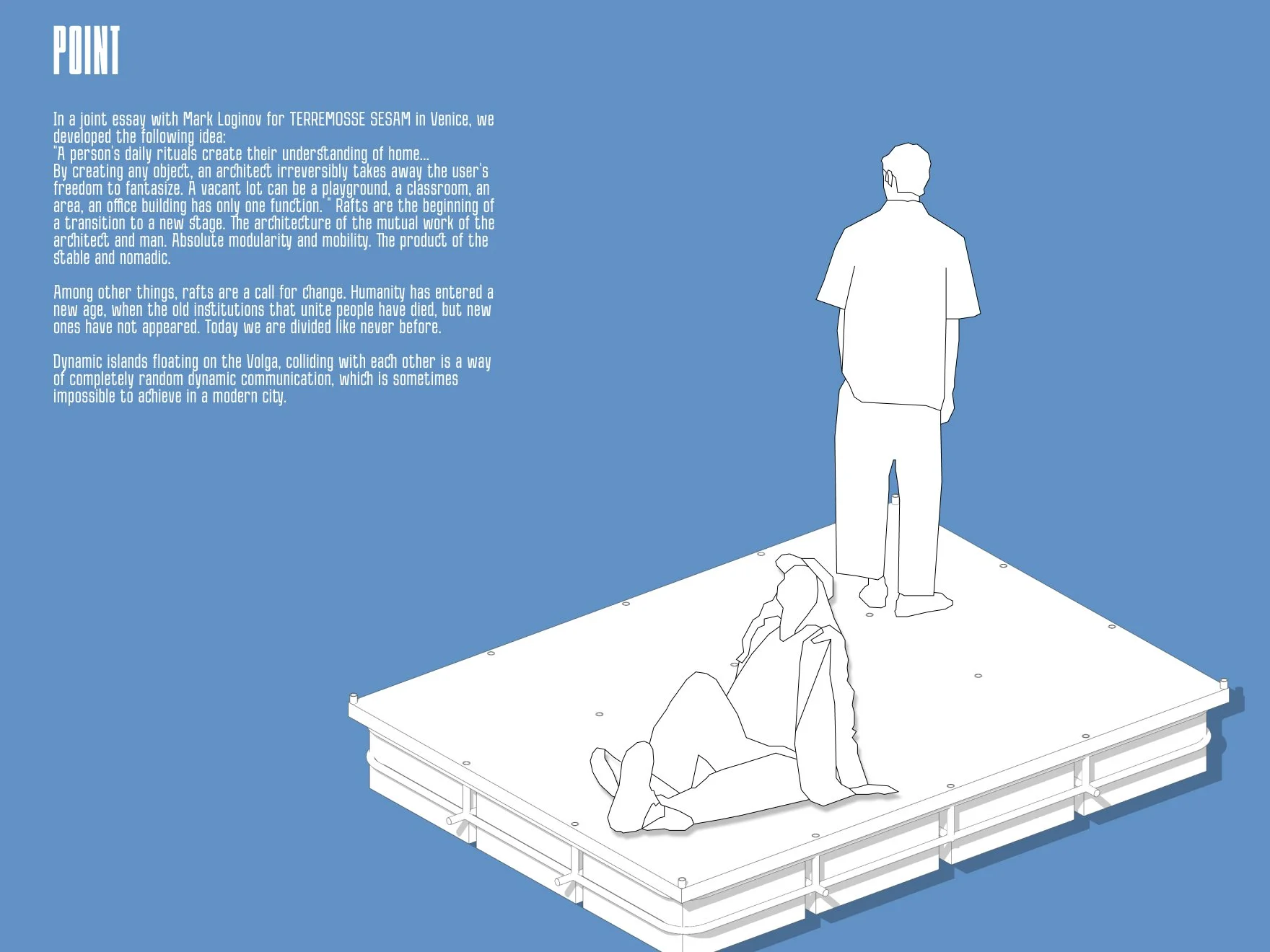
In a joint essay with Mark Loginov for TERREMOSSE SESAM in Venice, we developed the following idea: “A person’s daily rituals shape their understanding of home... When an architect creates any structure, they irrevocably deprive the user of the freedom to imagine. A vacant lot can be a playground, a classroom, or a public square, whereas an office building has only one function.” Rafts mark the beginning of the transition to a new stage.
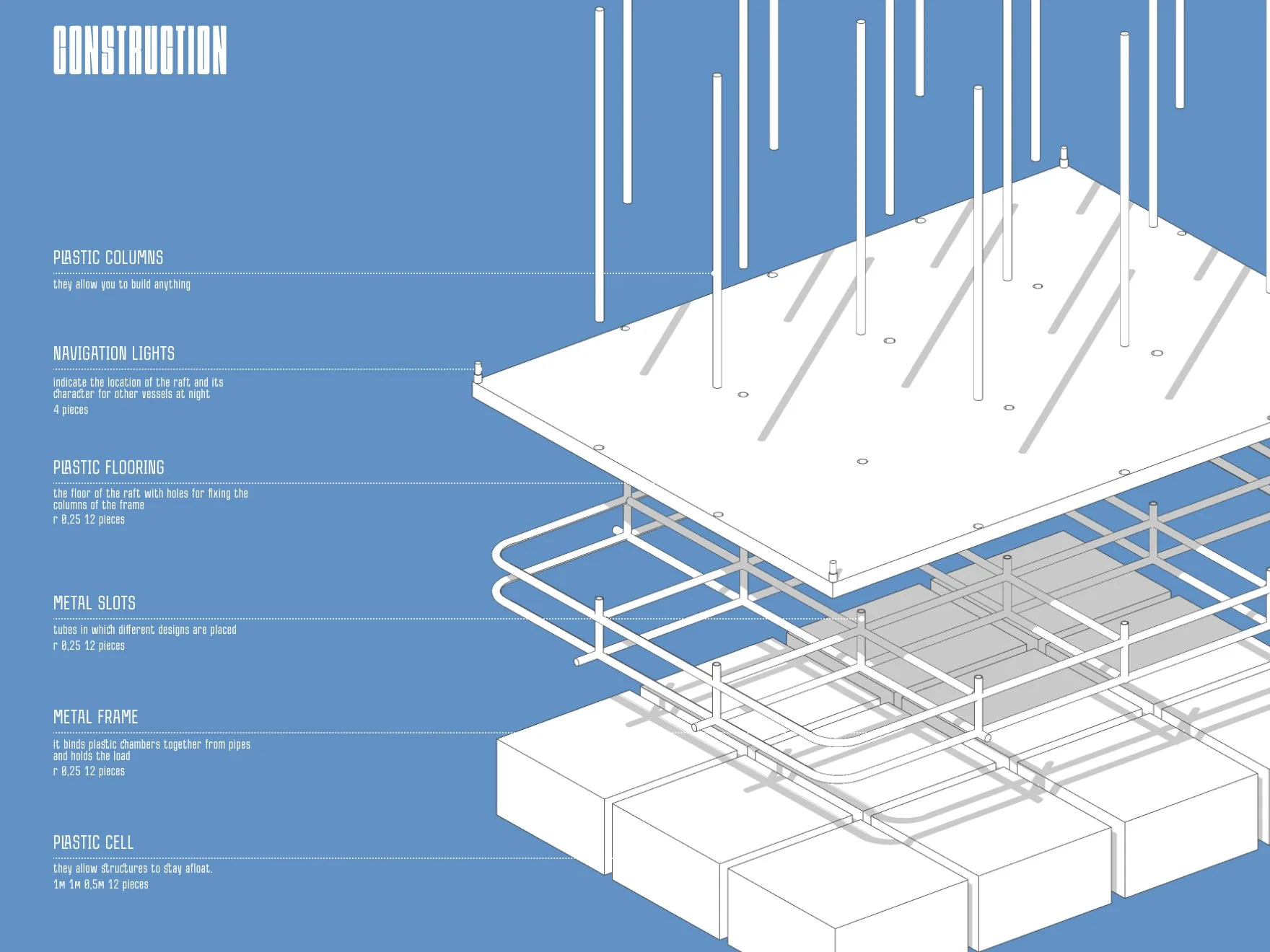
The architecture of collaboration between the architect and the individual. Absolute modularity and mobility. The creation of the stable and the nomadic.
Among other things, the rafts are a call for change. Humanity has entered a new era in which the old institutions that united people have died out, and new ones have not yet emerged.
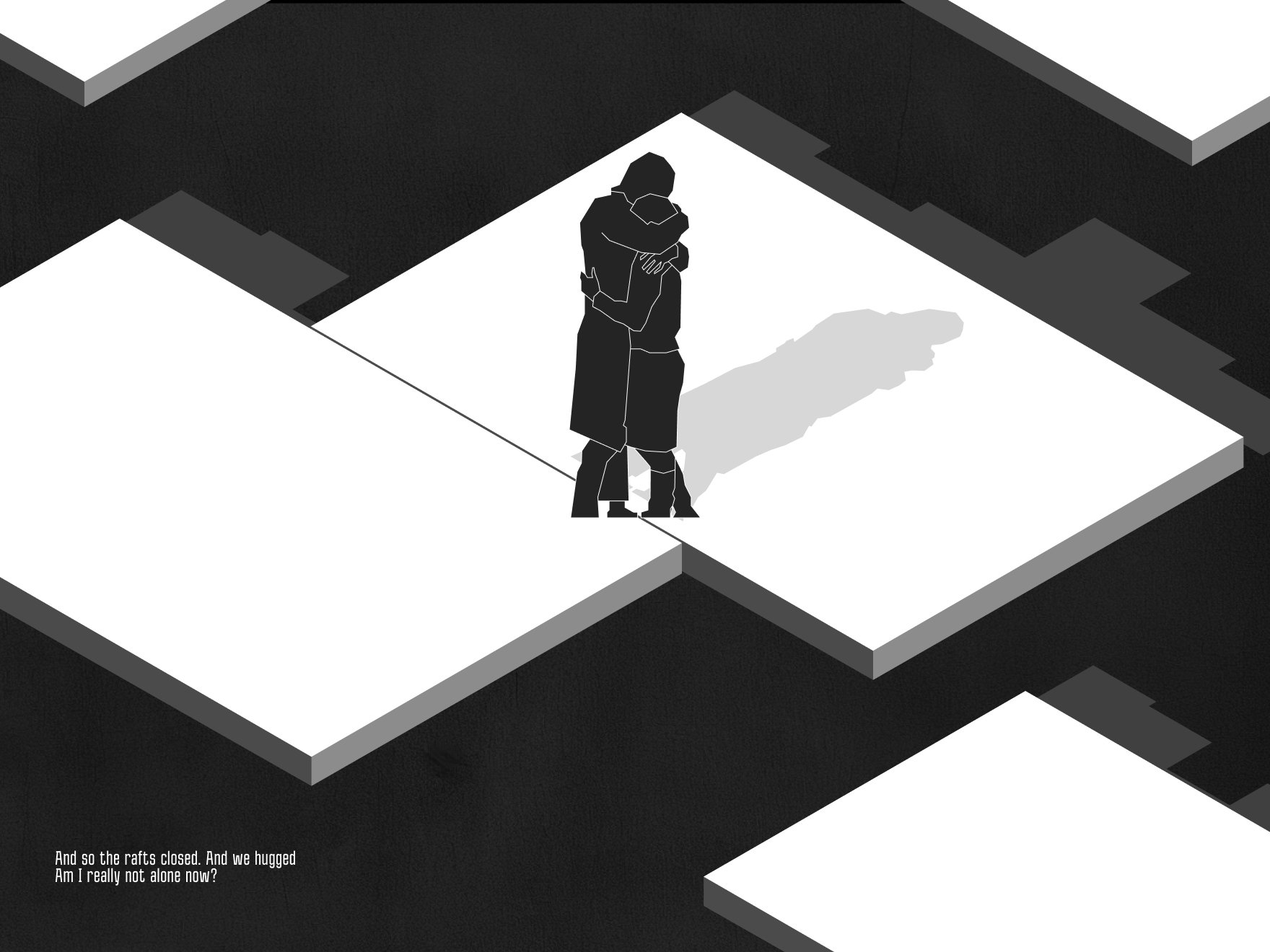
Dynamic islands floating down the Volga, colliding with one another, represent a form of completely random, dynamic communication that is sometimes impossible to achieve in a modern city.
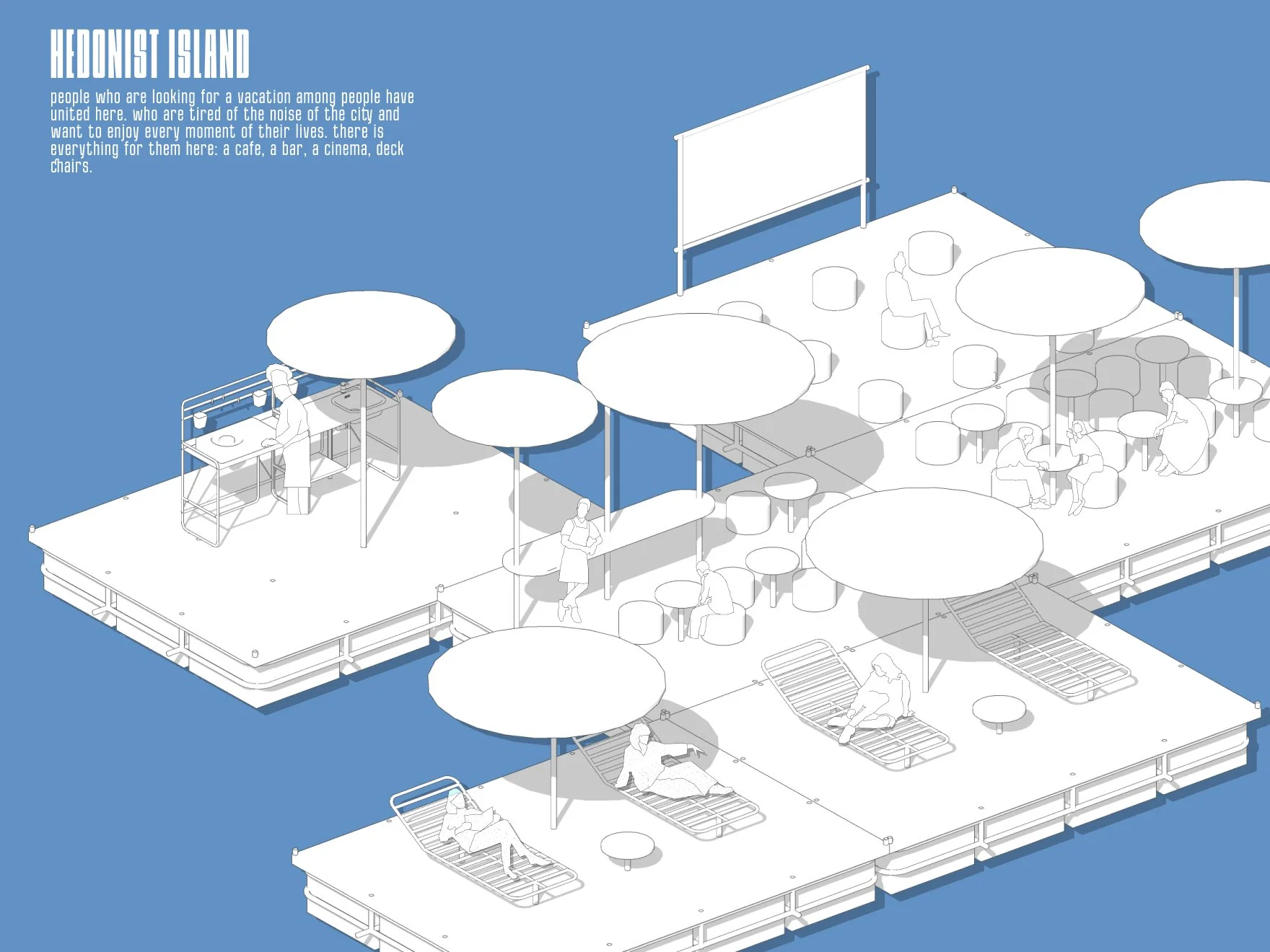
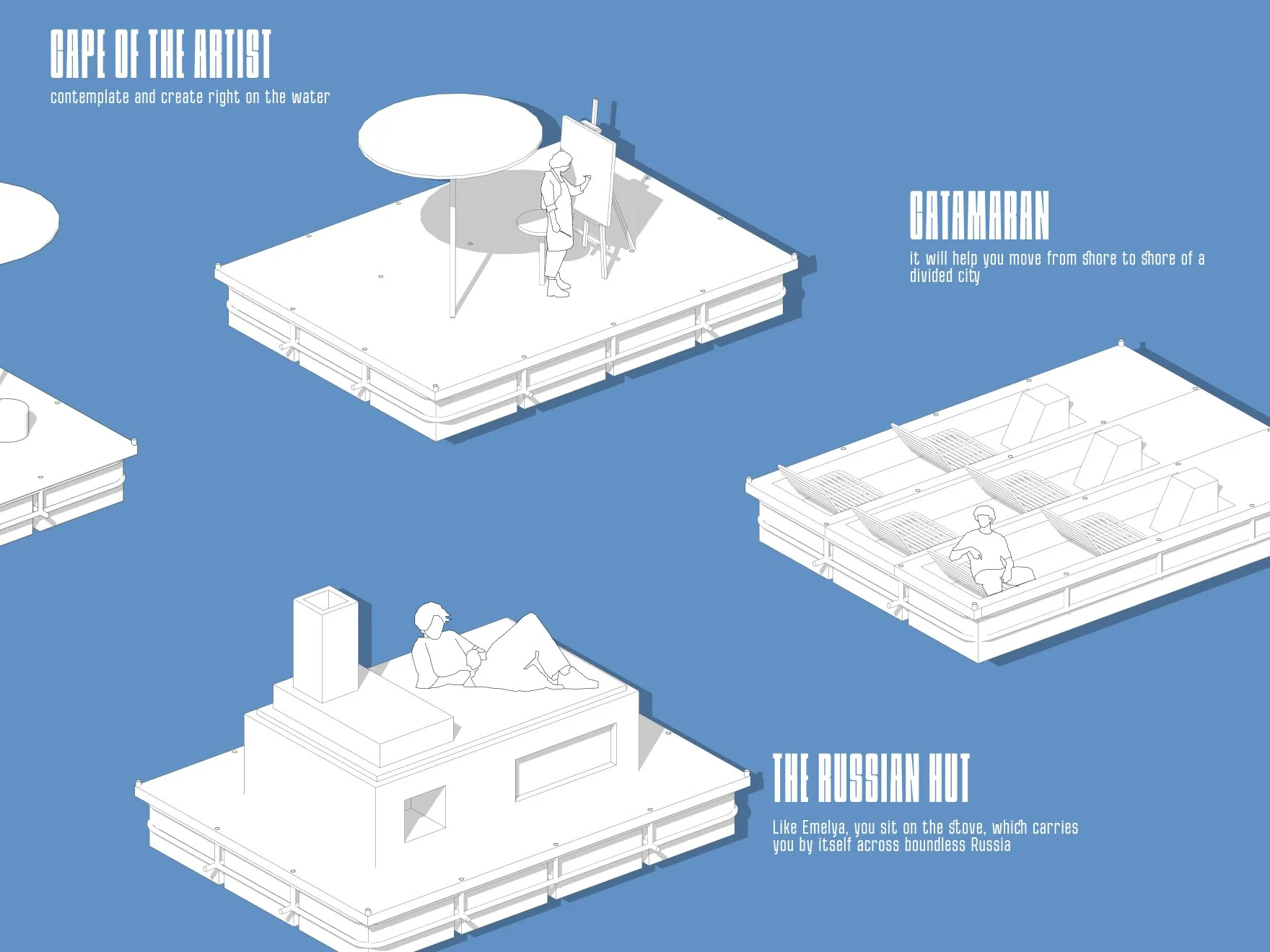
As a result of these trips and encounters, new ways of life emerge—ranging from pragmatic transportation to collective hedonism on the water.
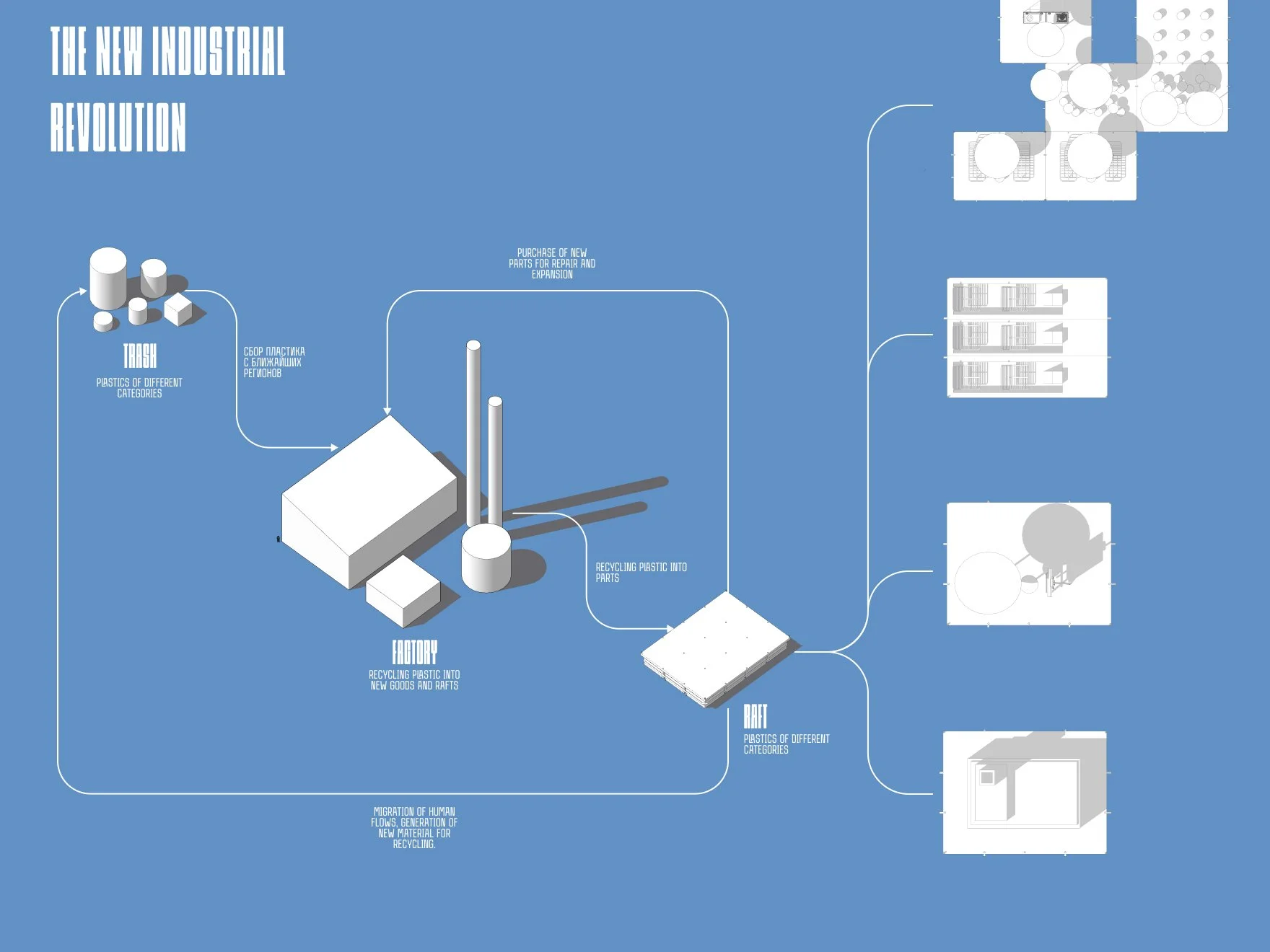
The raft system is also revitalizing life in the cities of the “Triangle of Sorrow”—a new plastic recycling industry is gradually reviving the city’s economy, diversifying its economic profile, and expanding raft production to encompass all cities along the Volga.