International Student Works Competition ARCHI START, 2026
Bronze Diploma XXXIII Interregional Architectural Festival "Zodchestvo Russia 25" Review and Competition: Creative Works of Students from Architectural Universities and Colleges Nomination: Creative Works of University Students from Russia and Foreign Countries in the "Urban Planning" Category
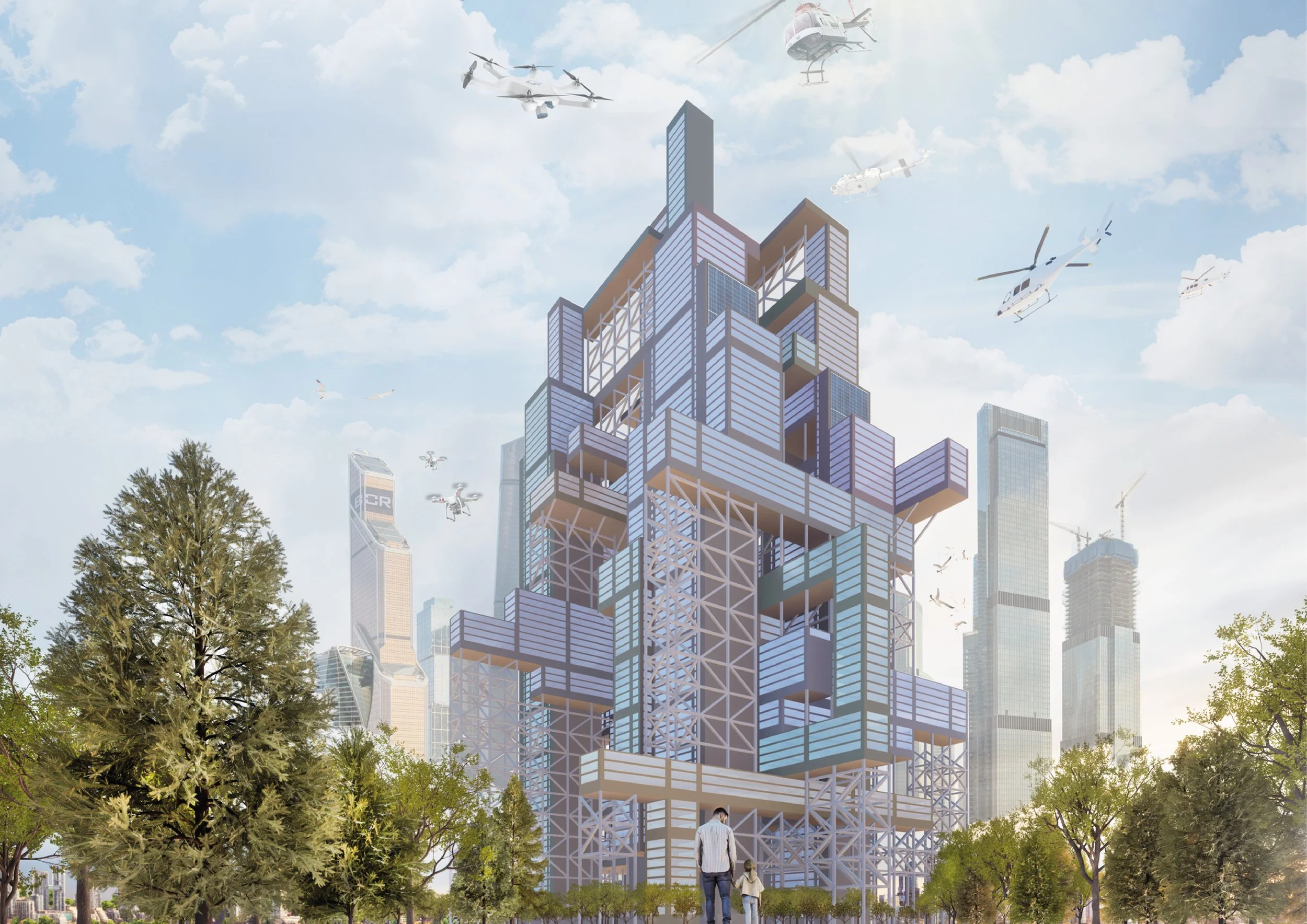
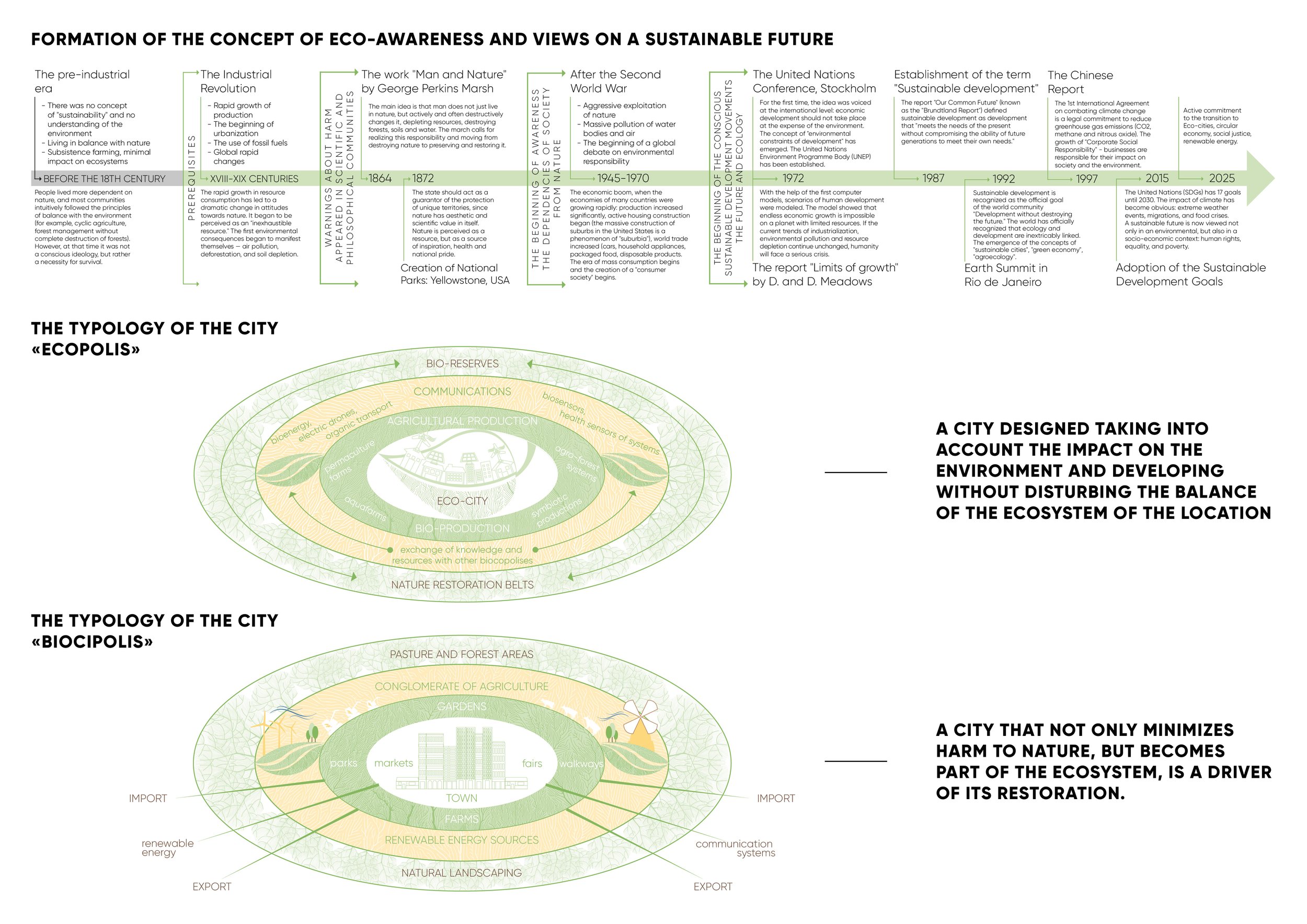
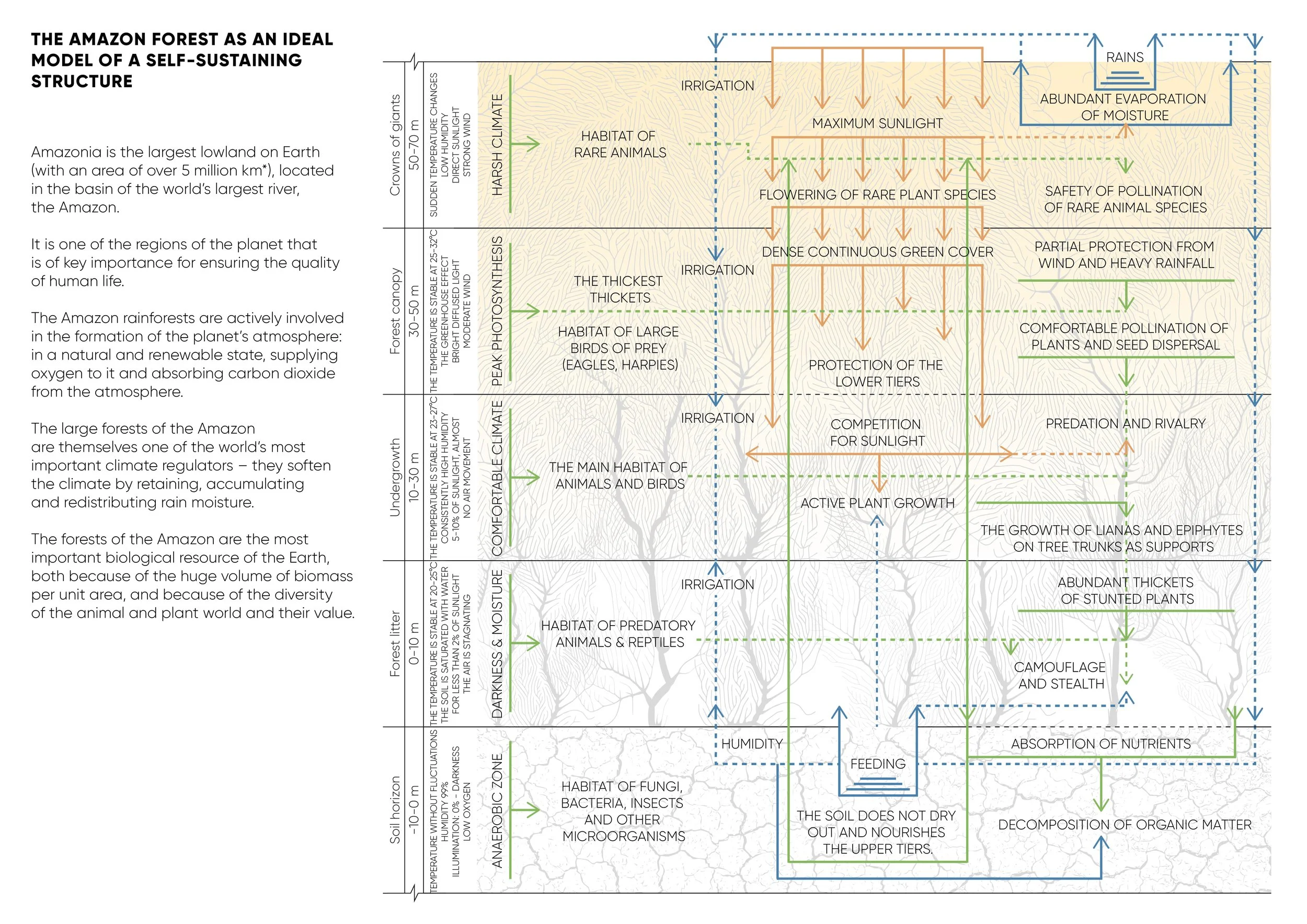
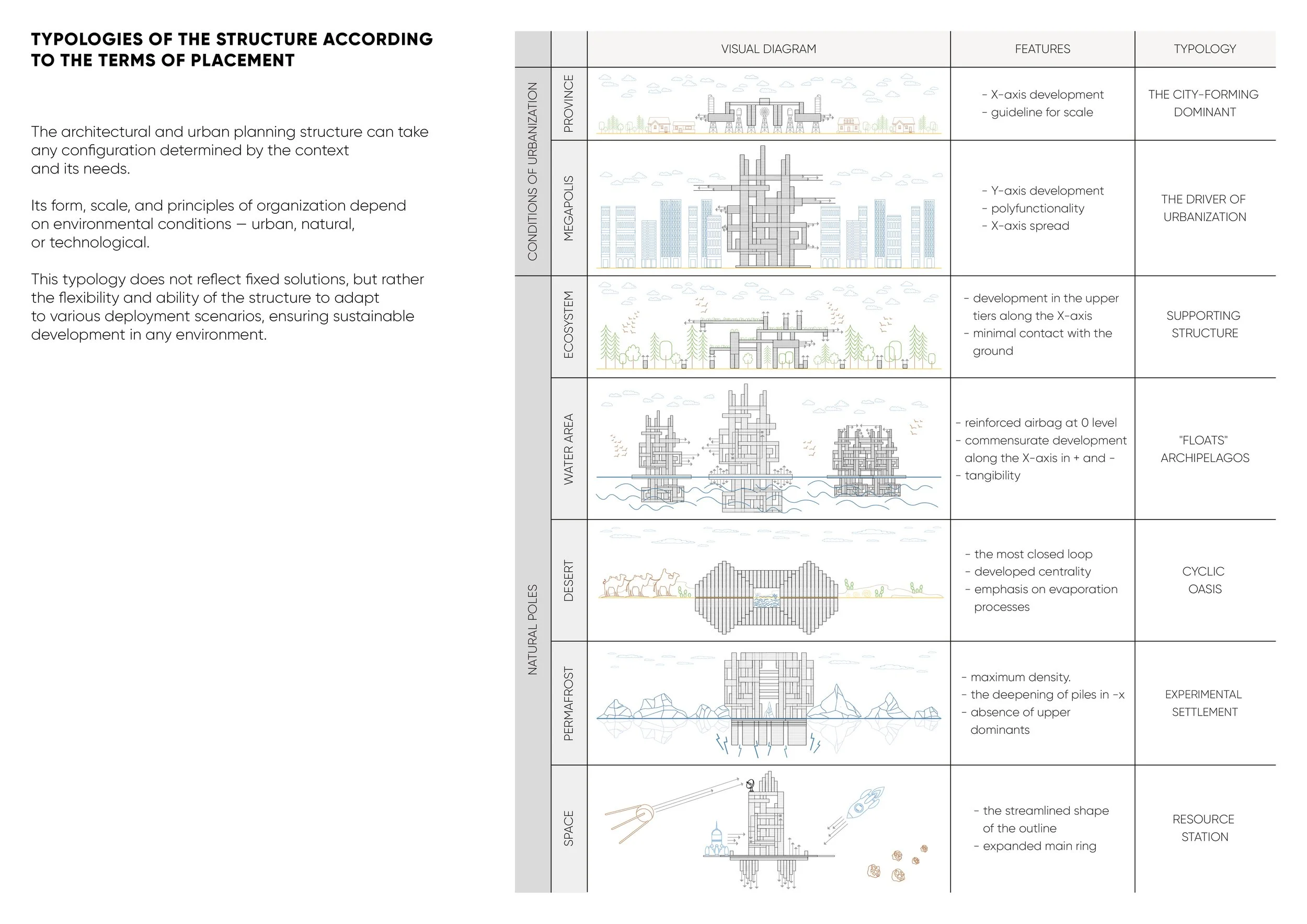
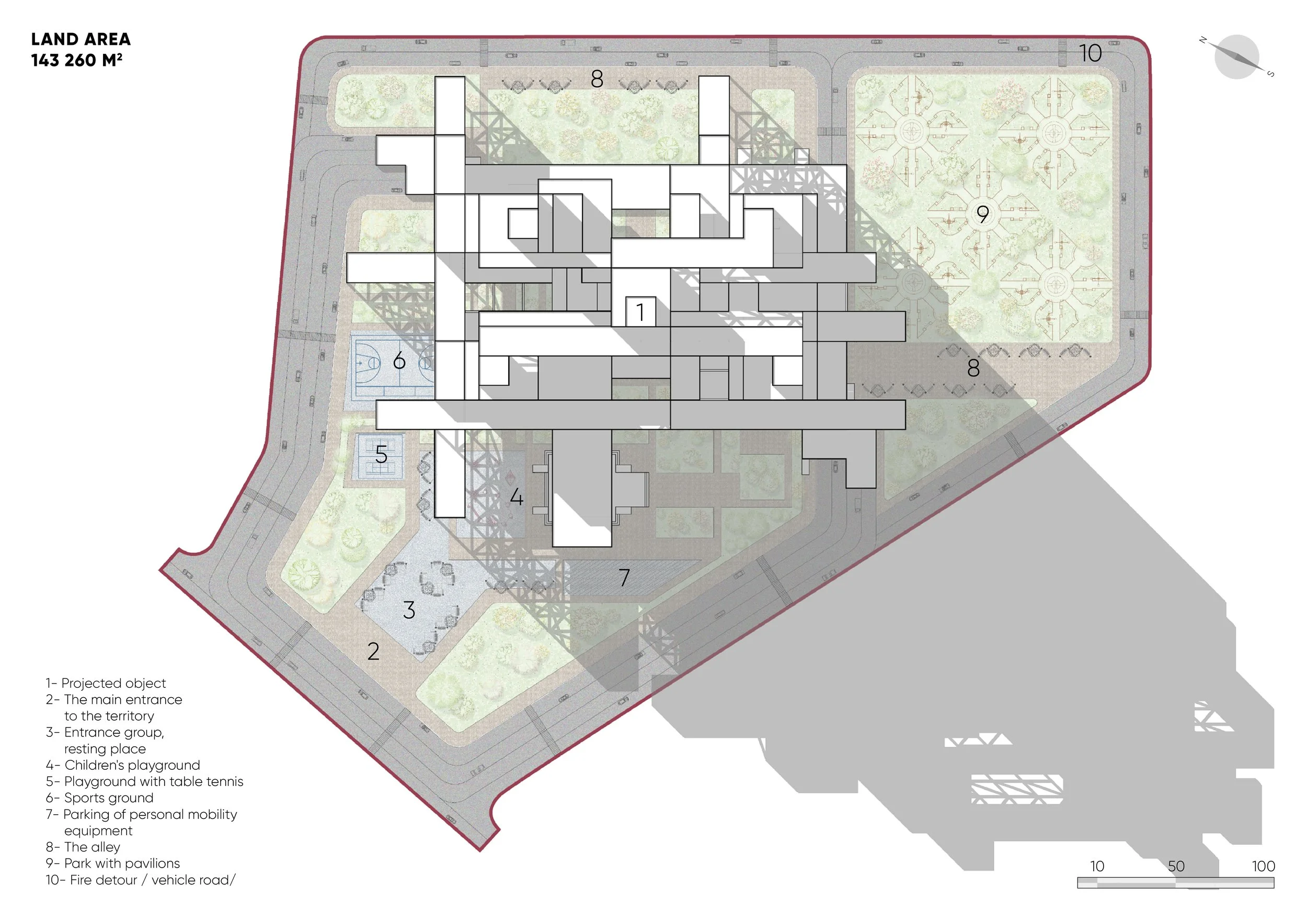
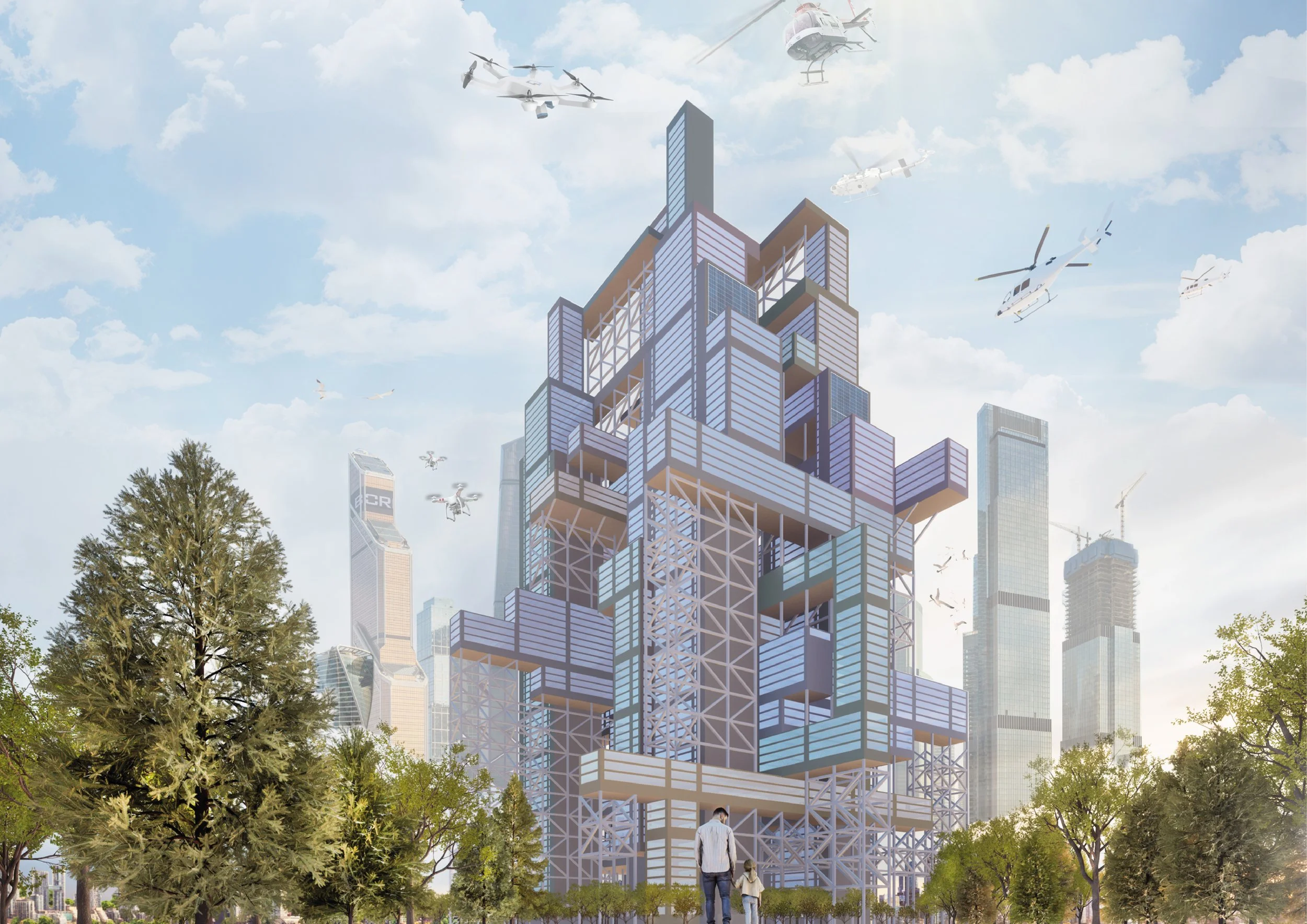
Situated adjacent to Moscow‑City, the "Ecotekton" agro‑complex spans 143,000 m2 and exemplifies a closed‑loop ecosystem. Inspired by natural biomes, the project integrates interdependent components to ensure long‑term sustainability and self‑regulation.
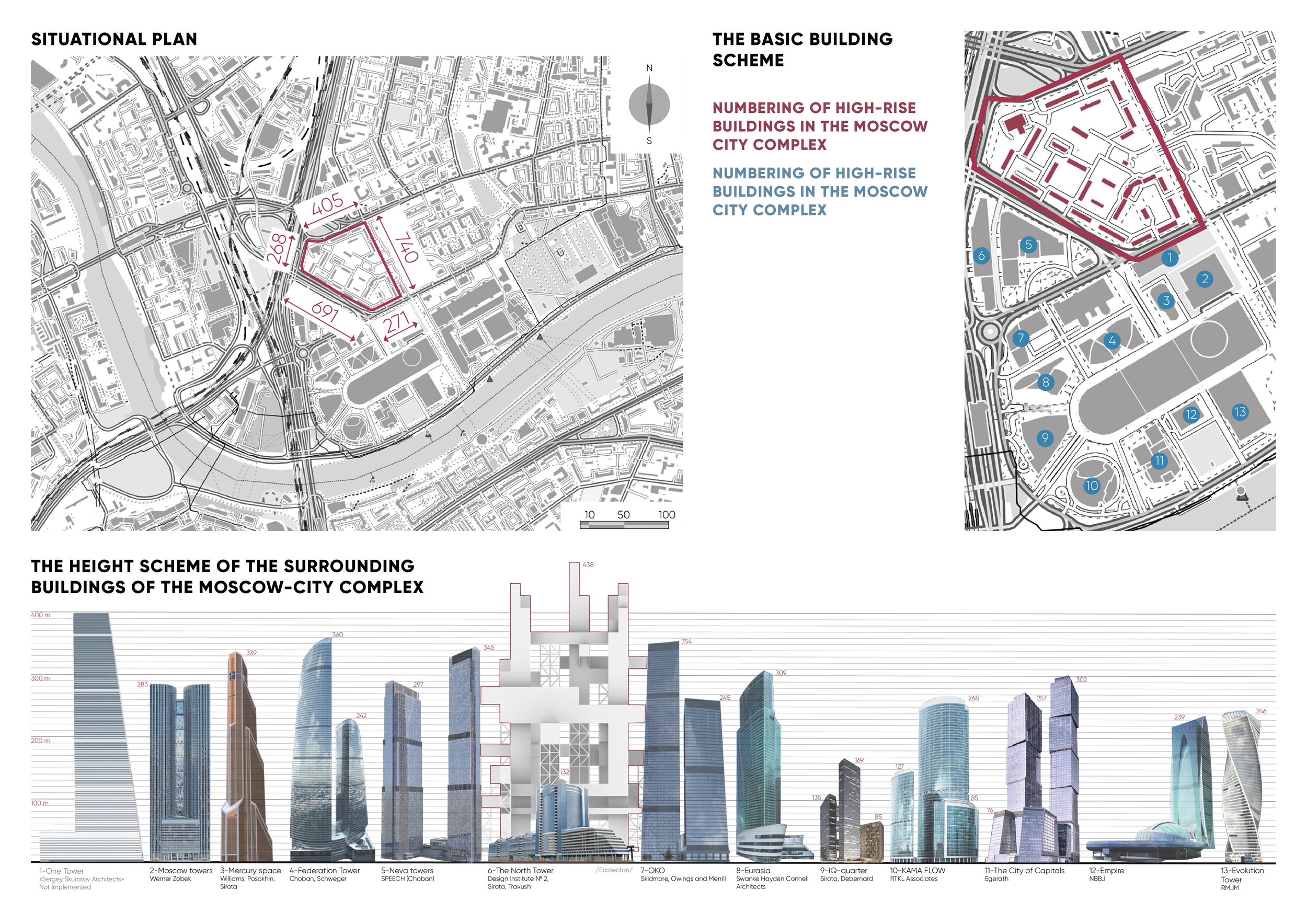
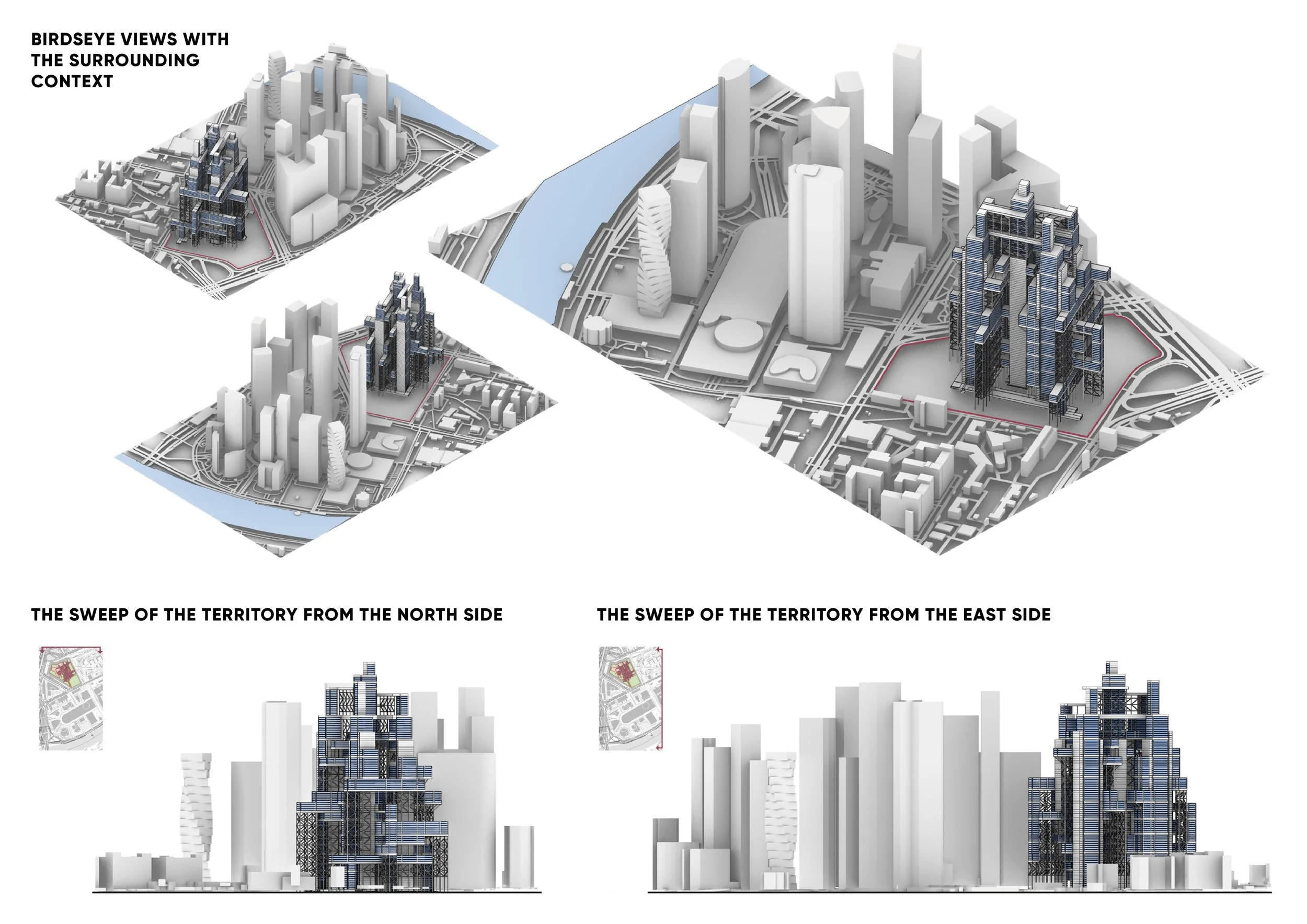
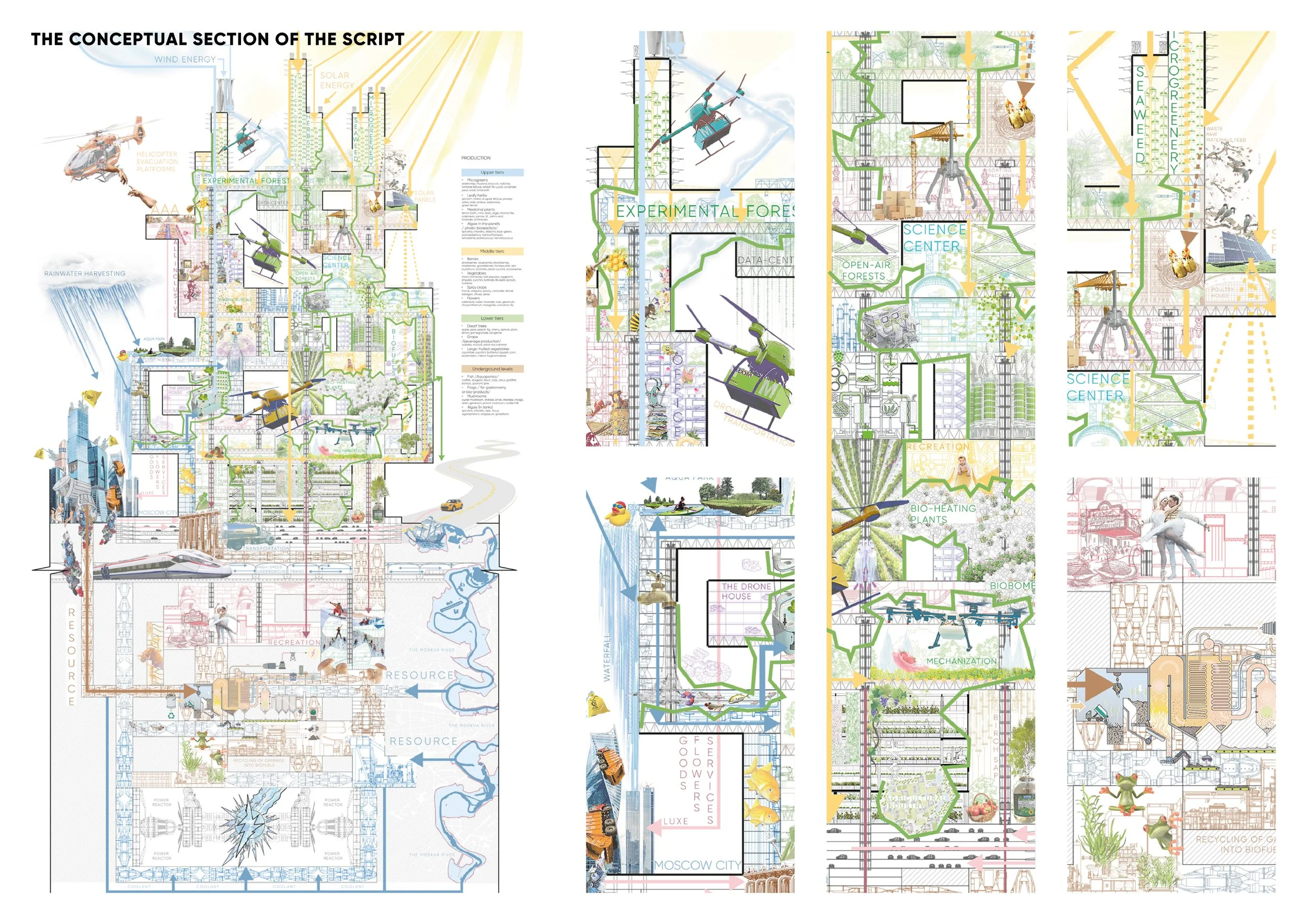
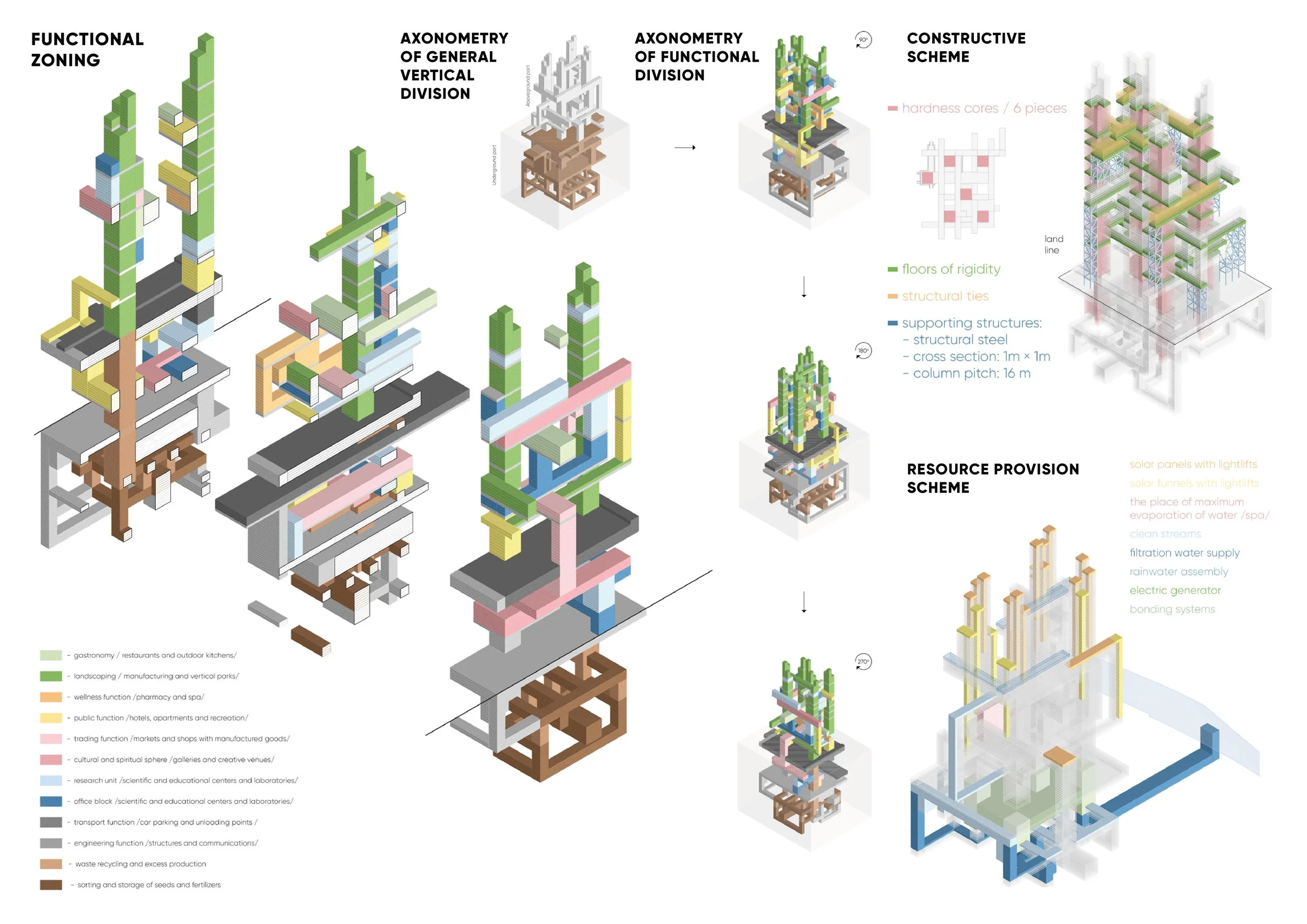
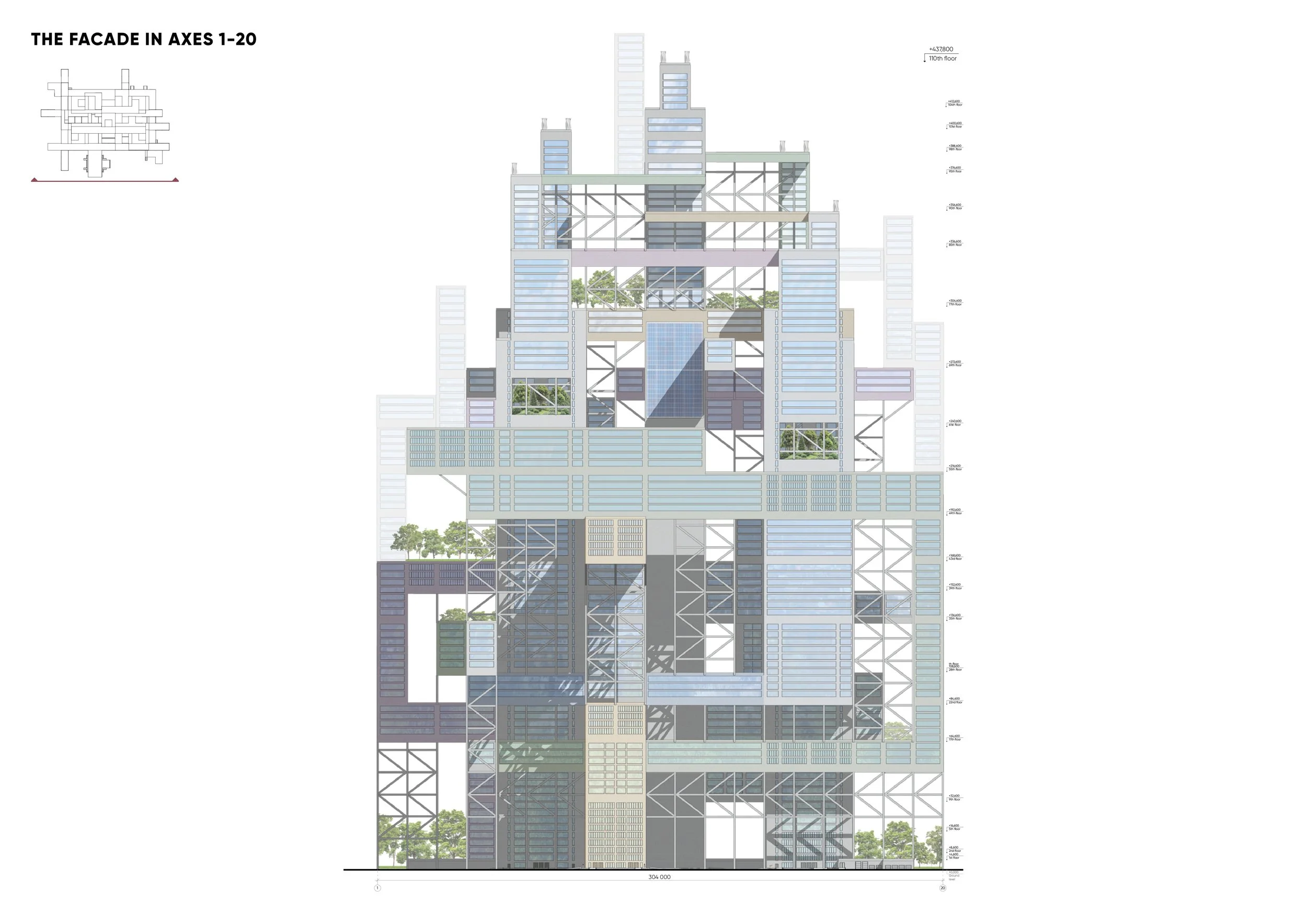
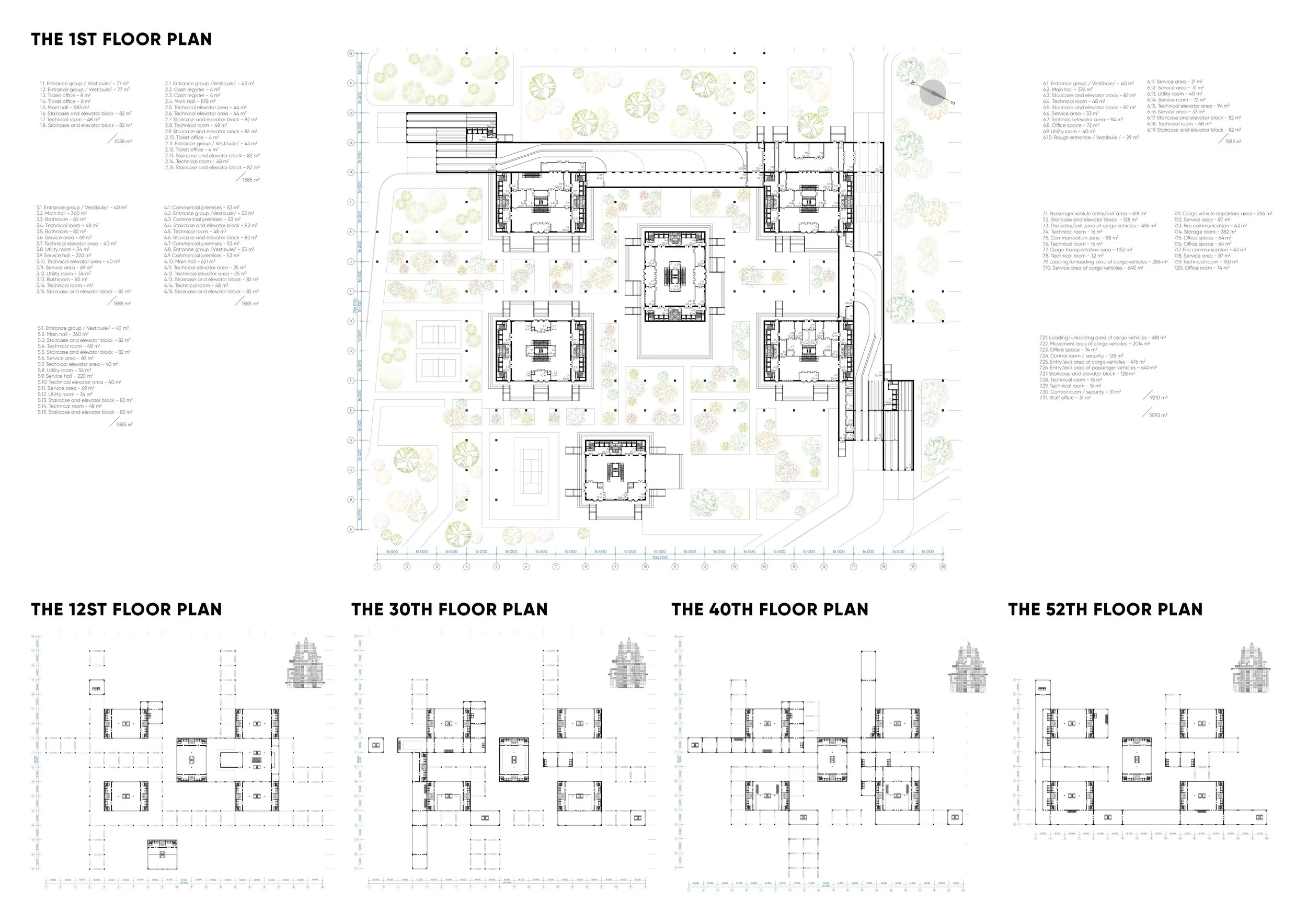
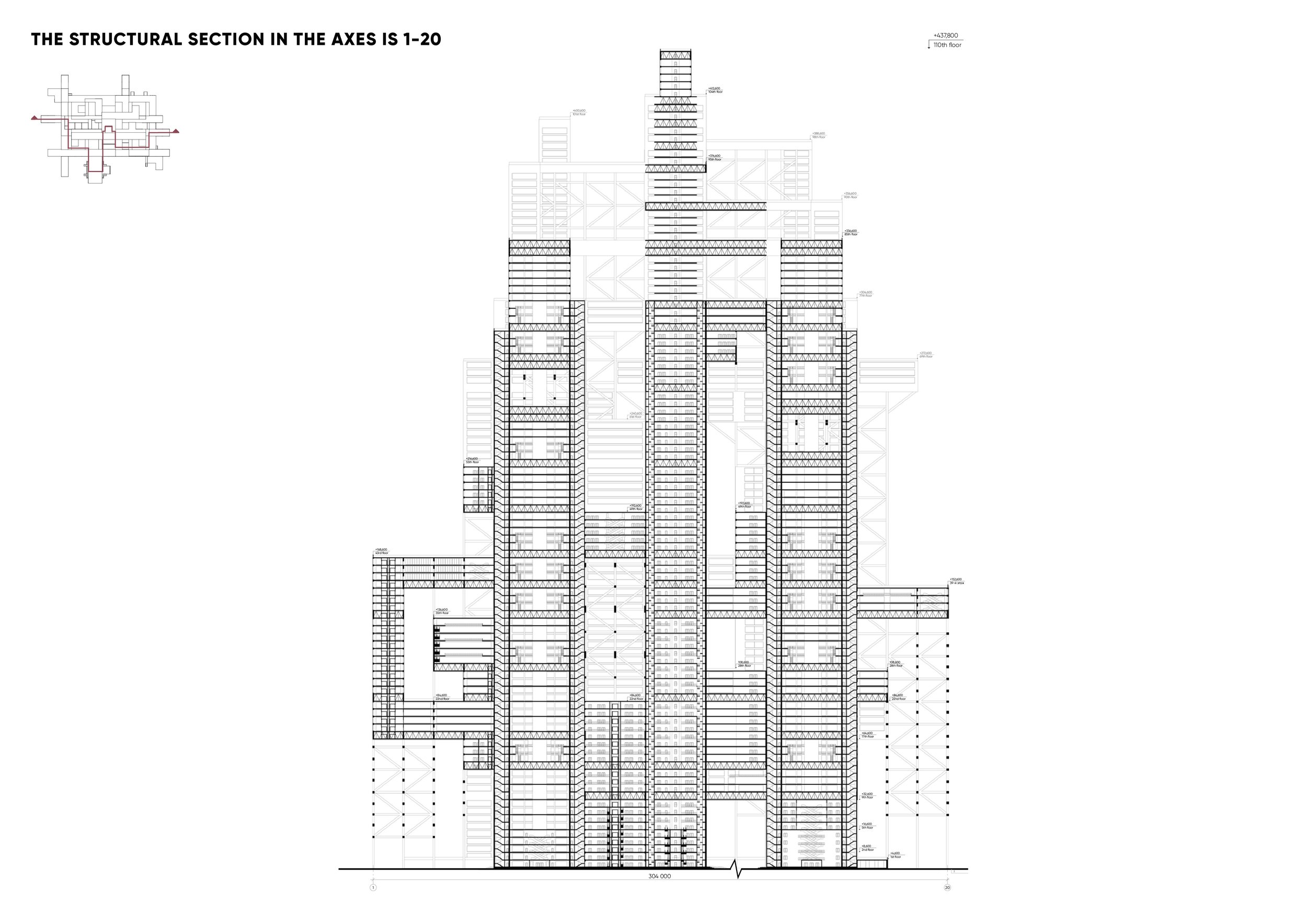
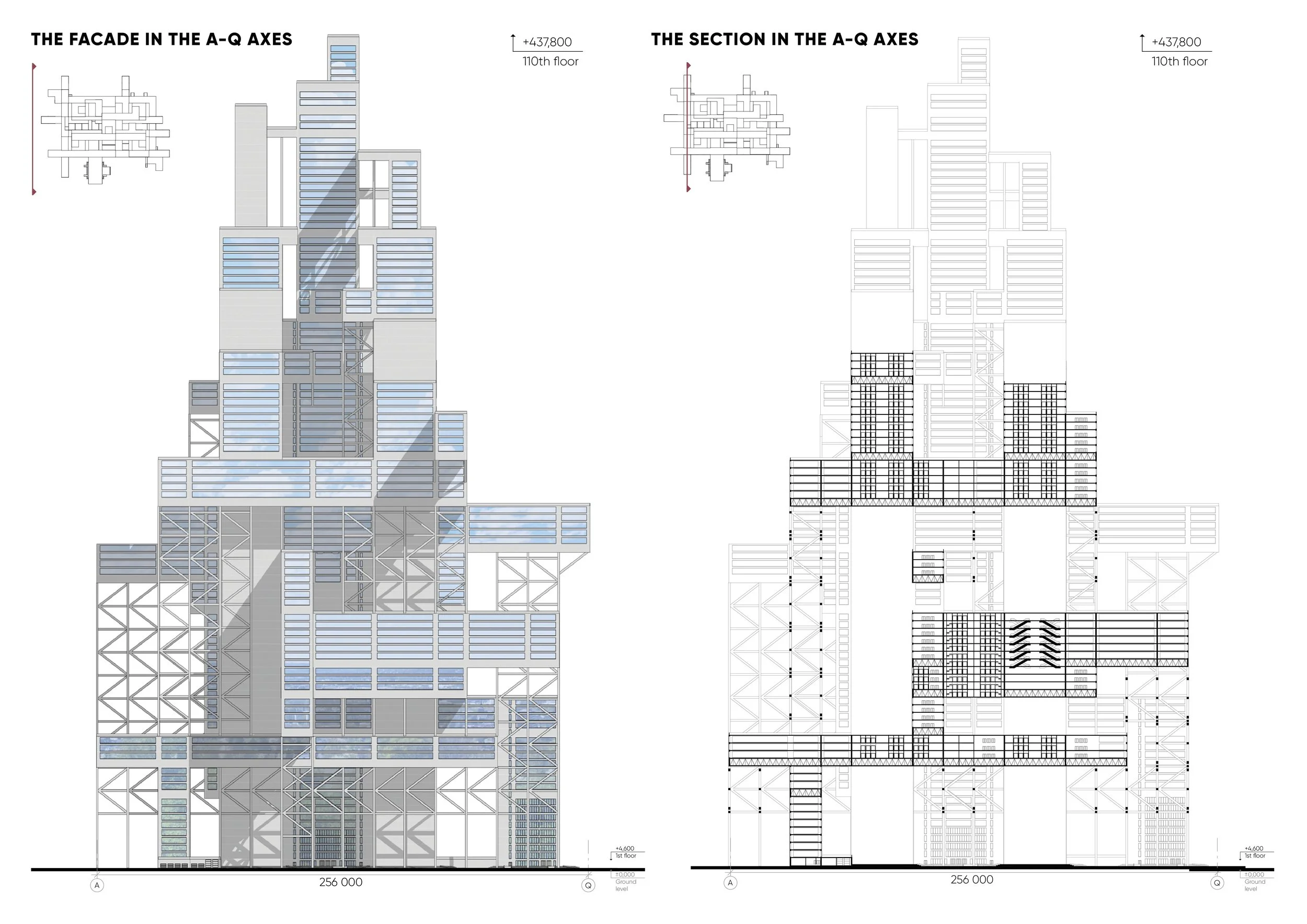
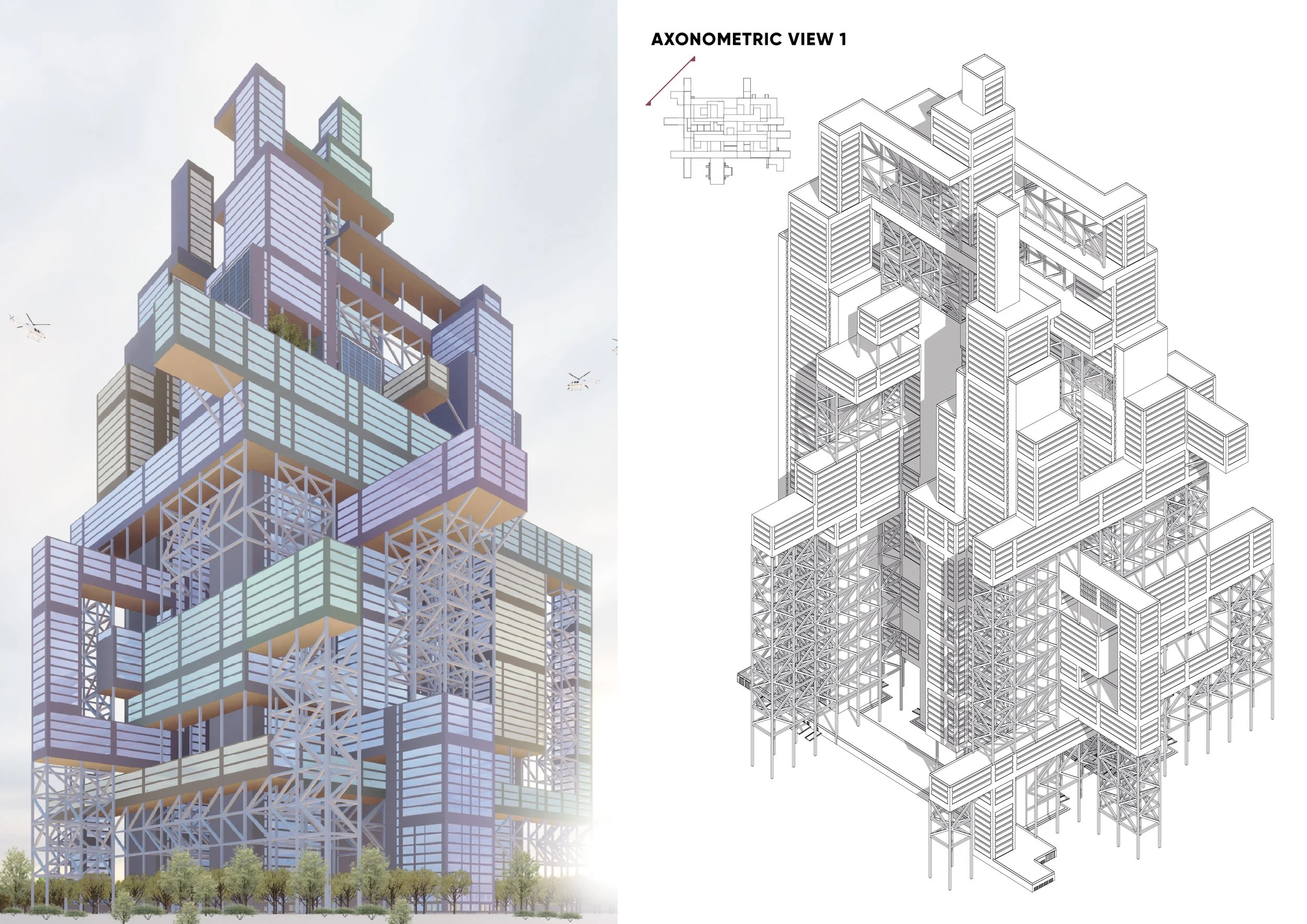
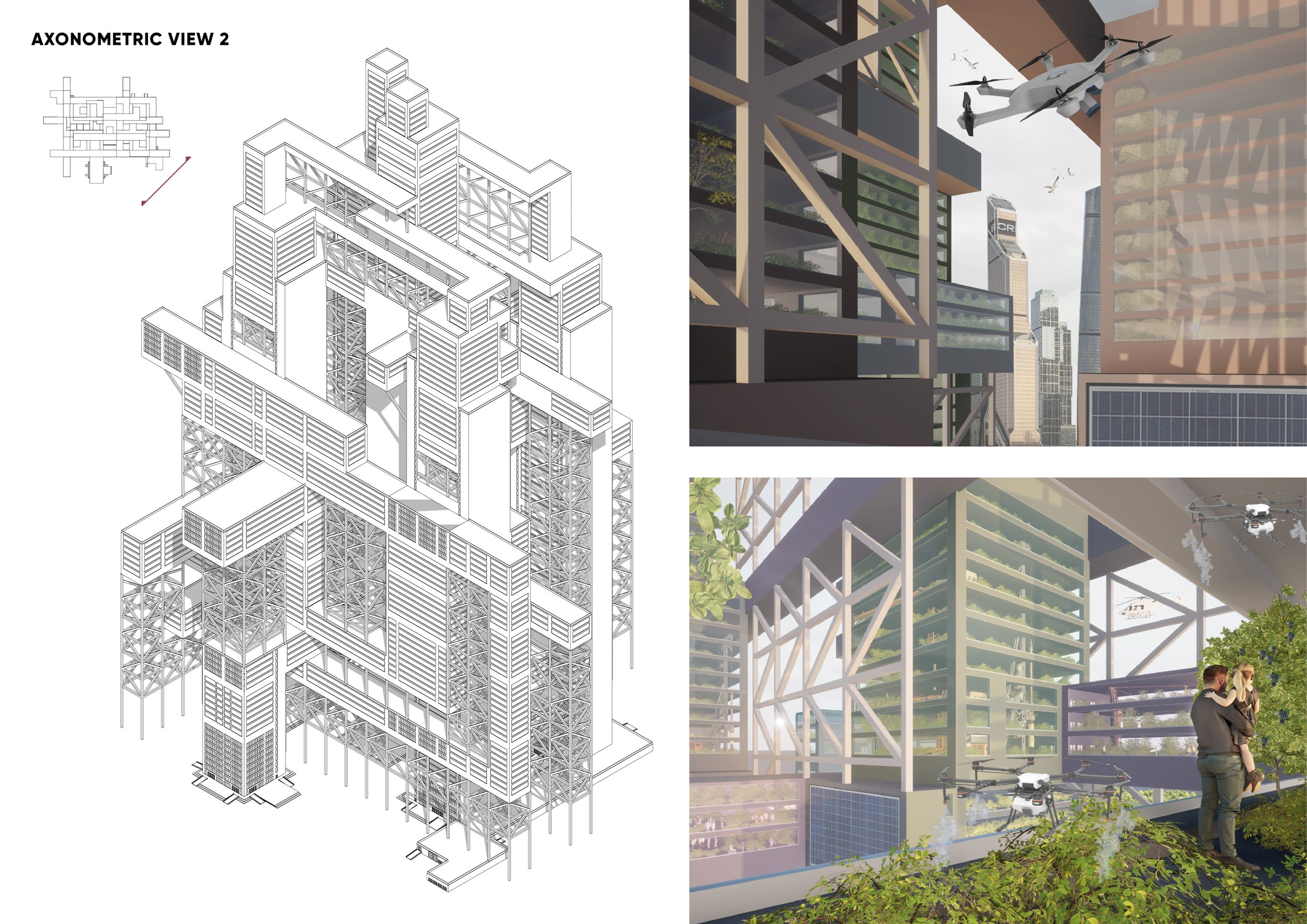
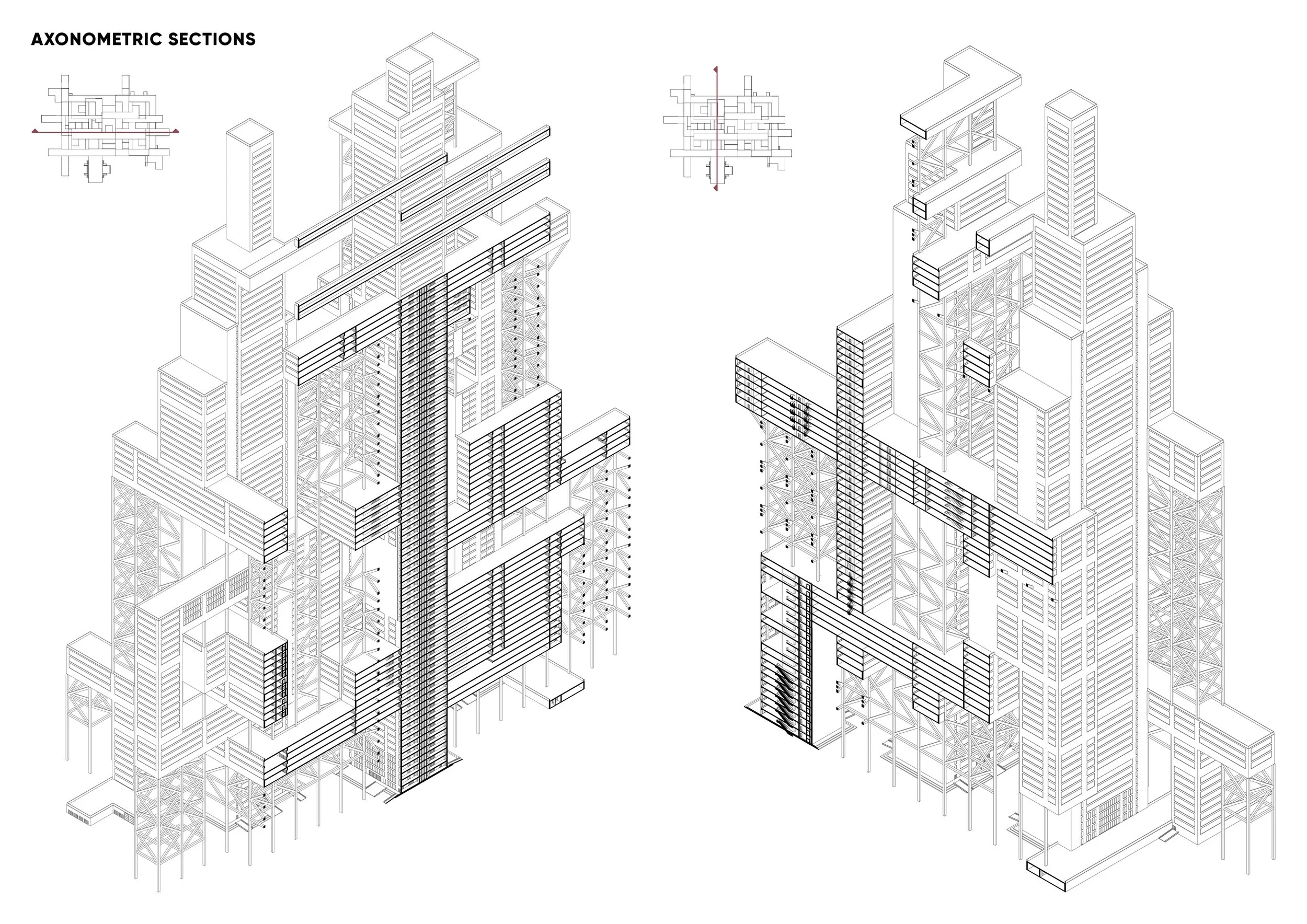
The complex adopts a dual‑level configuration. The underground tier serves as the infrastructural core, housing a waste‑to‑biofuel conversion facility that processes Moscow‑City waste, an energy hub with a river‑water cooling system, bioresource storage vaults, a multimodal transport node with metro connections and parking, and specialised bioproduction zones for algae, fungi, and amphibians. The above‑ground tier rises to 440 m (110 storeys) and is organised around six structural cores. It combines vertical farming with public amenities across three distinct vertical zones: the lower zone accommodates orchards and vineyards; the middle zone features high‑efficiency greenhouses for vegetables and berries; and the upper zone is dedicated to microgreens, medicinal herbs, and ornamental plants. Renewable energy systems—including solar arrays and wind turbines—power all operations, while interstitial spaces between agricultural layers integrate research facilities, educational centres, and recreational areas.
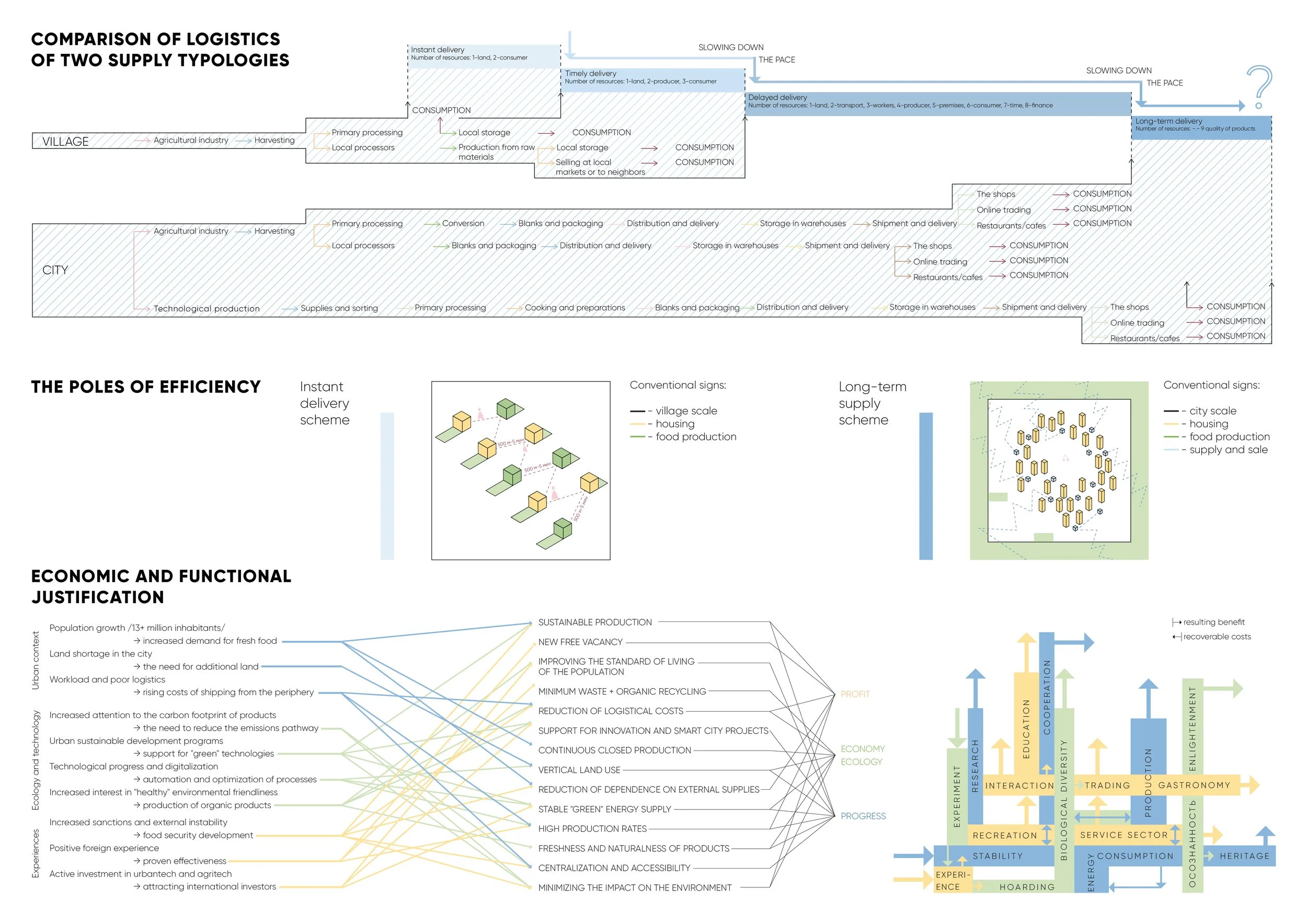
Grounded in modular design and Japanese Metabolism principles, Ecotekton delivers multiple key benefits. It enables localized food production, significantly reducing urban supply chain dependencies. The complex implements a closed‑loop waste management system that converts urban waste into energy and nutrients. It creates multifunctional public spaces that blend recreation, education, and research, and enhances urban resilience by mitigating ecological footprints through integrated systems.
«Ecotekton» represents a paradigm shift in urban development—a living system where architecture, agriculture, and ecology converge. By harmonizing metropolitan infrastructure with natural cycles, the project offers a scalable blueprint for sustainable cities of the future.